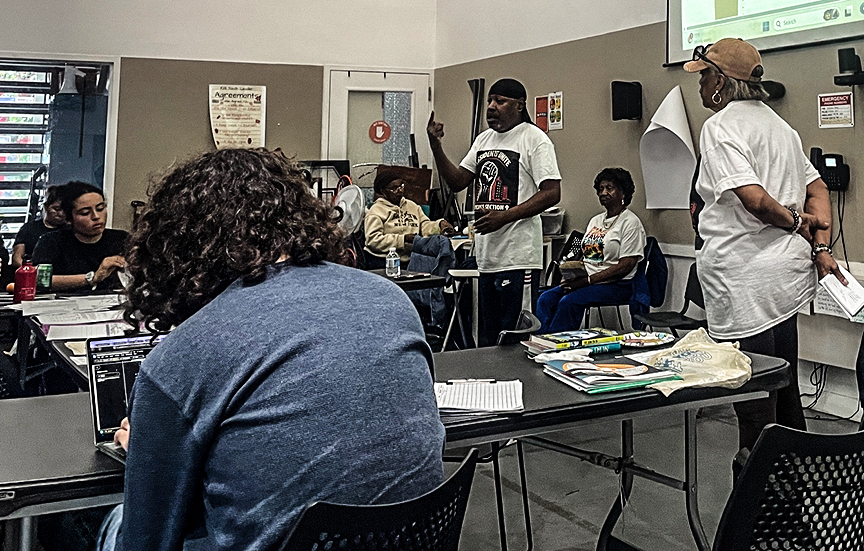
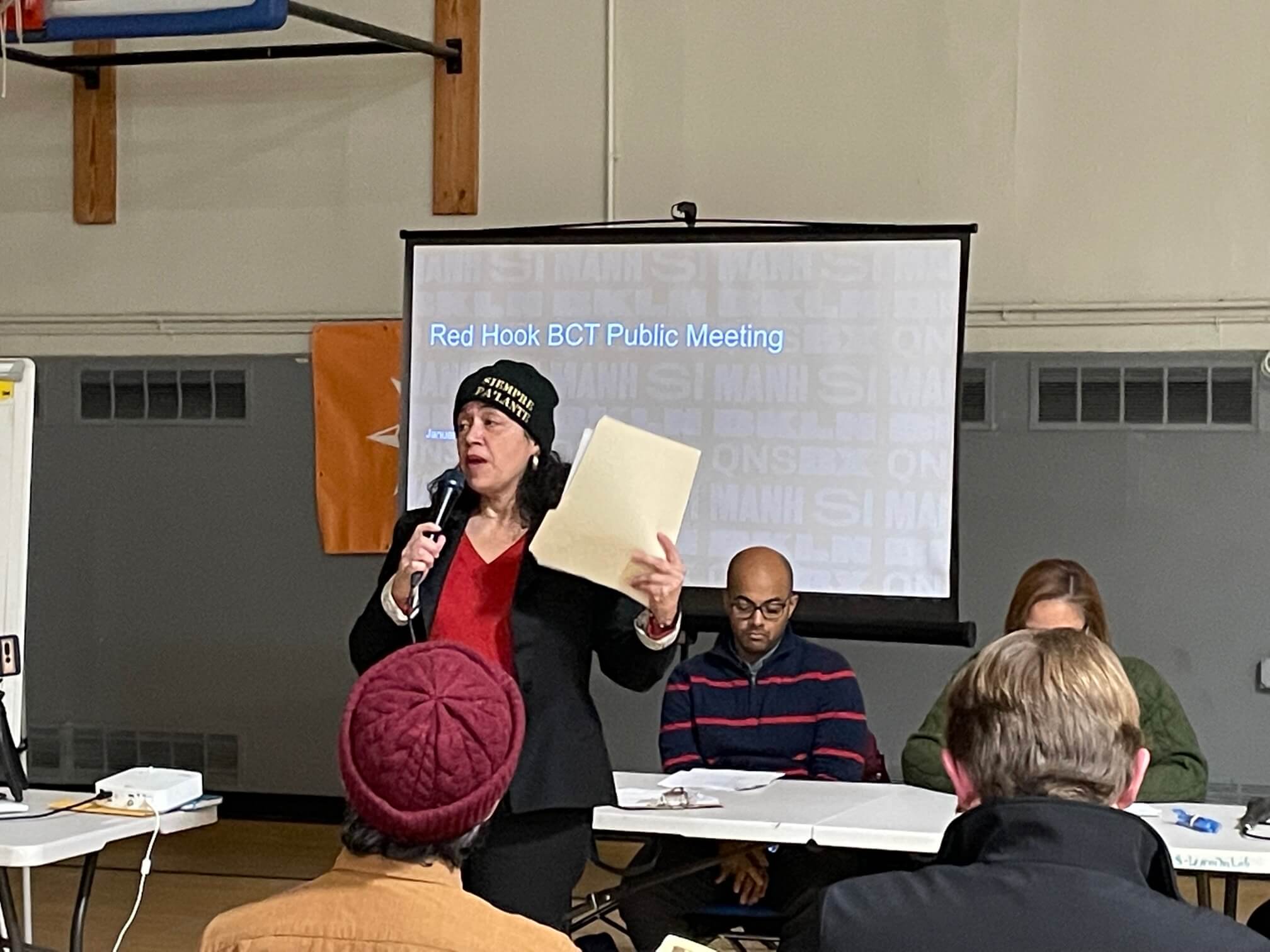
District 38 Council Member Alexa Aviles, representatives of the Economic Development Corporation (EDC,) and members of the Red Hook community met at the Miccio Center on Jan. 16 for a community meeting. Approximately 50 people attended.
In December 2022, Mayor Adams announced that MSC cruises would be coming to the Brooklyn Cruise Terminal. The announcement was a complete surprise to the community, to this paper, and even to Council Member Aviles. Last September, again with no community input, the EDC reached an agreement to expand cruise operations with cruise companies Norwegian and Carnival.
In response, Aviles and other politicians proposed Intro 1050, a bill that would require the use of shore power by cruise terminal operators as well as community traffic mitigation plans.
Shore power is a way of supplying electrical power to a docked ship so they don’t have to burn fuel.
The four topics discussed were traffic mitigation, facilitated by Matias Kalwill, shore power, facilitated by Adam Armstrong, economic development, facilitated by Victoria Alexander, and transparency, facilitated by Kiki Valentine Rakowsky.
Kalwill asked EDC about traffic. EDC’s Mikelle Adgate responded. “What we did beginning in the summer was we immediately began to bring in assistance with traffic enforcement agents and we hired 13 agents to supplement the NYPD.”
Members of EDC also said they were collecting and studying traffic data. The response from those in attendance as well as Kalwill was that while those were positive steps they wanted to see more.
“We appreciate what has been done but I don’t think it’s enough,” Kalwill said. “As a neighborhood, we’re dealing with a lot between the big Amazon facilities and the cruise terminal, and we need to see bigger steps taken.”
Regarding the ships themselves, one of the big concerns and frustrations for both Armstrong and those in attendance was a New York Times study that found that just 30 of 96 ships used shore power between 2016 and 2019. This happened because there are no laws requiring cruise ships to plug in and use the existing facility.
“What the EDC should take away from this portion of the conversation is we cannot allow this pollution to continue, and we must be more collaborative,” Armstrong said.
“We ensure that if a shore-power-capable ship docks into Brooklyn, they make every attempt to connect,” said Sudhir Puthran of the EDC.
The cruise companies have said they will make new ships capable of using shore power by 2028. New York City is officially giving the companies until 2035 as the year they will have to start plugging in. This led to confusion with those in the audience demanding clarity on the issue.
One of the most important things to come out of the meeting was that EDC officially gave its word that they will enforce the 2028 date.
This also relates to the call for transparency. Everyone wants to have a clear idea of what is being done and when changes will happen and in this case, the EDC gave a clear and transparent answer.
Alexander, who spoke in behalf of the Red Hook Business Alliance, expressed frustration that EDC and cruise companies have not done much to help the neighborhood from an economic standpoint.
“Formula E [which held a race in Red Hook for six consecutive years from 2017-2022] worked for years to build neighborhood relationships,” she said. “Most importantly they learned from mistakes made in the beginning. These are not qualities we have seen from the EDC or the cruise companies.
“We lost Formula E because of the city’s cruise contract. Formula E had measurable positive impacts for much of the Red Hook community. This cruise agreement must recognize that it begins with a net negative economic impact due to taking away Formula E from our economy.
“The terminal is a terrible tourist experience and this has negative consequences. When passengers arrive to blank walls featuring Marty Markowitz [whose terms as Brooklyn borough president ended in 2013] and a large parking lot with no information about local attractions it actively communicates that there is nothing here,” said Alexander, pointedly.
In response, Adgate acknowledged, “We do need to improve the cruise terminal to emphasize the local businesses and things that Red Hook has to offer to folks coming off of the cruises. We’re very interested in doing a walkthrough with community members and local businesses. We want to improve signage and learn what activities we should be promoting. We know we have to do more.”
The meeting ended up lasting more than the scheduled two hours as the audience was very engaged, asking a lot of questions and making their opinions clear. Aviles gave closing remarks at the end of the meeting.
“We want to figure out how we can bring these next steps into action,” Aviles said. “We want a more aggressive timeframe and 2028 doesn’t work for us. We want 100 percent shore power and we want to continue this conversation in earnest. We want a functional, working waterfront. We are going to keep pushing.”Alexa Aviles and EDC meeting story
At first members of the EDC said that ships “should” be plugging in at Brooklyn Cruise Terminal. Those in attendance kept pressing, and eventually, members of the EDC said that the cruise ships “will” be plugging in and using shore power in Red Hook by 2028.
This was one of the most important things to come out of the meeting because the EDC officially gave its word that this would happen. Following through should help begin to build trust between the EDC and the Red Hook community. This also relates to the call for transparency by Valentine Rakowsky and others in attendance. Everyone wants to have a clear idea of what is being done and when changes will happen and in this case, the EDC gave a clear and transparent answer.
Next, Alexander led a discussion on the neighborhood’s frustration that the EDC and cruise companies have not done enough to help the neighborhood from an economic standpoint.
“Formula E [which held a race in Red Hook for six consecutive years from 2017-2022] worked for years to build their local hiring and long commissioning program by building neighborhood relationships,” Alexander said. “Most importantly they learned from their mistakes. These are not qualities we have seen from the EDC or the cruise companies.
“We lost Formula E because of the city’s cruise contract. Formula E had measurable positive impacts for much of the Red Hook community. This cruise agreement must recognize that it begins with a net negative economic impact due to taking away Formula E from our economy.
“The cruise terminal is a terrible tourist experience and this has negative consequences for Red Hook’s economy. When passengers arrive to blank walls that say Marty Markowitz [whose terms as Brooklyn borough president ended in 2013] and a large parking lot with no information about local attractions it actively communicates that there is nothing here.”
In response, Adgate acknowledged, “We do need to improve the cruise terminal to emphasize the local businesses and things that Red Hook has to offer to folks coming off of the cruises. We’re very interested in doing a walkthrough of the Brooklyn Cruise Terminal with community members and local businesses. We want to improve signage and learn what activities we should be promoting. We know we have to do more.”
The meeting ended up lasting more than the scheduled two hours as the audience was very engaged, asking a lot of questions and making their opinions clear. Aviles gave closing remarks at the end of the meeting.
“We want to figure out how we can bring these next steps into action,” Aviles said. “We want a more aggressive timeframe and 2028 doesn’t work for us. We want 100 percent shore power and we want to continue this conversation in earnest. We want a functional, working waterfront. We are going to keep pushing.”
Author

Discover more from Red Hook Star-Revue
Subscribe to get the latest posts sent to your email.