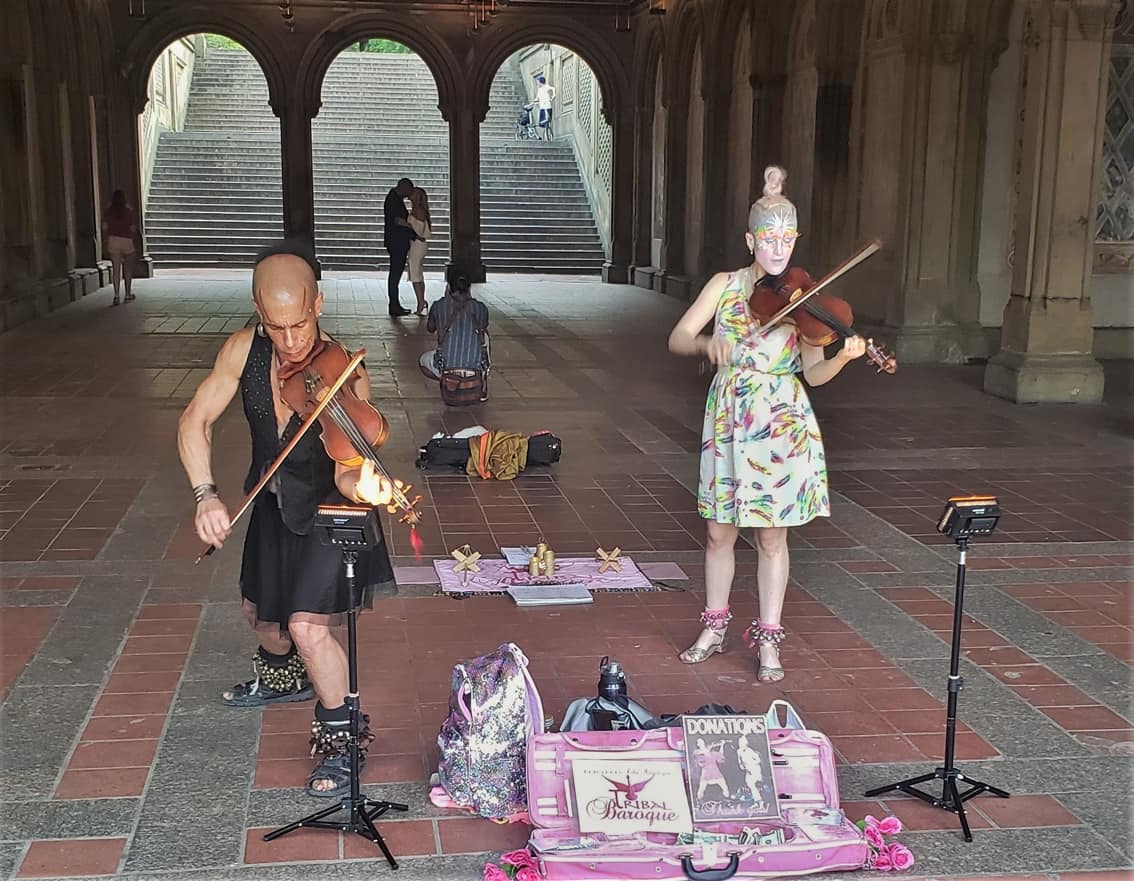
I set out to write a story on busking, the hip word for performing in the streets, in hopes of meeting crazy characters and hearing spectacular stories the likes of which could only happen in the chaotic streets and underground train stations of New York City. However, I got no such tales from the dozen or so musicians I spoke with. What I did get across the cultural board is the sense that buskers are walking, talking (singing) embodiments of the ineffable NYC grind.
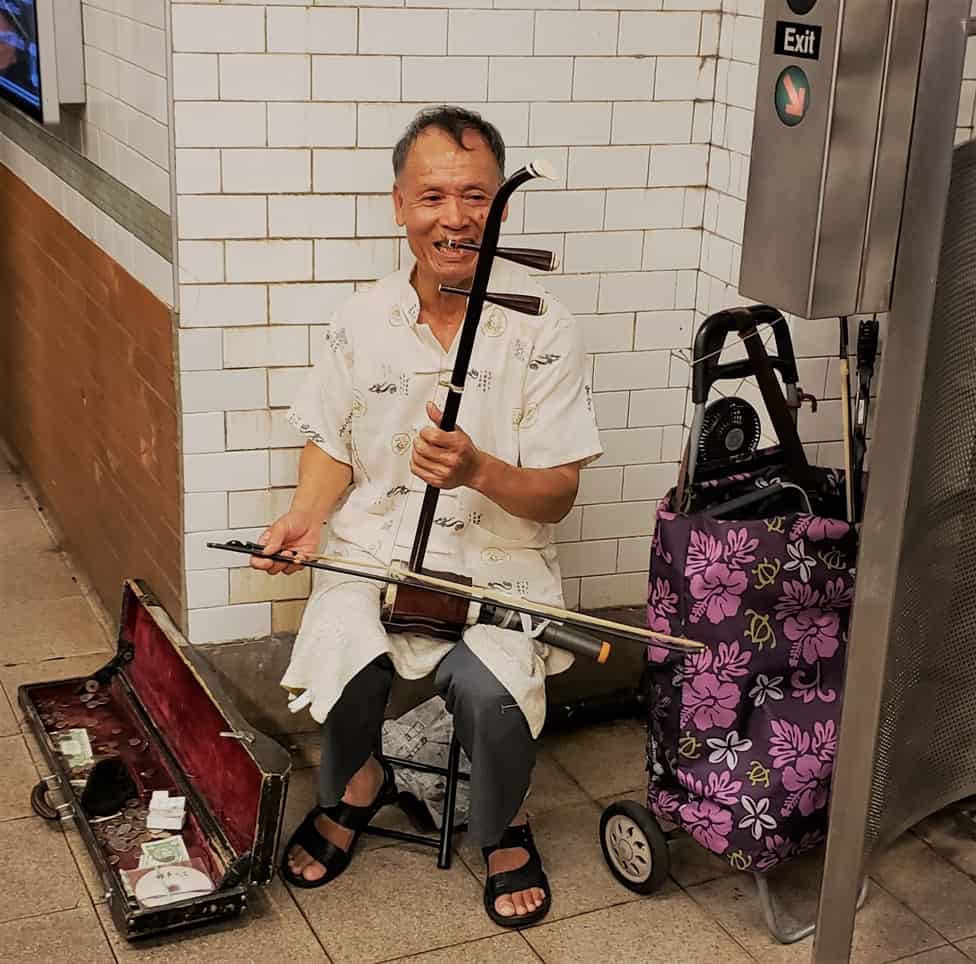 A busker may turn up anywhere. As I found myself in random stations, I’d put my head down and keep an ear out: a good way to echo-locate the musicians, and a good way to bump into commuters or get shoulder-checked by the more aggressive interlopers. Naturally, chances are good in major train hubs like Atlantic Center, Barclays, Times Square-42nd Street, or Union Square-14th Street. Parks are fine places to find folks singing for their meals, and the random street corner. If you’re not blocking pathways, or within 500 feet of a school, church, courthouse, or hospital during hours of operation, are no louder than 85 decibels, you can throw down anywhere to make your music in hopes of tips. Use of amps requires a permit which can be obtained at your spot’s presiding precinct.
The relative ease of picking a permissible spot is in direct opposition to how daunting it is to play your music in the subway, to throw yourself in the middle of a crowd that didn’t ask.
At a venue people purposely turn out to hear your music. There are systems in place to prevent just anyone from walking up and screaming in your face, “You suck!” Only paying customers have that privilege. Yet outright ire from strangers on the street is quite rare. Sure, it happens more frequently in Herald Square than at some art walk in a suburban park, but for NYC it’s pretty tame. Buskers are largely left alone to hack out a decent day’s pay. Occasionally, they’re shooed by the police or forced to put up with an overly friendly drunk. Otherwise, their day-to-day is singing the same songs as people here and there drop some change or Instagram their brief contactless encounter with the local color. There does exist a line of respect between musician and would-be audience member. Even in packed spaces the artists are given a degree of elbow room. But, if they’re entertaining enough to Instagram for all of your followers, throw ‘em a buck or two for getting you those likes.
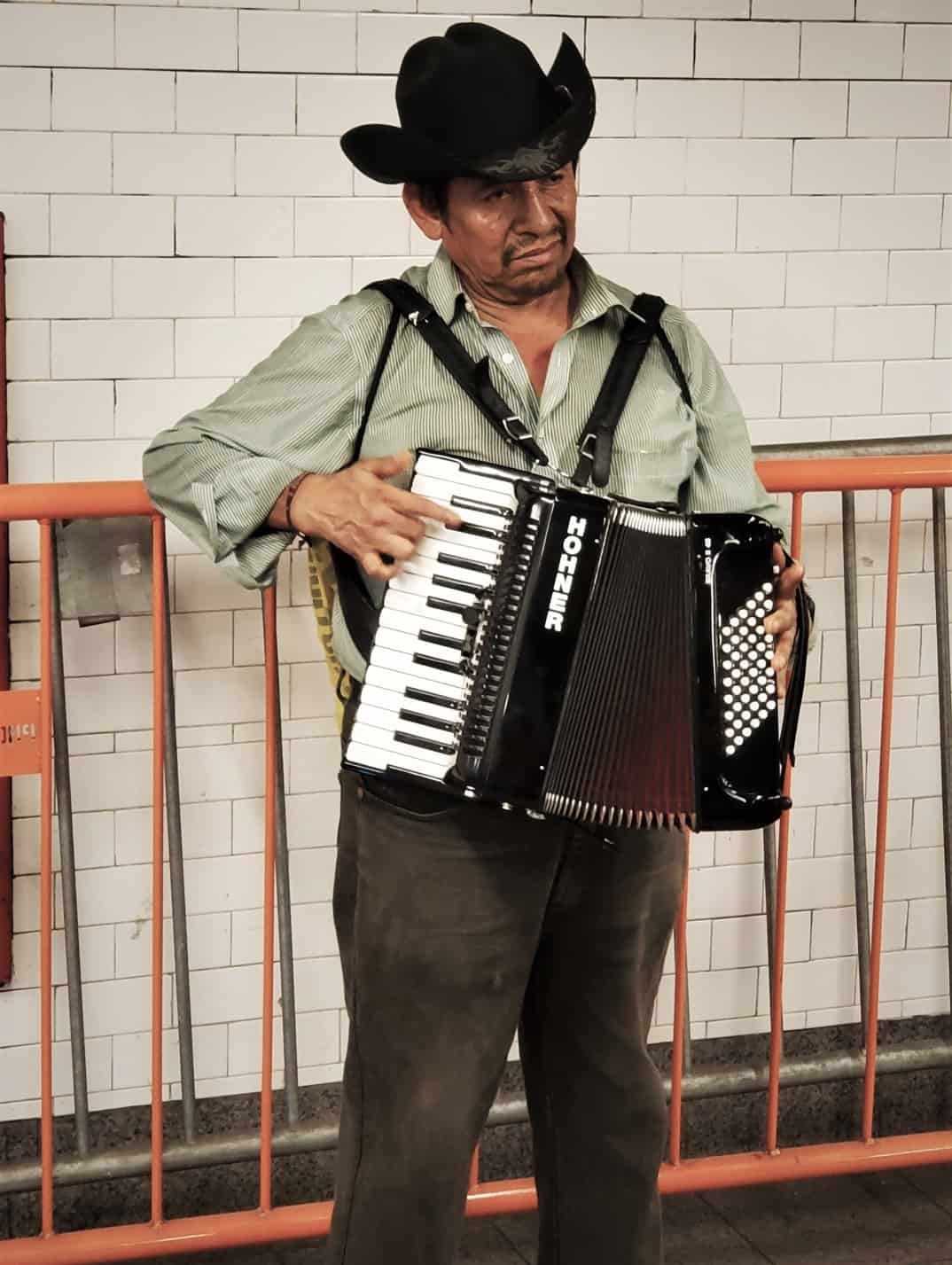 Show ‘em love, because it’s work, and not always in ideal environments. The subway is hot in August. It gets cold down there in February. Even in good weather the dingy halls of the MTA can smell of piss, fresh and old. The pay for a day’s worth of play is not really substantial. Supplementary at best. Zero dollars some days. No minimum wage, no nothing. Like us, no matter how hard it gets, they have to show up and act like they’re loving this big city life, because that will net them a dollar or a fiver. Sometimes a man in a fancy suit on his way to or from the Financial District drops a twenty in the hat, even if he never even stopped to listen. He hardly cared. Bless him.
Harder still is to do the subway circuit officially through MTA’s arts program MUNY (Music Under New York). Though not necessary to perform in the subway, it does offer choice high-trafficked spots and allotted times. But get ready for official rejection, too. Out of thousands of applications only about 65 acts are invited to audition live at Grand Central Terminal every Spring, which is open to the public. Only a couple dozen of them will get to fly the official banner over their dinged-up instruments and equipment.
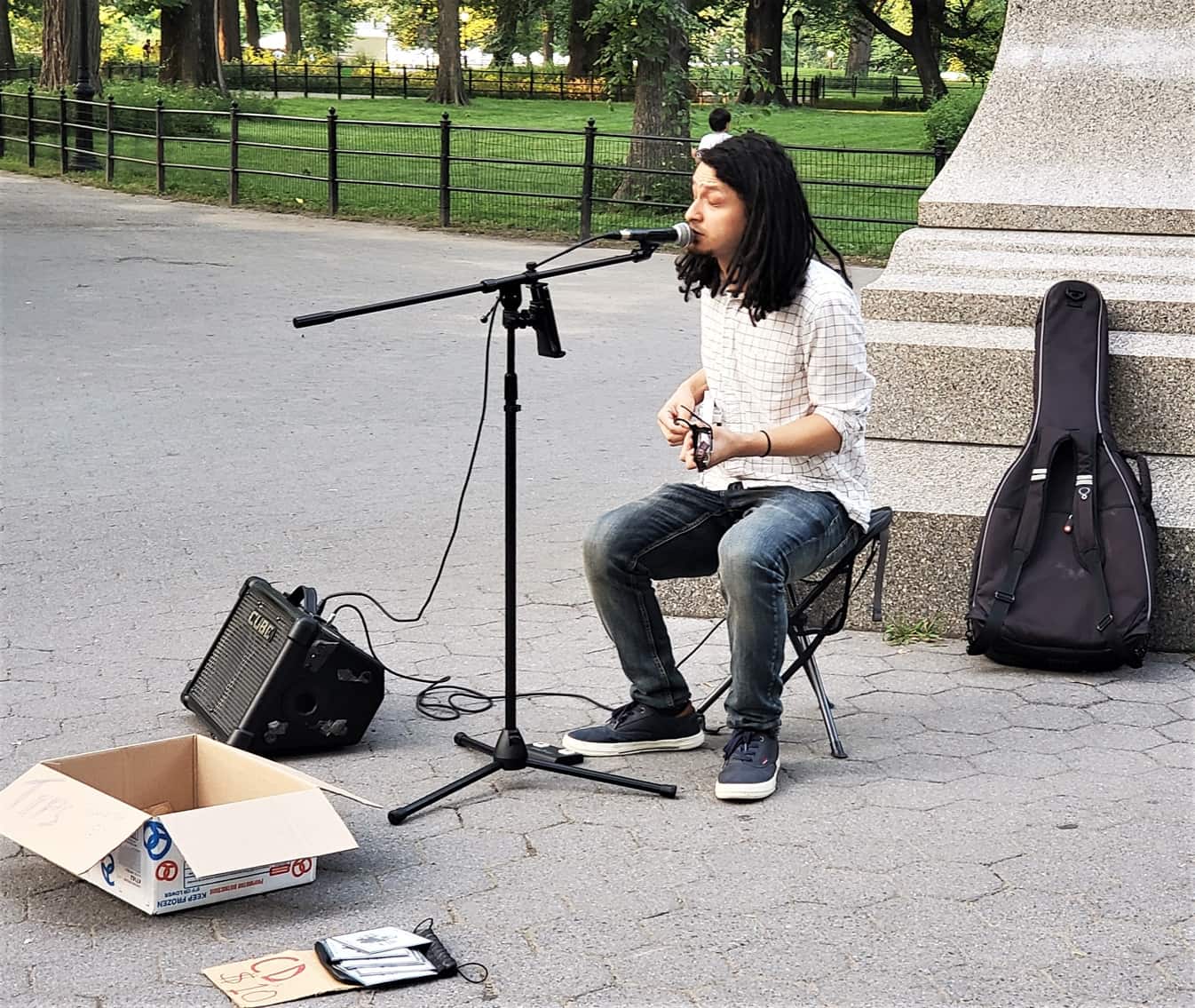 I wanted to find myself in a world different from our workaday one, less hectic and bureaucratic. In my hustle to be the greatest music journalist the world’s ever seen, I only discovered more hustlers hustling. I don’t believe anyone reading this needs a picture painted of what myriad funny hats a busker might wear or act they may put on. Whatever outlandish costume, or wacky persona these street performers take, it all amounts to a work uniform and professional conduct. The drive, the show a street musician puts on whether they’re feeling it or not, whether we’re feeling it or not, comes from a deep and sincere need to be heard above the crowds; to get that head nod. They make a little scratch, but mostly they earn experience as they grind for loose change, tokens that say keep it up. I love that. I do. There’s no doubt you know the deal. Grandmaster Flash probably wasn’t the first to say it, but he’s where I first heard the phrase “trying to make a dollar out of fifteen cents.” We fellow workaday folk trying to grind out our big city dreams dollar by dollar may not attribute such a statement to high art, but we know in our hearts it’s true enough to call back, “yup.”
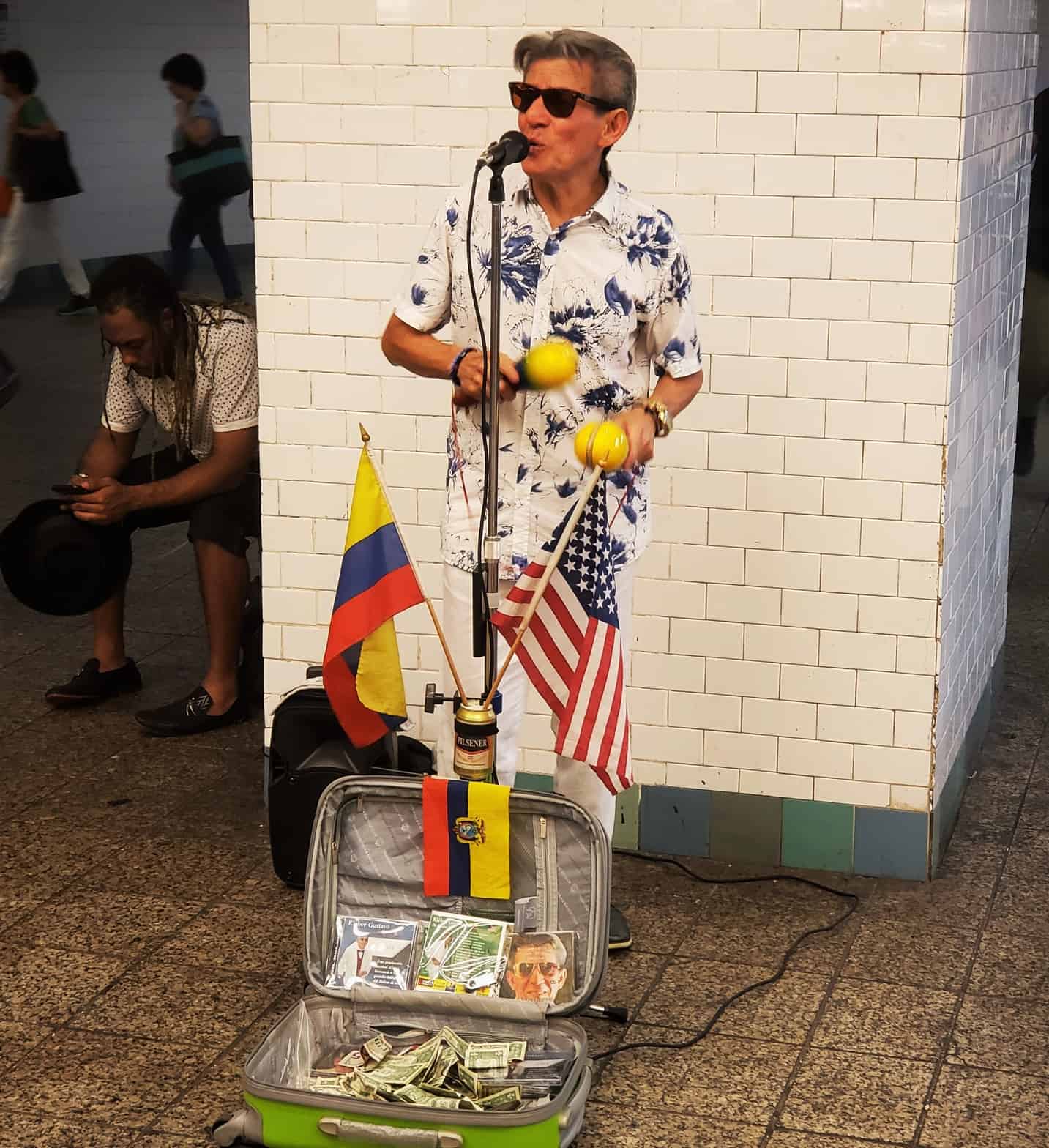 If a busking musician made your wait in a too-hot, too-cold, too-crowded train station, toss some love in the hat or instrument case. If they’re good, if they get you, hang out for a song. Train be damned. Be a part of something that is so inherently NYC, and far older than our country. Bob your head, tap your feet, clap your hands, but do put some tangible love and appreciation in the hat. For more information on MUNY, see their site: http://web.mta.info/mta/aft/muny/.
All photos by Jody Callahan.
Author
Discover more from Red Hook Star-Revue
Subscribe to get the latest posts sent to your email.