
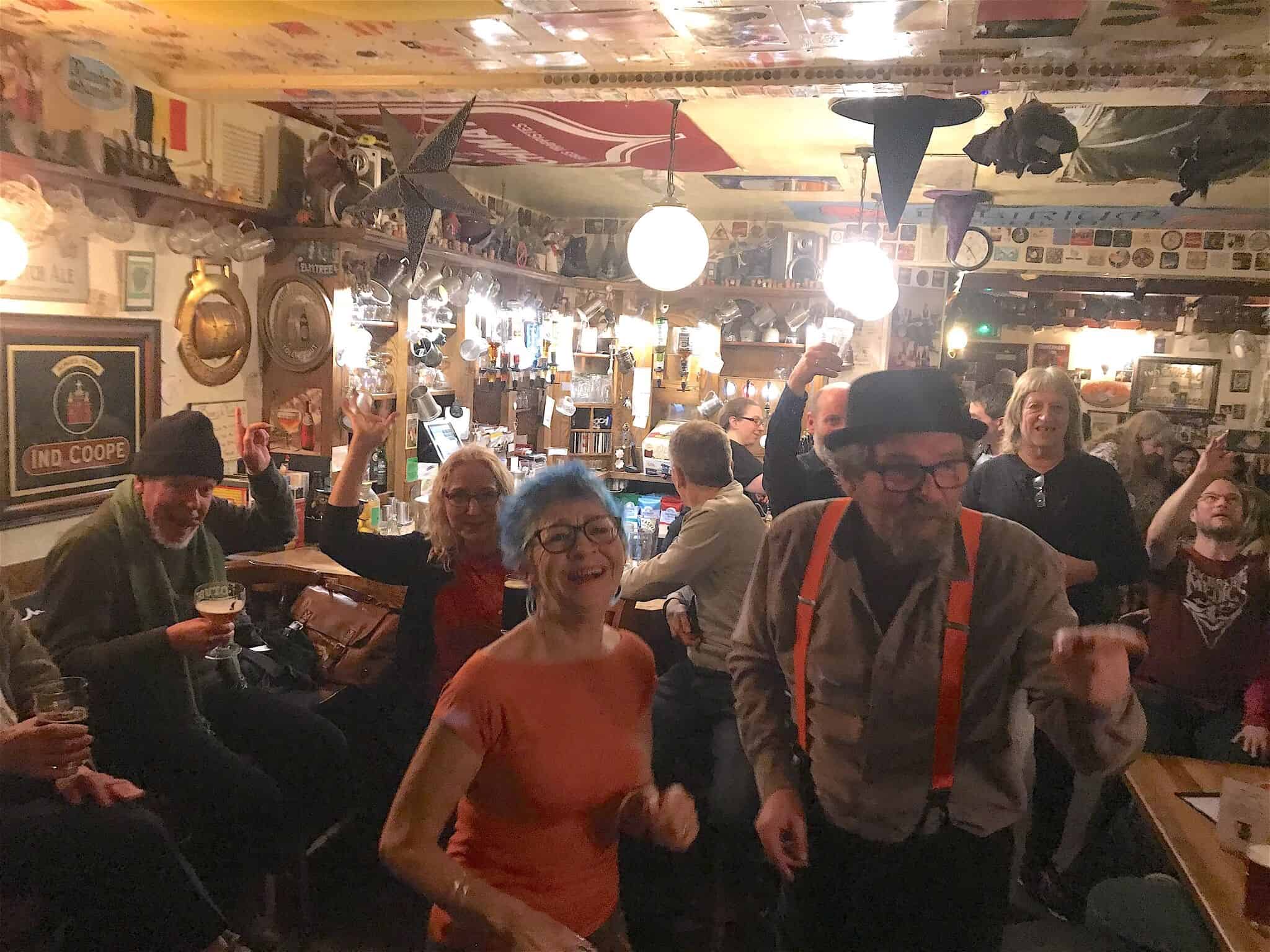
I moved to Cambridge, England for almost a year back in the fall of 2016. I now have a version of the Jack Grace Band in Cambridge, Massachusetts, and one in Cambridge, England. I also have versions in Colorado, Canada, and Austin.
I have spent much of my life in a van. Lately, my general approach is to go to a town and play the bars, pubs, and restaurants in the area with that version of my band and return to the same bed (most of the time), get to know a community, and become more a part of it. But I have always felt I was blowing through places too quickly. For various reasons, I do not play the more official rock clubs in many cities anymore. They often have multiple bands on the bill and provide acts with one 45-minute set (my show is two to three hours), they rely almost exclusively on a band’s draw, and if I am going to play multiple times in a month, I need more regulars to interact with. I do miss sharing the bill, meeting and hearing more bands, but it’s tough turning a profit while splitting the money with three to five bands a night.
I first played Cambridge, England, in 2009 after a tour in Ireland. We premiered at the legendary Flying Pig. The place was magical. I fell in love with the venue and the crowd. We booked an impromptu gig the next night at another random pub; the attendees from the Pig had spread the word, and it was packed. I thought, “I’d like to spend more time in this town one day.” I was in between career valleys in New York in 2016, and felt it was time to try the “Cambridge Experiment.” I arrived to play solo, but the rowdy crowd called for a full band experience, so the group that exists today came to be. We even made an album over here (due out in 2020).
The Cambridge environment is one that working New York musicians can relate to. There are musicians that play in several different bands, and there are a variety of pubs you can play without leaving town too often. But like New York, many clubs have closed, some are in danger of doing so, and the pay hasn’t really increased since the ‘80s.
There are different rules in Cambridge. Early rock & roll songs, designed to get people dancing, are often played. You will have an easier time getting away with songs very few folks in New York want to hear any more like “Mustang Sally”, “Midnight Hour” or Chuck Berry’s “You Never Can Tell.” I have also heard bands do “Dead Flowers” by The Rolling Stones, though they are usually closer to the Townes Van Zandt version. There is still some fine original music in Cambridge, but lately bands seem to do more covers, which can help or hurt musicians who primarily play original music, depending on the crowd and how well your songs apply to a pub’s atmosphere.
The average pub gig in Cambridge pays between £100 and £200, which is approximately $195 to $260 in US dollars. Some allow tipping while some do not want you passing the hat. Many places provide drinks, but they will keep track and cut you off when the tab reaches a level not in line with the turnout. Other places give band members one beer each. Generally, places with food feed bands. Most pubs don’t provide backline (drums, guitar, bass amps) nor do they have their own PA systems, so bands have to lug all the gear from home. New York venues with full music programs are almost required to have backline and a PA system as many musicians are traveling by subway or walking. Most places in New York that have food will provide a band menu, and the drinks can vary from one to several tickets. There are a few venues left that allow an unlimited tab, once a given for the city that never used to sleep. Then there are places in New York that expect you to rely solely on tips because, hey… exposure!
On this two-and-a-half-week run, I am playing places outside of Cambridge, and a few places are putting us up. Pubs in Cambridge or London are not likely to provide accommodation; in other European countries like France, Germany or Spain, it is more common for accommodations to be provided. Like the US, England and Ireland generally don’t provide accommodation on the pub circuit; you are mostly on your own.
Cambridge has some loyal, live music fans, and they are a lovely, colorful batch. In general, the majority of audiences are over 40, which means higher merchant peddling of ye olde CDs.
Cambridge has one helluva scene for a population of around 144, 000 (the county of Cambridgeshire is about 651,000). Audiences like something new but still enjoy the simple reliability of Chuck Berry. It’s hard to have a problem with that.
Author

Discover more from Red Hook Star-Revue
Subscribe to get the latest posts sent to your email.