Europe’s reaction to the autumnal second Covid wave has been different nation by nation, revealing the priorities and the weaknesses of each country.
Today the most discussed field where these differences break out is about keeping or not schools open.
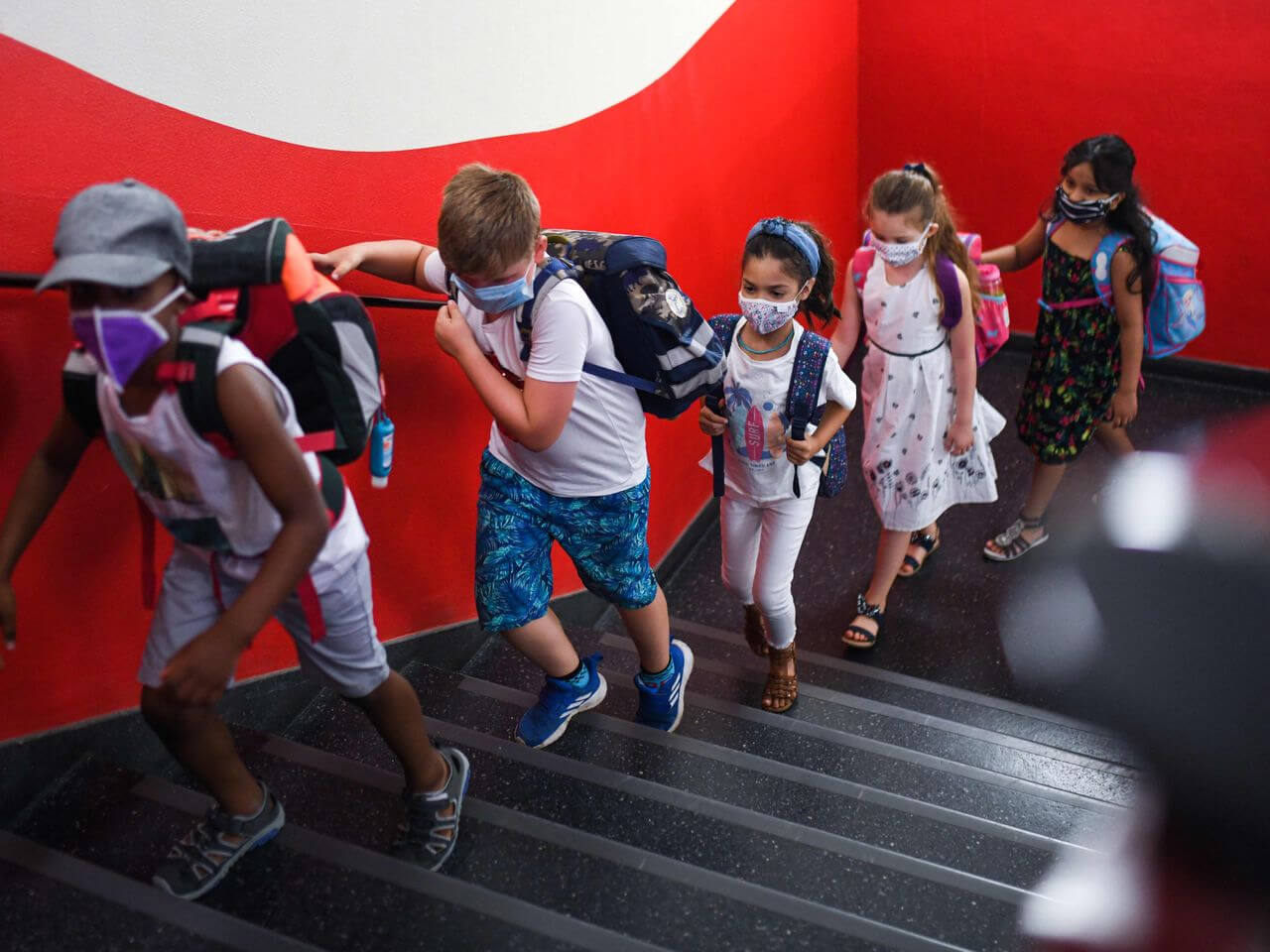
Countries like Scandinavian nations, Ireland,UK, Germany or France have decided not to shut down classrooms, even if cases have increased or if a total lockdown was imposed, like in France till November 28th.
The reasons why these countries do so are different, but they are commonly based more on reasons of principle rather than data. “In person teaching at schools continues to have the highest priority. The right to education can best be guaranteed by learning and teaching face to face” declared Germany’s Gov. officials to The Local, while, following the same lead, Irish PM, Micheal Martin, stated during a national address: “We cannot and will not allow our children and young people’s futures to be another victim of this disease. They need their education”.
This aim so widespread in northern Europe amidst the ruling classes has had to face many issues. Germany’s positive data suggest how only with a total lockdown opened schools may not be clusters, because even if in classrooms people respect mask-wearing and personal-distance, travelling students are in danger to be infected, if the public transports are plenty of other people.
That is why in Sweden, whose anti-masks and anti-lockdown strategy is famous, cases are increasing a lot even in schools, where there’s no mandatory mask for pupils aged less than 16.
Elsewhere, in France, where indeed a lockdown was imposed, students are obliged to go to schools although many of them do not want to, because of the relatively low distance possible to maintain in French classrooms. “Our class is packed, with students sitting side by side. They’ve tried to rearrange the tables but it changes nothing because there’s still 30 of us in a class” said to Reuters Jean, a pupil at Lycee Colbert in Paris, a city where roughly 75% of cases originated from schools.
La Ville Lumiere even saw students clashing with the police, going on strike, to affirm their right not to be infected while attending lessons.
But yet, in a twist, a country bordering on France has students demonstrating for the very opposite thing: turning back to schools after their government imposed 100% online teaching at the beginning of November for all the pupils aged more than 11.
That country is Italy, where I, 18 years old, am one of the high school students obliged to do home-schooling.
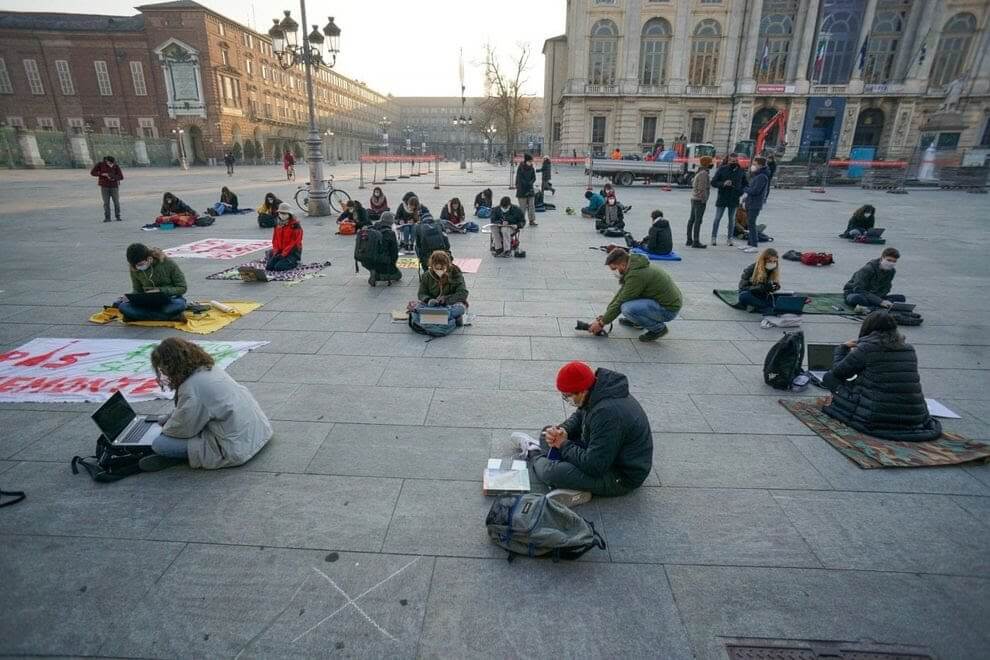
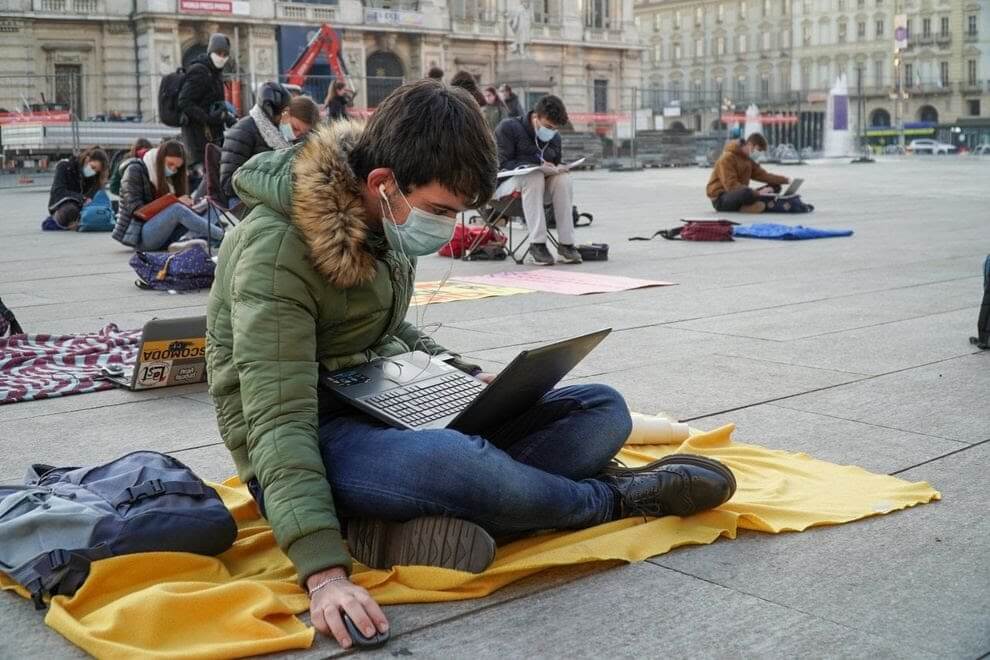
Many students in my city, Turin, but also in Milan or Rome, decided to demonstrate their opposition to online-teaching by attending online-lessons seated right in front of the governative palaces where the decisions to shut down schools were taken. This happens twice or even three times per week.
The students, and even some teachers or parents who believe schools must reopen, add as reasons the fact that when schools were opened only 3.5-3.8% of cases originated there, that distance was kept and few schools experienced massive contagions.
Moreover they often look at the rest of Europe, especially Germany, as a model to follow, often quoting the European WHO director, Hans Kluge, who once said “What we know is that we can’t open societies without opening schools first”.
This is absolutely true and that is why I’ve been amidst my mates to demonstrate last November 26th in Castle Square, Turin, but at the same time I›m aware that Italy did not reopen schools because the country has not enough money to increase public transports or to make the school environment safe.
And even if sometimes there is money, it’s often not spent in a good way. The ruling classes are more focused on helping the great industrial groups (Fiat Chrysler borrowed 6.3 bln Euros from Italy) than students or the smaller economical activities such as restaurants or retail shops that are still facing the financial consequences from the first lockdown in February.
In this situation schools are totally forgotten by Rome and I understand who wants to reopen them, but in any case I think that whether the schools are opened or not, students cannot be left alone, like today it is happening in Italy, where there are those who can’t afford to buy a PC (two or three in larger families) or to face the psychological aftermath of online-teaching, that is causing an increase of panic attacks amidst teenagers through the country.
But yet students have been left alone also in France, as Jean’s words suggested, revealing how the question is not to reopen or to shut down, but about how little every government cares about the pupils.
Today, under the siege of this gloomy pandemic atmosphere, there is no reasons of principle which can justify putting students at health risk, but at the same time, living in a world made up of values like education, society has to provide a real and effective instruction. This is not provided by Google Meet, where you can be silenced or expelled everytime the teacher wants.
We need to reopen schools as we do not know when the vaccine will be inoculated massively and we cannot afford years of online-teaching to keep the factories open. However, we must be aware that, if we reopen schools, we must guarantee safety to all the pupils, because every single case in schools is a potential death for the future of the world.
Pio, who lives in Turin, is our overseas correspondent. He can be reached at [email protected]
Author

Discover more from Red Hook Star-Revue
Subscribe to get the latest posts sent to your email.