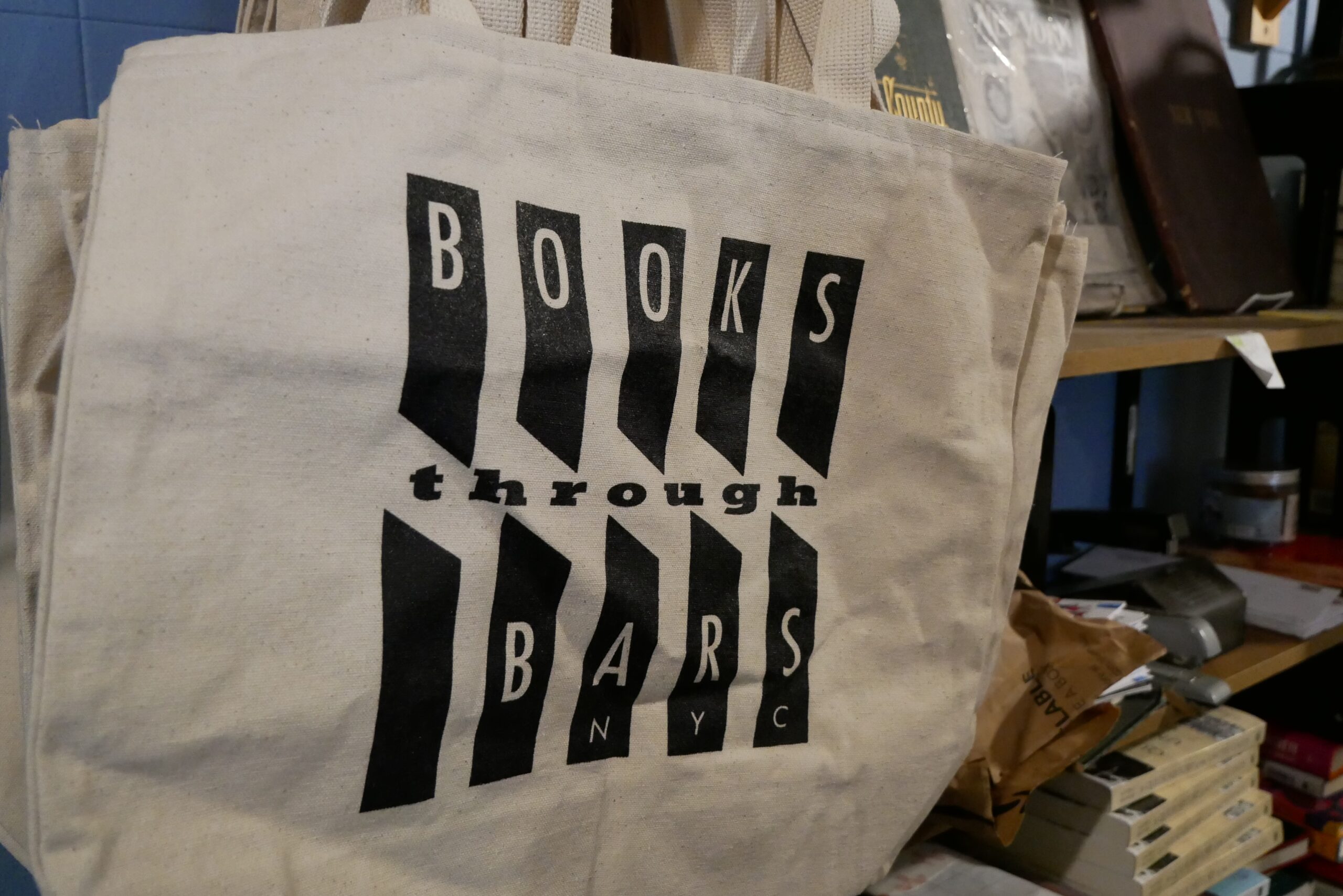
When Victoria Law helped launch NYC Books Through Bars in 1996, her goal was to send a few boxes of books to incarcerated women and juveniles in the tri-state area.
Law, a student at Brooklyn College with a keen interest in prison abolition, had seen the impact books can have in prison, watching several friends become voracious readers while incarcerated.
Then, a few adult male inmates at a Texas prison caught wind of the program and sent a letter asking for books. The team had the books and the stamps on hand, Law said, so they thought, why not?
Word spread fast. Soon, the small team of volunteers was swarmed with hundreds of letters requesting books from incarcerated individuals across the country.
“We had to figure out how to scale up really fast,” Law said. “We didn’t have a game plan as to how we’d actually form a project; we just had an idea and lots of people willing to donate books.”
Blackout Books, a small bookstore in the Lower East Side, transformed into a busy packaging and shipping hub as volunteers worked to chip away at a growing backlog of orders. Supply wasn’t an issue—donations flooded in from readers and authors alike—but money for stamps was running low. So, the team recruited more volunteers and started holding fundraisers.
Thirty years later, Books Through Bars still sends books to prisons nationwide—as many as 40,000 in a year, according to coordinator Daniel Schaffer.
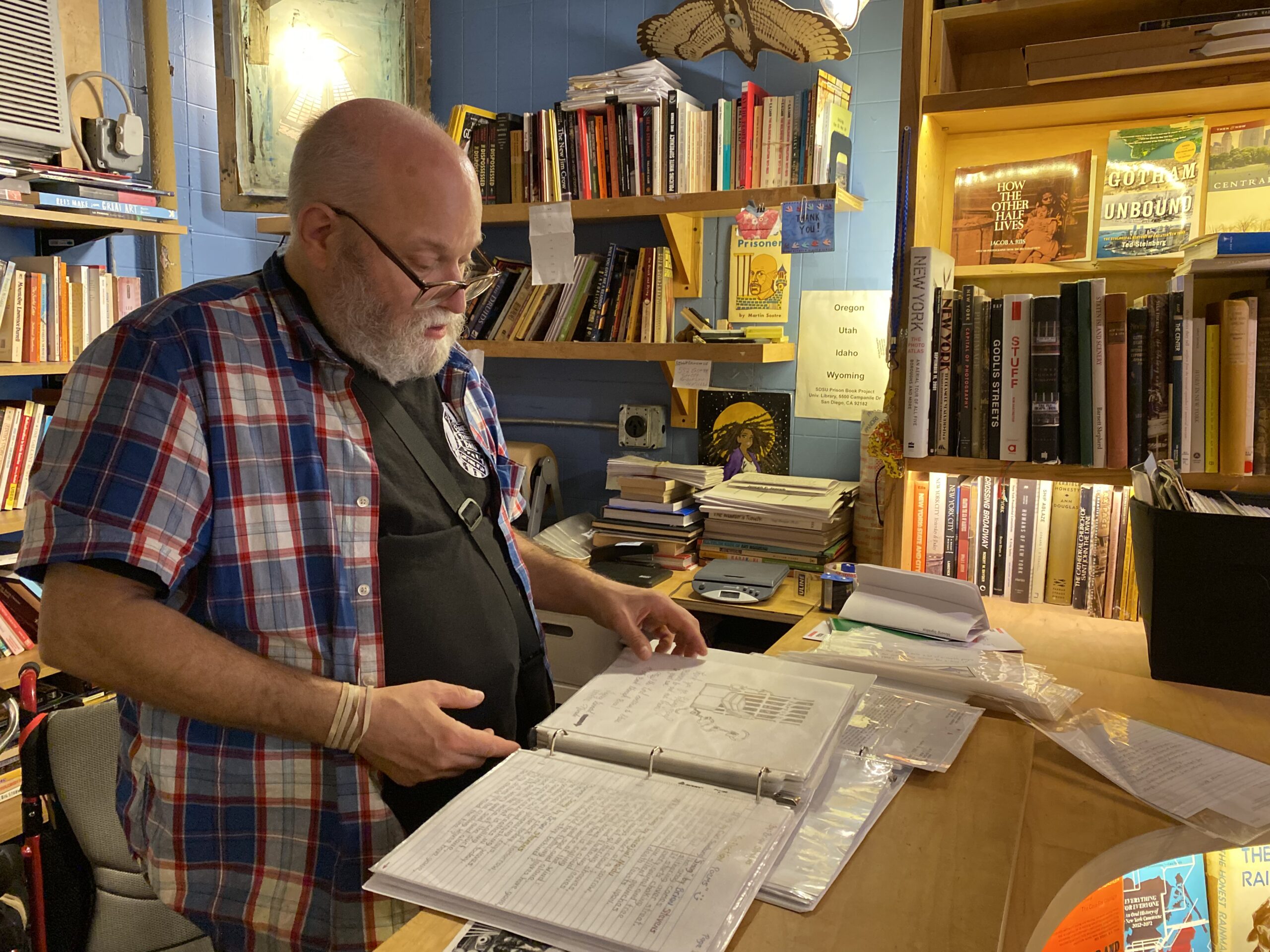
The program, which now operates out of Freebird Books on Columbia Street, receives letters from incarcerated individuals in about 30 states, Schaffer said. The letters are mostly from state prisons across the country, with about 30% of the letters coming from Texas, followed by 25% from New York, 12% from Indiana, and 10% from California.
The high demand for books in prisons isn’t surprising for Schaffer. Many don’t have libraries, he said, and in those that do, wardens often treat access as a privilege that can be revoked at any time.
In a space where personal possessions are limited, owning a book can be an empowering experience for inmates, Schaffer said.
“There are a lot of people who have no family or friends who write to them, and it’s a nice thing to get a package and say ‘This is my book,’ as compared to going to the prison library and borrowing one,” he said. “Even if it’s a momentary thing, it helps people have more self-control over their own life.”
Law recalls a particularly heart-wrenching thank-you letter she received from a death row inmate in Texas after he received his books. “You don’t know how much this means to me to get this package before I die,” she remembers him writing. By the time she read the letter, he had been dead for months.
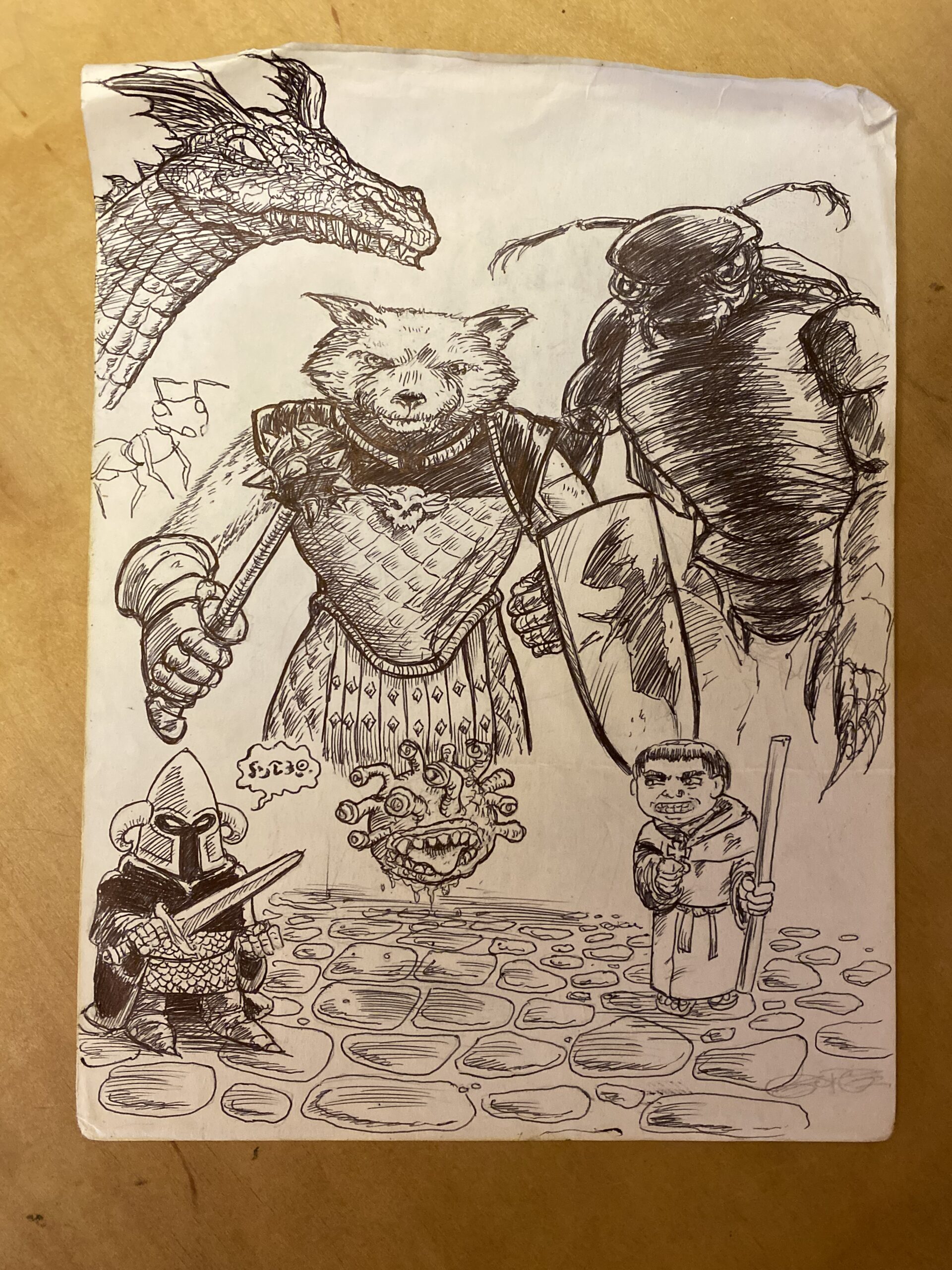
Many inmates mail original art to the volunteers as a gesture of thanks, ranging from intricate, and often comedic, sketches to pop-up cards and miniature sculptures.
Comic books are frequently requested, Schaffer said. Books on African American, Latino/Chicano, and Indigenous culture and history are also especially popular, according to Law.
“People really want to reconnect with their heritage,” she said.
The Autobiography of Malcolm X is frequently requested, and the civil rights leader’s daughter, Ilyasah Shabazz, even donated copies of it along with her own memoir, Law said.
Other recipients have told volunteers like Law that the books helped them broaden their understanding of identities different from their own.
A woman living in an Oklahoma prison requested books on HIV/AIDS so she could help dispel misconceptions on how HIV is transmitted and stop the marginalization of inmates living with it, Law said. Another female inmate in Oklahoma wrote in a letter that a book on Muslims living in the U.S. after 9/11 helped her acknowledge an internalized Islamophobia.
“It really changed the way she looked at the world,” Law said.
Books Through Bars may be decades removed from the logistical challenges that once slowed deliveries, but in recent years, it’s faced a new hurdle: prison censors.
“Across the board, we’ve seen administrations try to tighten the screws on what can come in,” Law said.
A 2023 PEN America report found that 84% of prisons surveyed require books to be purchased from a list of approved vendors, often blocking donations from nonprofits, bookstores, family and friends—up from 30% in 2015. The criteria and pathway for approval is usually not made public, the report states.
Some states—like Michigan, Kansas and, as of July, South Carolina—don’t accept books from nonprofits like Books Through Bars, Schaffer said, while other states, like Utah, Colorado and Connecticut, make donations difficult.
States like Texas are particularly hostile to books on race and gender, a trend Law said predates the Trump Administration’s anti-DEI push.
“You can get Mein Kampf but they’ll give you a hard time about things like the writings of Martin Luther King Jr.,” she said. The women’s prisons in Gatesville, Texas send back any books with lesbian themes, she added.
“We have to be really creative about what we send in,” Law said.
A newer issue is the rise of books and papers being soaked with the synthetic cannabinoid K2, or spice. This has prompted many prisons to only accept new books, which can be cost-prohibitive for nonprofits, Law said, adding that administrators have “used the spectre of fentanyl and other drugs to decrease what people can bring in.”
Law, who has authored four books highlighting issues in the justice system, is proud of how far Books Through Bars has come.
“I would not have imagined in 1996, when I was 19 and fumbling my way through this project, that it was going to last 30 years,” she said, adding that the program’s continued relevancy is bittersweet.
“It’s still a little heartbreaking that we’re still at a point where people behind bars don’t have access to books and that this project needs to exist at all,” she said.
Those interested in donating books can visit www.booksthroughbarsnyc.org to browse book wishlists. There, you can also learn how to get involved with letter reading, book packing, and fundraising events.
Community members are invited to celebrate the program’s 30th anniversary on September 13 at The Hop Shop at 121 Columbia Street.
News from the neighborhood.
Red Hook & Gowanus
Want more news and features like this straight to your inbox? Subscribe to our newsletter below.
Discover more from Red Hook Star-Revue
Subscribe to get the latest posts sent to your email.