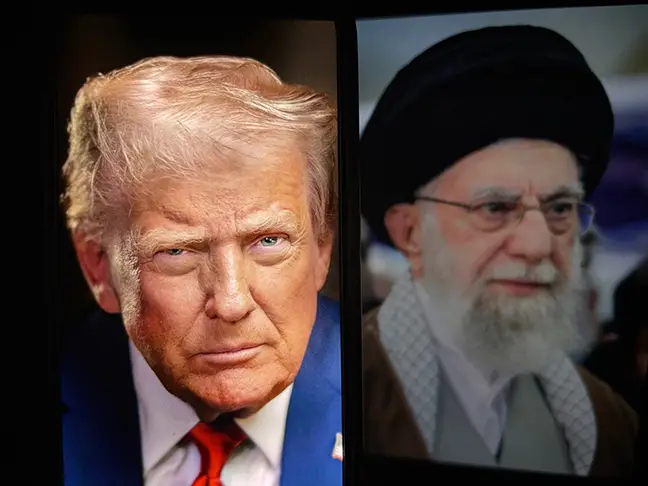
As Iran faced attack on the night of February 28th, 2026, it was disclosed that at least two European governments, Germany and Poland, were informed in advance by the US Administration. Although both governments denied any kind of consultation or agreement with the US and Israel on the military operation, the news sparked outrage among other European allies who were not notified.
Paris and Rome, notably, were blatantly ignored by Washington, although likely for different reasons. French President Macron’s foreign policy activism – recognition of Palestine, tough stance against US tariffs, military presence in the Pacific Ocean, etc. – oftentimes irritated Donald Trump, who in the latest Davos Economic Forum even mocked Macron for the glasses he was temporarily forced to wear due to illness. Rome’s exclusion, though, is more surprising.
Italian PM Meloni has nurtured a strong relationship with the US President, including giving full legitimacy to his intervention in Venezuela, which is in contrast to the official EU position. Similarly, she sent her Foreign Affairs Minister Tajani to the first meeting of his Board of Peace, notwithstanding the many concerns around a body allegedly competing with the mandate of the United Nations.
As the attack started unfolding, Italian Defense Minister Crosetto was in Dubai visiting his family on vacation. As airports closed, Crosetto got stuck in the Emirates, providing further proof of the Italian government ignorance of US intentions vis-à-vis Iran.
The embarrassment, however, was arguably bigger on the French side. France has Europe’s biggest army and navy, has territories all over the five continents and also a nuclear capacity. If Rome considers itself a medium power looking for a space among the bigger players, France considers herself to be still a great power. That is why the lack of notice about the attack will hurt in Paris more than Rome. Indeed, while Meloni has a solid national consensus, Macron’s approval rate is below 20%.
To Meloni “losing” on the Iran dossier doesn’t mean a lot, meanwhile for Macron, who increasingly relies on foreign policy to shadow his domestic failures, that slight means a blow to French national pride.
What Trump has effected, in other words, is a divide and conquer strategy, targeting the four biggest countries in Europe, France, Germany, Italy and Poland, and dividing them so that their response may vary. Call it cynical, call it genius, such a strategy is likely to work.
Author

Discover more from Red Hook Star-Revue
Subscribe to get the latest posts sent to your email.