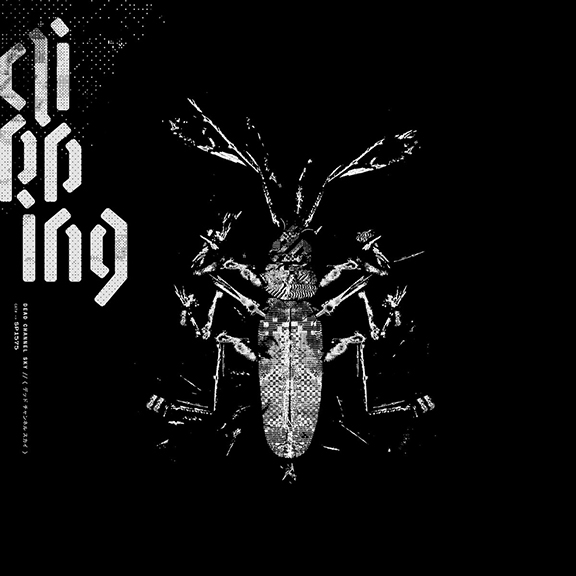
The rhythm, the rebels. The smart assault of clipping. returned last month with a full-on assault. Dead Channel Sky is the hip-hop crew’s first album in five years (CD, LP, download on Sub Pop Records) and only their fifth full-length since their 2014 debut. It was worth the wait. After a quick intro that fills the table with topics in less than a minute, the album goes bold with “Dominator,” staking claim to intelligent rap with a Public Enemy reference: “Once again, back is the incredible / Guess the feeling wasn’t indelible / Masticated up all the edibles / Still ain’t trippin’.” They bring the 21st century noise, bridging the PE onslaught with the more current digital punk of Britain’s Benefits (who seem to be giving way to dancefloor textures with their new album anyway) and Daveed Diggs’s taut, rat-a-tat bravado, treating cyber-fluency like street smarts: “What’s a disease if you aren’t sick? / Consciousness in a memory stick / And that means that you can / Plug it in and feel what they believe / Drive it harder till you know them you will never be relieved / In this moment at your fingertips is everything you need.” That flows direct into the lead single “Change the Channel,” which quickly lays waste to everything the Dominator holds sacred (and has a killer video to boot), imploring us to take possession of our intake of information.
A lot has happened at that point and we’re less than six minutes in. The whole album isn’t breakneck like that, there’s some pulled back tempos and sci-fi sound interludes, but clipping. has hit us with a 1-2 so hard that there’s no time to wonder if they’re the right channel of information and thought or not. It’s a good bit of Orwellian trickery, stitching fear and reassurance into a single knot. A handful of guests provide some breathing room: rapper Aesop Rock, actress Tia Nomore and the duo Cartel Madras give added voice; guitarist Nels Cline and laptop ensemble Bitpanic provide supplemental sonics. Dead Channel Sky is current and cutting, despite the comparison above to Public Enemy, or even KRS-1 with the emphasis on bare beats and vocals. The album feels as important as those early voices in conscious hip hop, made all the more enlightened by the vague promise, damning indictment and bright musicality of “Ask What Happened,” the epic final track.
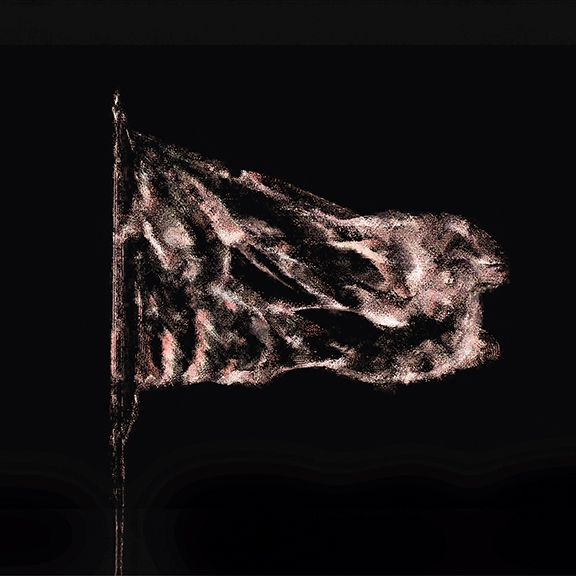
What makes clipping. great is the precision, their clarity and directness. Those are qualities shared by Use Knife, whose second full-length, État Coupable (LP and download out last month on Viernulvier Records), blends Iraqi tradition with electronics and heavy beats. At center is singer and percussionist Saif Al-Qaissy, who launched the group in 2022 with Belgians Stef Heeren (saxophones and electronics) and Kwinten Mordijck (synths and beats).
The état coupable in question is a culpable state but the focus is living under one, bearing the brunt of institutionalized injustice, but not doing so alone. Heeren and Mordijck both contribute vocals, giving a sense of community, other voices appear as apparitions. The brief and haunting “A Reckoning” is built almost entirely from looped Arabic voices, fading like dissolving spirits, one after another. The 10-minute title track is delivered in English and in angry desperation: “Hey, we’re all here / Out here in the open / All eyes on us / How on earth did we get to this point?” The tension relents only a little with beautiful buzuq figures (played by Radwan Ghazi Moumneh of the Beirut/Montreal band Jerusalem in My Heart) laid over an anxious electronic soundbed.
That dissertation comes near the end of a propulsive album about imploding societies. État Coupable reaches its a conclusion with “Che Mali Wali,” perfectly blending acoustic percussion, noisy electronic rhythms and disembodied voices into a pulsating paranoia. Like Dead Channel Sky, it ends on what might be a hopeful note, or at least it seems to be looking for one. The masterful blend, and the front-and-center sonics throughout the 40 minutes, come thanks to Egyptian-born, Brooklyn-based engineer Heba Kadry, who has recorded Big | Brave, Björk and Mdou Moctar and worked on recent reissues of John Cale, Garbage and Ryuchi Sakamoto albums.
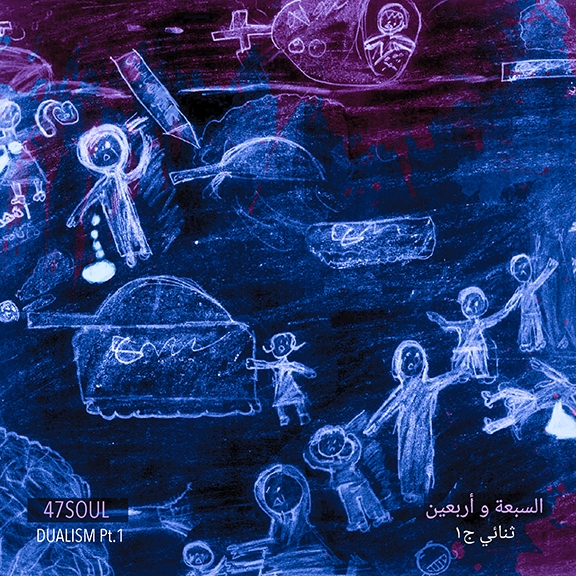
After the Use Knife immersion, 47SOUL’s East/West blend feels a bit more bifurcated. The raps (in English) and Palestinian shamstep stylings on Dualism Pt. 1—which will release to streaming platforms May 2 via Cooking Vinyl—adhere more closely to Western standards, but the verses, sung in sloping Arabic melisma, cry to a sense of place. Even with the cultural blending, the three songs in a dozen minutes don’t contain many musical surprises; the momentum is in the messaging. The memorialize children in Gaza, tracks pay tribute to the people working to document the ongoing occupation and horrors and address the structures of power. 47Soul formed in Jordan in 2013, but Dualism Pt. 1 is only their fourth release. The title gives promise to a fifth, which is to be more about resistance and resilience.
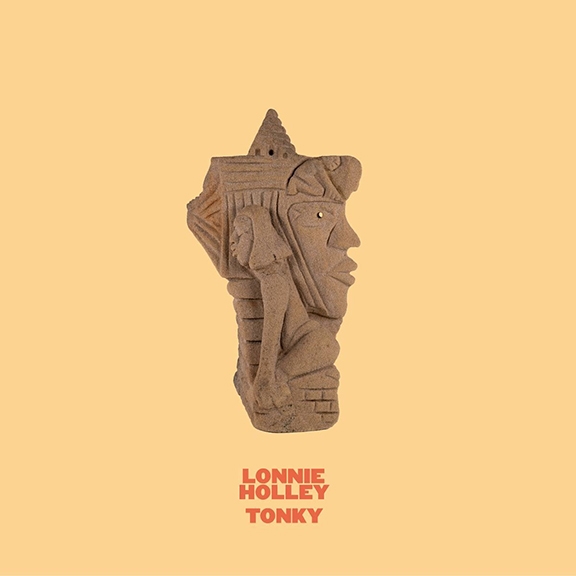
The singer, sculptor, painter and sage Lonny Holley might not quite fit into the hip-hop mold, but he’s not too far off: The words are the point and he speaks from the heart. He’s often called an “outsider artist,” but if that’s what he is, he’s on the outside looking in. As a result, insiders have had trouble packaging him and putting him on store shelves. His first two records—Just Before Music (2012) and Keeping a Record of It (2013), both on Dust-to-Digital—have remained his best because they were him alone with his keyboard, speaking truth over preset rhythms and chordal progressions employed like a shruti box. The four albums since have unwisely risked overshadowing his poetic insights with overproduction and guest musicians.
Tonky (CD, LP and download out last month on Jagjaguwar) isn’t a return to form but in the hands of producer and primary instrumentalist Jacknife Lee it’s a respect for form. Lee’s production credits include U2, REM, Bloc Party and Taylor Swift, but he doesn’t try to blow Holley up into something he isn’t. There’s horns and strings, there’s multiple guest singers and players (including Isaac Brock, Budgie, Angel Bat Dawid, Alabaster DePlume, Jessica Hoop, Mary Lattimore, Open Mike Eagle, and Saul Williams), but they’re all there in service to the project, and the project is Holley’s ability to look deep into the void and pull from it deep truths.
The album opens with a call-back to his 2018 “I Work Up in a Fucked-Up America,” the closest Holley has come to a hit. Over the course of nine minutes, Holley lays out how his 75 years as a Black man in this country led him to write such a song. It’s a heartbreaking adjudication. Near the other end of the album’s 14 tracks is another piece of self-reflection, complete with a small chorus. “That’s Not Art, That’s Not Music” assumes the voice of his critics, rejecting his work, rejecting him, as he stands “emotionally hurt, physically deserted.” But for the most part, Holley preaches love, respect and overcoming fear and hardship. It is art, of course, it is music. It’s also a sermon. It’s wisdom. The ones who reject it, sadly, might be the ones who most need it.
Discover more from Red Hook Star-Revue
Subscribe to get the latest posts sent to your email.


One Comment
Pingback: MUSIC: Wiggly Air, by Kurt Gottschalk - Red Hook Star-Revue - Hit Makers Radio