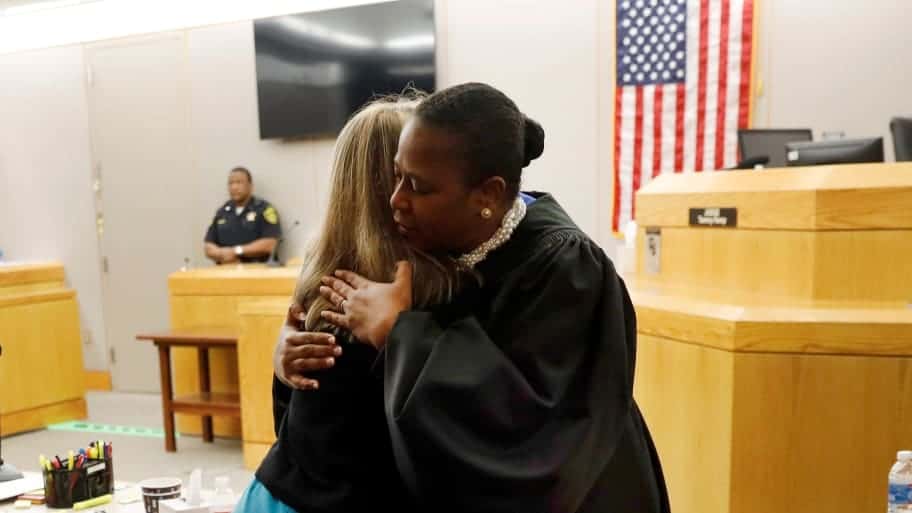
The legacy of harsh punishment and imprisonment of black people gives context to the outrage over the hugging of convicted murderer Amber Guyger, by Judge Tammy Kemp.
Amber Guyer is the Dallas police officer who entered Botham Jean’s apartment, one floor above her apartment, and shot and killed him, believing that he was an intruder in what she thought was her own home. This was while he was famously on his own couch eating ice cream.
The initial outrage over the incident stems from the ongoing frustrations of the black community regarding racial injustice, and the nearly unbelievable spectacle of the case.
It’s hard to imagine a reversed scenario in which a black man could mistakenly enter an unarmed white woman’s home, shoot twice, kill her and not be arrested immediately. Botham, an accountant of St. Lucian descent, is, unfortunately, one of the more tragic outcomes of the “while black” scenarios: barbecuing while black, selling lemonade while black and the well-known, driving while black to name a few. Society says to be suspicious of black people, even in spaces they (black folks) call home.
In 2009 in a less tragic situation, famed professor Henry Louis Gates, Jr. was arrested in his own home, for nothing other than a neighbor finding his presence suspicious. It was yet another“while black” incident that exposed the racial divisions in this country. A then-president Obama responded to the event, by having a meeting with both the arresting officer and Gates. In essence, being found suspicious while in your own home, “while black” isn’t new. However, to be shot and killed for simply being at home is devastating.
On September 23, 2019, the trial began and a profile of Guyger was forming. Text messages revealed a young police officer who seemed to regularly make, at the very least, racially insensitive comments about black people with her friends and co-worker and mentor, Officer Martin Rivera. Adding to her profile was the ongoing sexual relationship between Guyger and her married partner, Officer Rivera–himself tied to a 2007 case were he fatally shot an unarmed 20-year-old, Brandon Washington, over an alleged stolen candy bar.
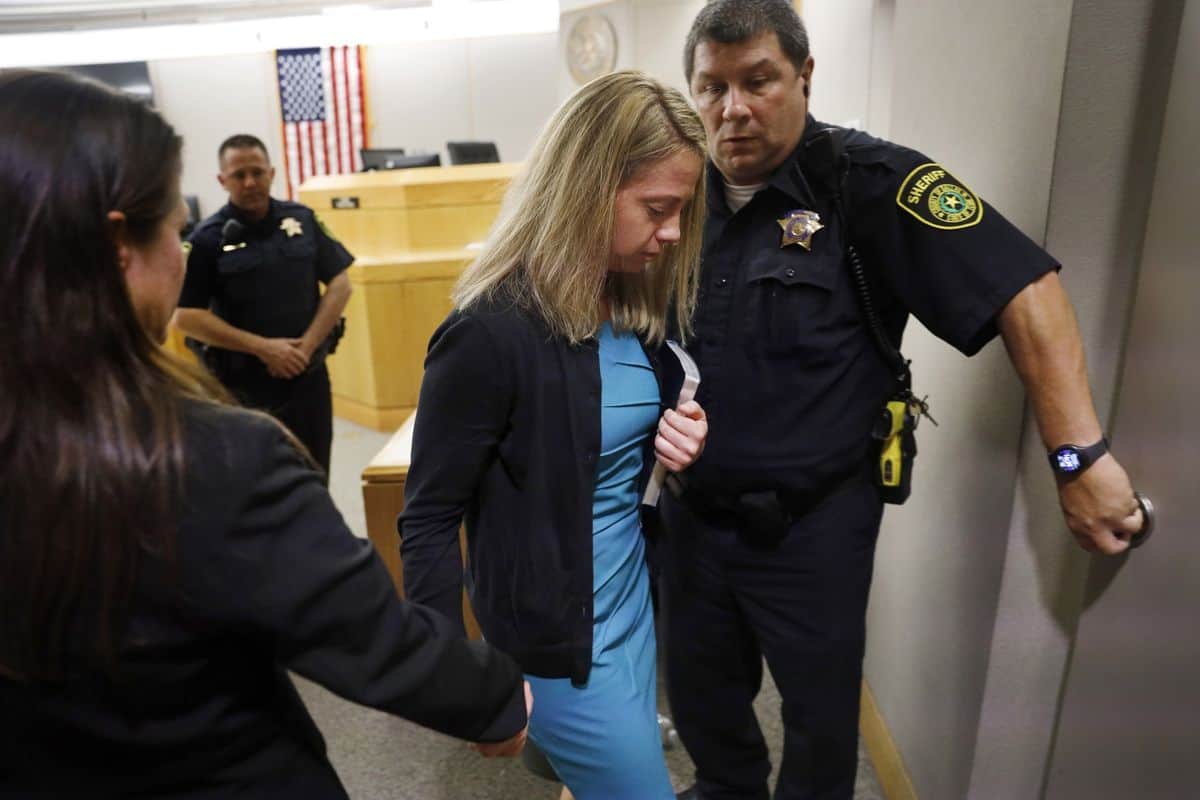
The trial was a peek into the lives of some officers, a world of god-complexes and missing empathy. On the day of sentencing, facing jail time on a murder charge for the killing of Botham Jean, Amber Guyger was given a 10 year sentence. Botham’s 18-year-old brother, Brandt Jean,took the stand to give his impact statement. The relatively composed teenager introduced sentiments of forgiveness and mercy, citing his (and his brother’s) Christian faith saying,“I’m not going to say I hope you rot in jail. I know I can speak for myself, I forgive you, I don’t wish anything bad for you,” before requesting to hug Guyger.
While this moment can understandably be interpreted as a powerful allegory, it’s symbolic of how religion has been used as a numbing agent for black pain: constantly having to look past trauma and give it to Jesus. As Amber Guyger and Brandt Jean approached each other, her arms stretched upward and around his neck, reminiscent of someone hugging their prom date.The scene was as uncomfortable as it was potentially inspiring. The cringe-worthiness of the WWJD (what would Jesus do) antics didn’t stop there. The presiding Judge, Tammy Kemp, then proceeded to give Guyger a hug as well and a bible. I have little to no criticism of the brother:grief is complex–there is no antidote for loss. However, Judge Kemp should have kept her arms to herself. The optics of Guyger, a white woman, receiving so much affection after murdering an innocent man was a vividly disturbing reminder of how society responds to white female fragility. The hug was unnecessary.
The definition of forgiveness is“to cease to feel resentment against (an offender).”Forgiveness isn’t the removal and replacement of anger and sadness with good feelings. Forgiveness doesn’t require that you be a model of positivity. Guyger received a 10-year sentence, a slap on the wrist to some, and will be eligible for parole in 5 years. The case has spawned a renewed interest in the 2007 killing of Brandon Washington, by her former partner Officer Martin Rivera. Most recently, the suspicious death of a key witness, Joshua Brown, has raised eyebrows. Brown,Botham Jean’s neighbor, apparently feared for his safety when coming forward to speak openly during the trial. The case seems to be more complex than what is currently understood. Amber Guyger is the first Dallas police officer to be convicted of murder in 46 years.
Discover more from Red Hook Star-Revue
Subscribe to get the latest posts sent to your email.