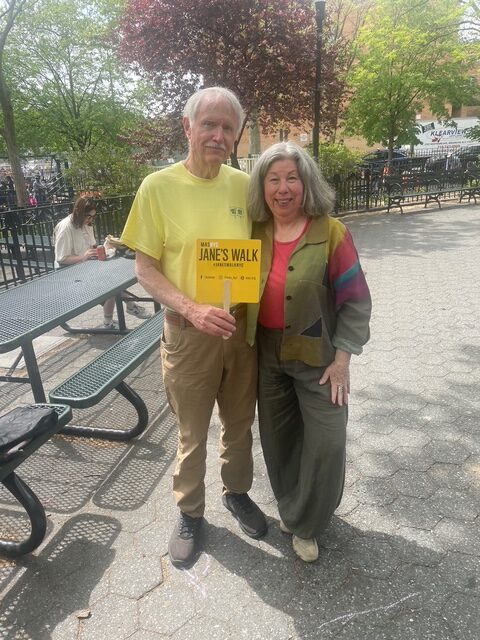
I attended the Cobble Hill Jane’s Walk on a most beautiful May 2, led by volunteers Susan Dresner and Strephen Wing. This is a yearly chance to learn some in-depth history of a neighborhood, and in this particular case, Dresner’s go-to places for food.
We met early that Friday near the Bergen Street subway station. Dresner began by explaining that the area was initially inhabited by Canarsee Native Americans in the 1630s, before Europeans settled in the neighborhood. By 1810, there were approximately 4,000 people and 400 houses. That number increased dramatically with the start of ferry service to Manhattan in the 1830s.
“Cobble Hill is one of the few neighborhoods that kept its 19th-century character,” Dresner said. It became NYC’s second landmarked neighborhood in 1969.
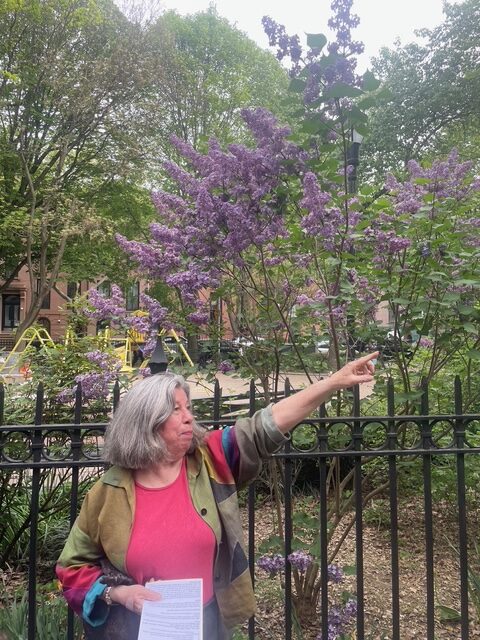
We walked down Warren Street and saw many well preserved buildings. Some of them were brick and others were brownstone. Dresner explained that churches and synagogues played a big role in helping people as many people without much money moved into the neighborhood.
We walked into Cobble Hill Park which was filled with people and dogs enjoying the nice weather.
Developers once wanted to turn the area of the park into a massive supermarket but the Cobble Hill Association, which was founded in 1958, fought against that plan and won. However, developers then tried to turn the area into a big apartment complex and once again the Cobble Hill Association fought it and won, finally cleared the way for the area to become a park in 1965. It is one of New York City’s first vest pocket parks.
We admired the architecture on Verandah Place and Wing explained that the star-shaped structures on the outside of some buildings were actually beams holding the buildings together. I’ve seen them on many buildings throughout Cobble Hill and Red Hook but never knew that.
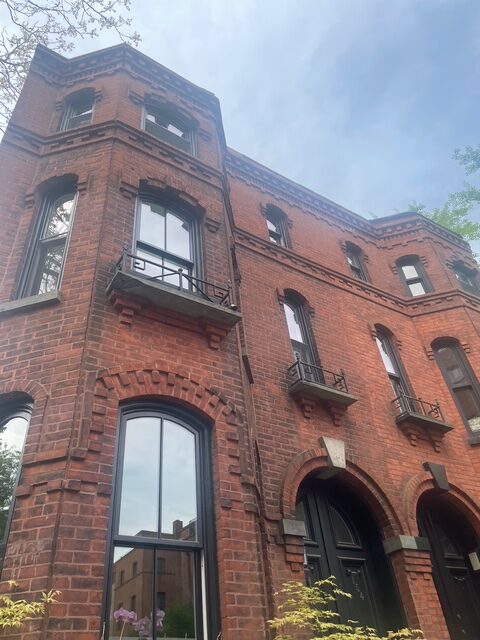
We admired the Tower and Home Buildings on Warren Street between Hicks Street and Henry Street Alfred Tredway White, known as “Brooklyn’s first citizen,” built them in the 1870s. In addition to their beautiful architecture, he changed $1.93 per week as rent and had to be collected from 7-10 pm on Saturday nights. The timing was intended to make sure the tenants didn’t go out drinking. They also weren’t allowed to have alcohol in the buildings. Now, the apartments go for millions of dollars.
We walked down Hicks Street above the BQE and learned about how Robert Moses’ decisions decades ago shaped New York City today.
I learned that Kane Street used to be called Harrison Street and admired Street Paul’s Episcopal Church at 199 Carroll and Kane Street Synagogue at 236. Both were built in the 1800s. We also admired some of the community gardens we passed along the way.
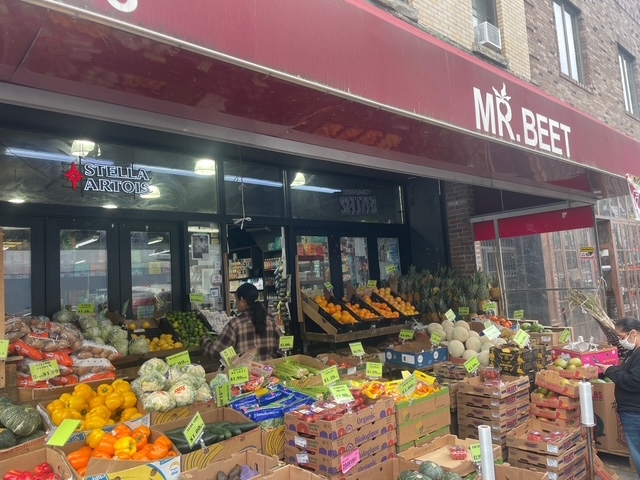
We then stopped by places to get food, including Poppy’s at 243 Degraw, Brooklyn Farmacy & Soda Fountain at 513 Henry, Dolce Brooklyn at 204 Sackett, Mozz Lab at 502 Henry, Mazzola Bakery at 192 Union, and Monteleone’s Bakery & Cafe at 355 Court Street We got to sample fresh mozzarella at Mozz Lab and Mazzola’s lard bread. Afterward, we finished our walk in Carroll Park.
Jane’s Walk is named after the urban activist and writer Jane Jacobs who believed in a walkable city.
The initial event took place in Toronto in 2007 but there are now Jane’s Walks in hundreds of cities all over the world. The walks coincide with Jacobs’ birthday which is May 4 and are coordinated by the Municipal Art Society.
Discover more from Red Hook Star-Revue
Subscribe to get the latest posts sent to your email.