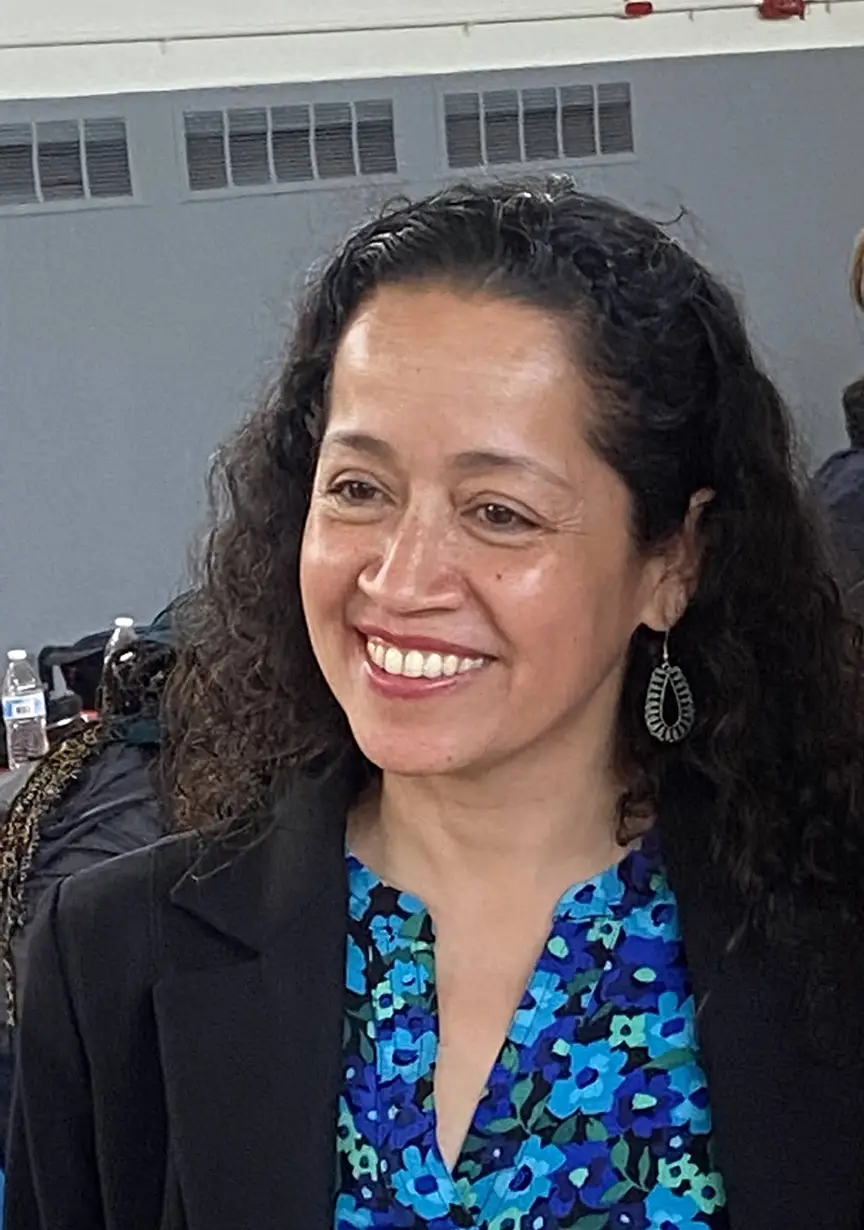
District 38 Council Member Alexa Avilés knows how hard the Trump administration’s immigration policy is hitting Red Hook.
Avilés, who is Chair of the Immigration Committee, says that community providers have noted drops in undocumented people accessing services and a lot of talk about moving away.
People do not feel safe, according to Avilés.
“There’s unfortunately an enormous amount of vitriol and scapegoating,” she says. “The mayor himself has scapegoated new arrivals on just about any issue with funding. So, it’s created a lot of tensions and challenges amongst community members.”
New York City is a sanctuary city, meaning it has a collection of laws in place to limit sharing information about undocumented residents with federal immigration authorities, like ICE. However, Mayor Adams has floated the idea of changing or removing some of these laws.
Avilés is hoping he rethinks this.
“These are tried and tested public safety laws for immigrants and for all New Yorkers,” she said.
“Adams has been relatively consistent around making proclamations around finding workarounds. So, it’s just really unclear, and really signals hypocrisy and is keeping communities really on edge around who to trust.”
“One thing is for sure,” Avilés clarified. “If Adams tries to change the law with a legislative body, we will not allow it. So, his options are potentially executive orders and/or telling his agencies to do otherwise. The problem with many of his proclamations is they create contradictions and sometimes signal to part of the workforce, like NYPD, that they can do what they want.”
With the increased threat of deportation, it is more important than ever to make sure undocumented residents are safe in Brooklyn, according to Avilés.
Providing support
She called “connecting with undocumented neighbors” the “first and foremost” way to help out. She explained that community building is one of the best ways to provide support:
“Reaching out to your neighbor, checking in on them, letting them know that that you stand with them,” she said. “People feel isolated and are incredibly vulnerable if they don’t have social networks. Red Hook has so many amazing examples of how to welcome new arrivals and folks who are challenged, like Red Hook Mutual Aid. The work that they’ve been doing is a perfect example of how neighbors can help each other.”
Red Hook Mutual Aid (RHMA) has been serving residents of Red Hook regardless of immigration status since 2020. Since President Trump’s reelection, they’ve been hard at work making sure undocumented Brooklynites have the support they need to protect against ICE.
Louise Bauso – one of RHMA’s founders and its lead organizer – sees mutual aid as a “desegregation effort.”
In Red Hook, she explained, “there’s hardly any spaces where there’s crossover between residents of public housing and residents of private housing. There’s very few places where these two communities intermix, and they’re very divided by race, by class.”
Through programs like homebound deliveries, RHMA provides material support and community to those in need. With many of their community members, they use a “buddy system” to match someone who needs something – like an elderly resident – with someone who wants to help them out and get to know them.
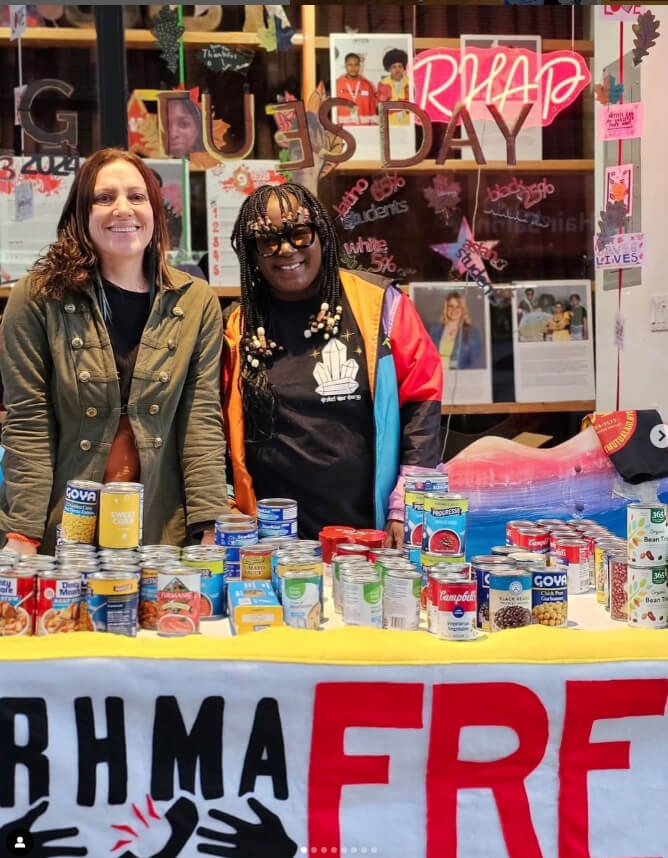
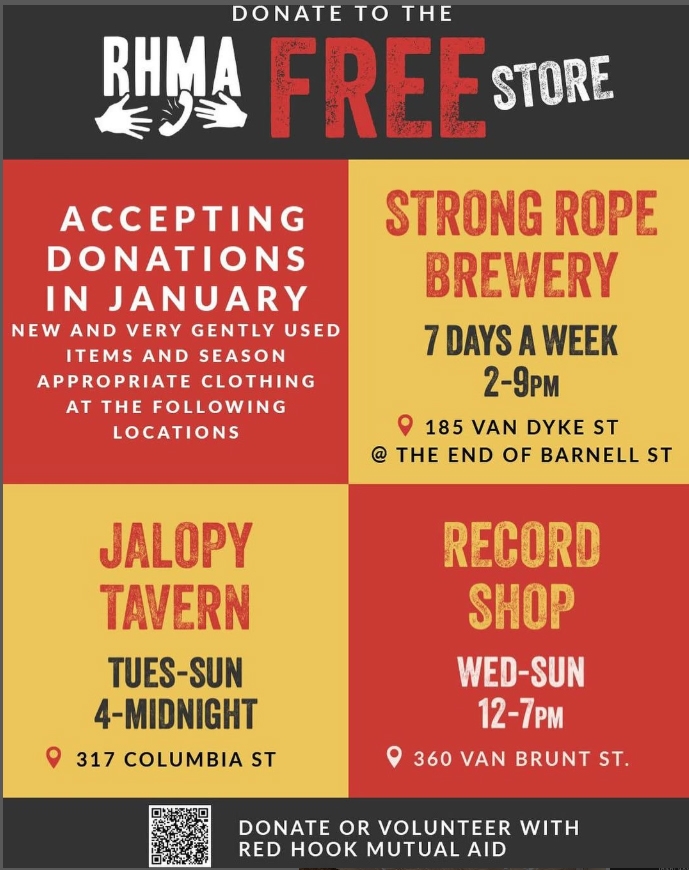
For the migrant community, in addition to resource sharing, RHMA provides court accompaniment, English classes, and a multi-language phone line. Charity-based assistance is also provided through RHMA’s “free stores” and community fridge.
Instead of following the “buddy system” format, they have found it makes more sense to help the migrant community by hosting a WhatsApp group with Spanish speaking residents in the area they serve. This format allows migrants to ask for needed items (like strollers), other residents to offer them, and for everyone in the community to share information.
“It’s a series of smaller groups based on language,” Bauso explained. “We’ll blast an announcement of a resource in English, like, ‘this is what you say when you’re interacting with authorities.’ And then the moderators in all of the smaller language groups will translate the information into the native language for their group. So, it’s sort of like a phone tree.”
While the “buddy system” isn’t RHMA’s go-to when working with migrants, it sometimes rises out of the other work they do. Bauso described one family RHMA works with. Because of their son’s kidney failure, “the food that they were being served just didn’t work for him. We started with a formal meal train and now it is a buddy system. We shared the phone number with a community member that drops off food. We did Christmas presents. Everybody could say what they wanted to get their kids for Christmas and the community bought all the presents and we delivered them on Christmas morning.”
When it comes to undocumented residents, RHMA’s reach spans beyond Red Hook. As Bauso explained, “They’re constantly forced to change shelters. They’re not allowed to really integrate into any one community. So, anyone who reaches out to us can theoretically be part of our community.”
RHMA doesn’t currently have the funds to help everyone financially – but where they can’t help with money, they help in other ways, like hosting free stores and teaching English classes at Red Hook Art Project and New Brown Church.
“Once [residents are] in the community for whatever it is – whether they’re volunteering or shopping at a free store or going to English class – we consider them part of the community and do a little more based on their needs,” said Bauso.
Getting ready for Trump
In preparation for the Trump administration’s crackdown on undocumented community members, RHMA has been hard at work helping migrants find housing and pay for lawyers.
Because the vast majority of those without an attorney in immigration court are deported, “right now, the best thing is to have a lawyer,” Avilés said.
In December, RHMA hosted a Know Your Rights training, which teaches constitutional rights and how to assert them. They’ve also been helping with ICE watch – keeping a lookout for officers outside shelters – and distributing Red Cards, which provide instructions for asserting one’s rights to ICE agents.
“Be the upstander,” Avilés encouraged. “Engaging compassion, and being an upstander when you see something. If you see an actual ICE interaction, you can safely record it.”
As for how Brooklyn residents can help out undocumented neighbors throughout the Trump administration, Bauso emphasized participating in ICE watch and accompaniment to court hearings.
“Myself and others in the Red Hook Mutual Aid group have taken on guardianship at family court for unaccompanied minors, which is a path to citizenship outside of the asylum process,” Bauso explained.
As a high school teacher, Bauso sees the destructive impacts of Trump’s immigration policies in all aspects of her work life. Her and her fellow teachers have worked to come up with emergency response plans to protect undocumented students in the event of ICE visiting their school.
“Sanctuary policies are public safety instruments,” Avilés explained. “Not having immigrants who can confide, can participate in, and have some kind of trust with public agencies and institutions is a very costly endeavor. It means that people won’t connect around being victims of crime or actually witnessing crime. It means that labor exploitation can become rampant because people are too fearful to report. It means domestic violence: survivors potentially can’t get connected to resources or children get pulled out of school. So, the costs of not having these policies are quite significant.”
Avilés additionally cited a recent Fiscal Policy Institute study which showed devastating economic consequences to NYC – and the USA at large – if mass deportation attempts were to be successful.
“In New York State, undocumented people actually pay more taxes than the top ten percent,” she said. “And they’re paying Social Security taxes in a system that they may potentially never see any benefit from.”
“It’s a moral argument, it’s an economic argument, it’s our legacy as a city,” Avilés said. “And we must do better.”
If you need support or would like to provide it, visit Red Hook Mutual Aid’s website at
linktr.ee/redhookmutualaid. They are currently looking for somewhere to host their community refrigerator. If you or someone you know can host a fridge, RHMA will stock and maintain it.
The best way to get in touch with RHMA to receive or provide support is through calling or texting their phone number – (646)484-9677 – through text or WhatsApp. This phone number is available to text in any language. They are also available at [email protected] or on social media.
The Red Hook Community Justice Center did not respond in time to comment.
Author
Discover more from Red Hook Star-Revue
Subscribe to get the latest posts sent to your email.