There isn’t a human life on earth that hasn’t been affected by the coronavirus pandemic. For the first time in human history, there’s no other place to which we can escape. Here in New York City, many of us are quarantined at home.
The nesting instinct isn’t natural this time of year when, through our dirty winter windows, we can faintly hear the birds’ songs, and maybe catch glimpses of daffodils and forsythia, that particular green-yellow that only shows up in early spring.
Inside, we scrub down surfaces. We check the news and wipe our phones on our shirts. We wash and wash our hands. The fantasy of spending endless hours immobilized on the couch binge-watching Netflix series is a bitter reality when the allotted time has no endcap. Already, some people are ready to climb walls.
The way out is in. Why not try the humble, timeless pleasure of losing yourself in a good book?
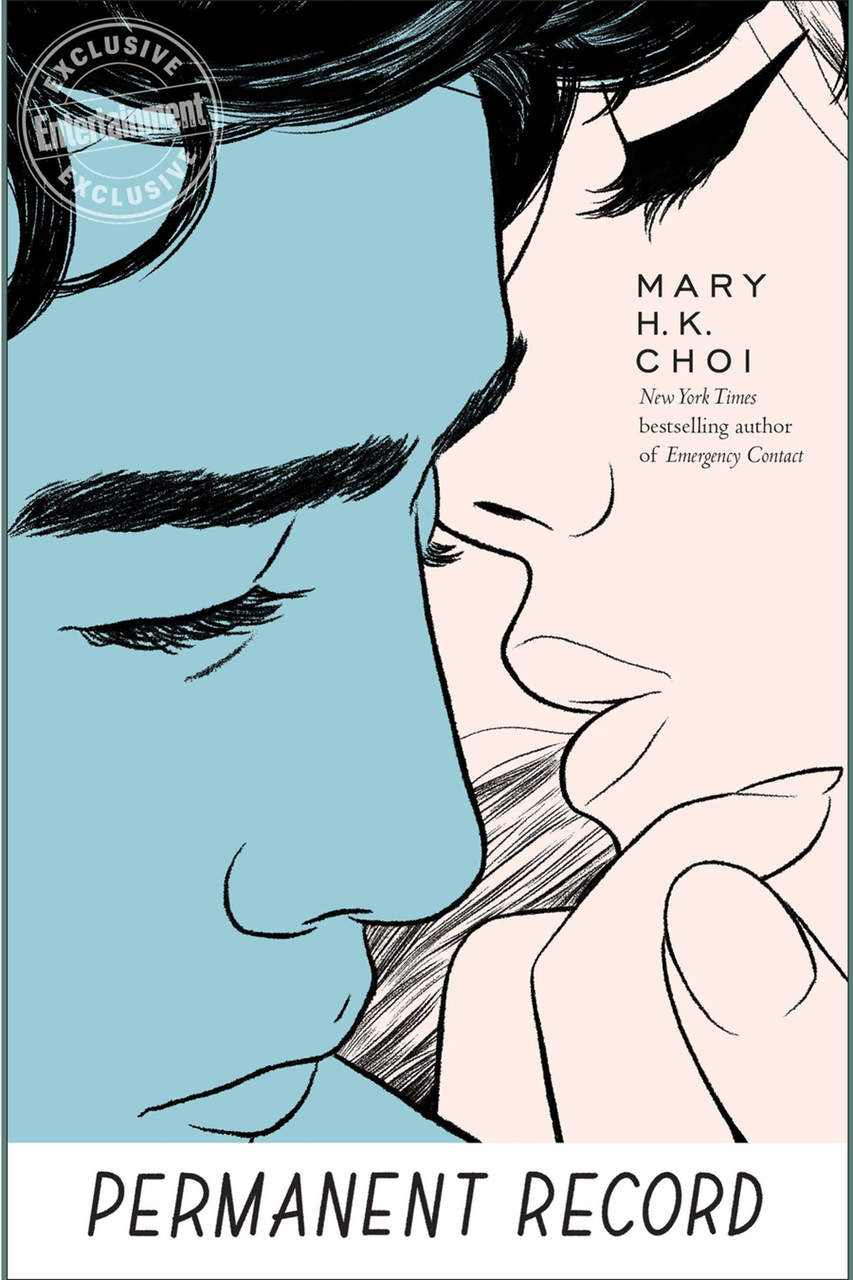
Permanent Record, by Mary H.K. Choi (New York Times bestselling author of Emergency Contact), is a story about young adults written for young adults, yet its memorable characters and excellent storytelling deserve a much larger audience (adult readers, I’m looking at you). I was drawn to the book for the simplest, most obvious reason. It has the most incredible graphic, comic book-style cover I’ve ever seen, a clear dust jacket with blue and white artwork by an artist who goes by the name ohgigue.
The novel’s protagonist and narrator, Pablo Neruda (“after the Chilean poet”) “Pab” Rind, is a college dropout working overnight shifts at a Korean-owned Brooklyn health store. “Not. A. Bodega,” Pab insists. Pab has a quick, easy wit that masks his insecurity about his lot in life. He has “unequivocally zero idea what the hell to pursue,” a state of uncertainty which fuels and is fueled by frequent bouts of crippling anxiety. “Honestly, it scares me the way I end up living out the aftermath of decisions I don’t remember making,” Pab confesses.
Pab’s parents are separated. He can’t live up to the expectations of his uptight, Korean, anesthesiologist mother – “‘You can’t be good. You have to be exceptional,’” she tells him – and is too embarrassed and inhibited to follow the example of his free-spirited Pakistani father, an aspiring playwright whom Pab writes off as “a total ABCD. American-born confused desi.” Pab also has a little brother, Rain (named after the Bohemian-Austrian poet, Rainer Maria Rilke), who’s 13, musically talented, and already something of a ladies man.
Pab lives in a tiny, crowded apartment with three roommates and one of their girlfriends. When the actor among them lands a regular role on a popular series, Pab can’t help but spoil the news, a reaction that might as well have a soundtrack by Morrissey: “We Hate It When Our Friends Become Successful.”
The secret Pab hides from everyone is a dresser drawer stuffed with unopened bills stemming from the huge debts he’s amassed from both credit cards and student loans. Like many young people of his generation, Pab constantly scrolls though his phone, “convinced that the next video in the autoplay is the answer. That it’ll be the antidote to my entire life.”
Pab is alternately depressed by his existence and cheered by the certainty that it’s temporary. Sliding into a pair of bootleg brand fuzzy slippers for his shift at work, noticing a hole in his sock, Pab reflects, “When I’m successful and rich, these are the details of the biopic I’ll have to remember to include for color and relatability.” Groomed by our culture to be an American success story, he can overlook what are surely temporary hardships, certain he’s destined for something great.
That something great rushes into the store in the dead of night on two legs with Bambi eyes. Woefully underdressed for the cold, this mystery woman is watched by Pab on the store’s camera monitors. He delights in seeing her stalk the snack aisle. When she finally approaches the register, they bond over their love for junk food. Here Pab’s passion and knowledge give him a chance to shine in this beautiful girl’s eyes. It’s only when it comes time to pay – when she produces a Black Amex card – that Pab realizes who she is: the former-Disney-child-actress-turned-pop-star, Leanna Smart. That name becomes something like Cinderella’s slipper Pab is left holding after she slips off into the night.
Permanent Record is a love story, but it manifests itself not just between these characters, but first between Pab and his idea of who this woman is. He sees her face in posters while walking down the street. He hears her music out of a passing car (“I straighten up and walk normal style as if she can see me”). She stares at him from the pages of a perfume ad while he lies in bed with a different woman. Of course he falls into an Internet hole, Googling the hell out of her, but the more he learns, the farther away she seems to be.
What makes Permanent Record exceptional is that it expands the idea of what a love story should and could be. It shows all the ways love can show up in relationships: between Pab and his brother, Pab and each of his parents, Pab and his roommates, Pab and his employers. And it shows the way private, inexplicably meaningful moments are the ones that tend to register. In one such instance, Pab seems to take himself aside: “Will myself to record this. Log it for keeps.” The title might refer to the way our past continues to haunt us, or to the indelible mark a relationship leaves on us, the story we’ll then carry with us.
Choi has done a remarkable job creating a fully realized world with complex characters whose relationships are infused with deep, recognizable feelings. Pab admits, “It is honestly so terrifying – so intolerably humiliating – to want anything and to declare it.” Here Choi has staked her claim as a masterful storyteller. And in these sorrowful times, we need stories more than ever: to help us make sense of what’s happening, and to help us escape from it.
Author

Discover more from Red Hook Star-Revue
Subscribe to get the latest posts sent to your email.