Red Hook may be a small seaside village in Brooklyn, but thanks to local art institutions like Pioneer Works and DE-CONSTRUKT, it’s easy to catch painters, sculptors, and writers from around the world on Van Brunt Street. Founded in 1994, apexart is a nonprofit gallery in Tribeca, but Abbie Hebein, its Director of Fellowships and Public Programs, lives in Red Hook, and she also likes to bring visiting artists to the neighborhood.
Based on recommendations from previous fellows and other trusted sources around the globe, apexart provides 13 artist fellowships a year: eight for international artists who come to New York City, and five for New Yorkers to go abroad. The program operates differently than a typical artist residency, however: specifically, it prohibits the artists from creating art for the duration of their stay.
“It is essential that they are not producing work or making art, promoting themselves or their practice,” Hebein clarified. “The goal is to encourage fellows to expand their comfort zone outside of their arts practice and encounter challenges, self-reflect, become bored, stimulated, overwhelmed and inspired in new ways.”
Hebein curates a month-long schedule of “non-art activities” for apexart’s fellows. An average day includes three or four obligations – performances, workshops, and other opportunities for “cultural immersion.”
On a Friday morning in February, I met Dhrubo Jyoti, an Indian journalist, at the Columbia Street Farm near IKEA. Jyoti had arrived from New Delhi about a week earlier, and apexart had installed them in an apartment in Manhattan. Already they had attended Black History Month events at the Weeksville Heritage Center in Crown Heights and a lecture at the National Museum of Mathematics. They had also distributed vegetables at a foodbank in the Bronx.
According to Jyoti’s official biography, they write “narrative non-fiction” that explores “the links between caste and desire, especially queerness,” in South Asia. In person, they described themselves as a reporter who, until their current sabbatical, covered elections for the Hindustan Times, and they denied being an artist at all.
In that case, how did Jyoti end up an apexart fellow? “I don’t know,” they replied with a smile.
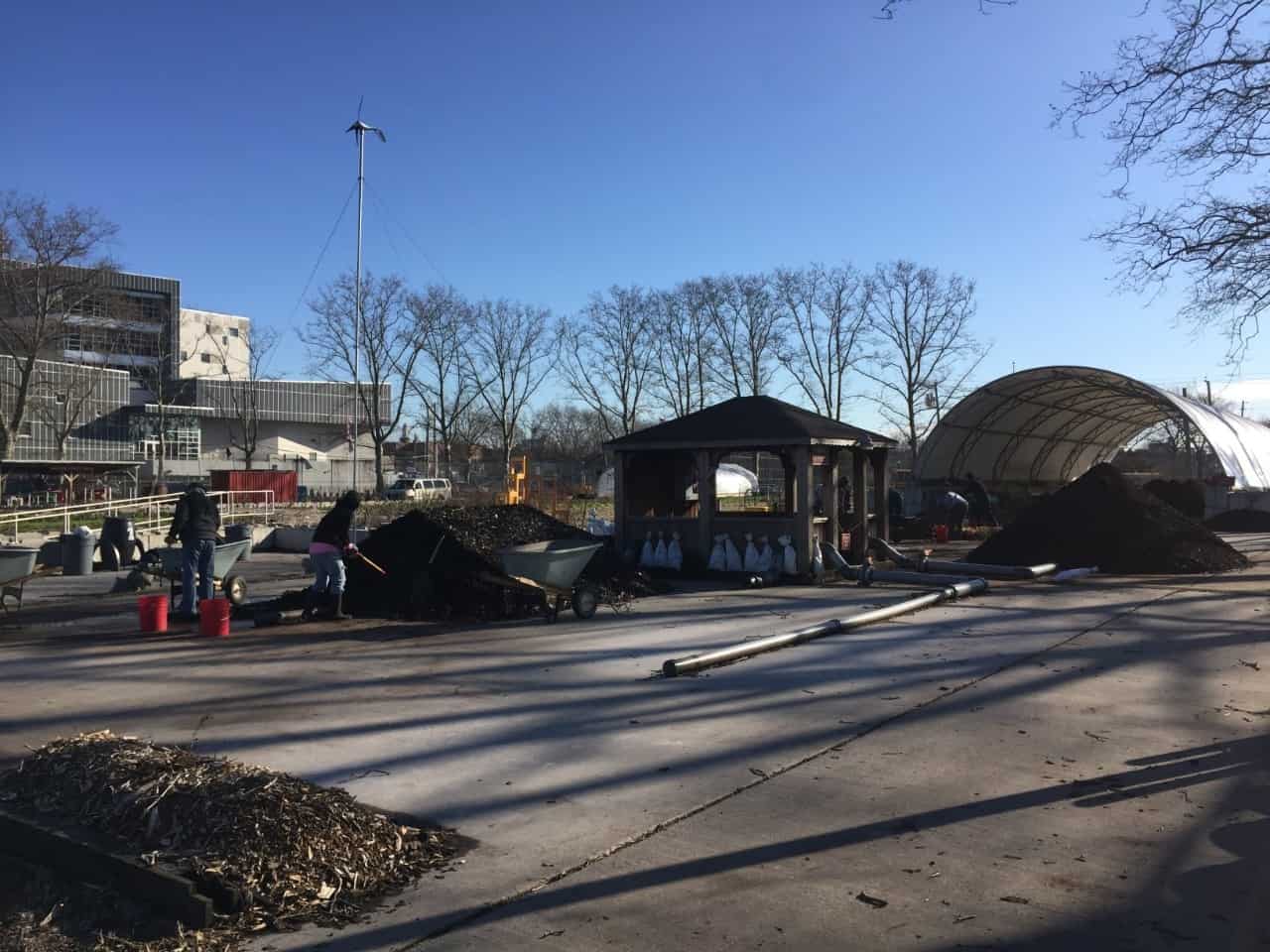
On Columbia Street, volunteers show up every Friday, even in the winter, to help turn household trash into fertile compost for community gardens and urban farms. The Red Hook Initiative administers the farm, but the southern section of the lot – owned by the Parks Department – belongs to the Brooklyn Botanic Garden, another nonprofit tenant, with the Department of Sanitation funding their effort to divert organic waste from the landfill.
The site managers run an impeccable operation, combining food scraps, coffee chaff, and wood chips to produce just the right proportions of carbon, nitrogen, and oxygen inside each odorless, pest-free mound. Through natural biological processes, the mixture gets as hot as 160 degrees and, if carefully tended, ultimately yields a few tons of gardener-coveted “black gold.”
The Columbia Street Farm is the largest composting operation in the United States that doesn’t use any fossil fuels. Most involve heavy machinery, but apart from a bit of wind and solar energy that helps aerate the compost, the Brooklyn Botanic Garden relies here on manpower. It requires a lot of shoveling, but some apartment-dwelling New Yorkers appear to suffer from an unfulfilled craving for yardwork and are willing to donate their sweat.
After a couple hours of labor, my arms, back, and hands all ached, but the arduousness of composting didn’t visibly affect Jyoti. At noon, the volunteers departed, and I walked with soft-spoken Jyoti to Fairway for a bite to eat and a glimpse of the harbor.
I asked them what they thought of New York so far. Did it measure up to its reputation? “I’d been told it would be a lot colder,” they said.
A first-time visitor, Jyoti is journaling his New York City experiences at apexart-journal.blogspot.com. “The first thing that strikes one about life in NY is the extreme isolation and mechanisation. Of every activity. The second is fear,” they wrote on their second day in town. I hope Red Hook left a friendlier impression.
Before long, Jyoti was off to another activity. But they mentioned that they’d be back in the area for an evening at Books Through Bars, a program that sends free reading material to prisoners across the country from the basement of Freebird Books in the Columbia Street Waterfront District.
The next apexart fellow will be Nyadzombe Nyampenza, a photographer and conceptual artist from Zimbabwe, arriving on March 9. Be sure to say hello if you run into him at the farm.
Author

Discover more from Red Hook Star-Revue
Subscribe to get the latest posts sent to your email.