2025 was a year of extensive coverage of the Brooklyn Marine Terminal redevelopment process for the Red Hook Star-Revue. But so much happened that it’s easy to forget some of the twists and turns.
So, here is the recap.
While the Economic Development Corporation (EDC) and then-Mayor Eric Adams began the public engagement phase already in the summer of 2024, the community began to engage in earnest toward the end of that year and into the beginning of 2025.
The reveal
This was when it first became clear what the plan for the site was: thousands of housing units, both luxury and affordable, and a minimumly viable port. The city had engaged with the communities living around the BMT site for about four months, receiving feedback that high-rises and luxury apartments were not what most local residents wanted, when it announced on Dec. 18, 2024 to the BMT task force (the advisory body that voted on the vision plan for the marine terminal redevelopment) that 7,000-9,000 apartment units were needed to fund rebuilding the degrading port.
This came as a shock to many, including task force members. Housing, which since May that year had been presented as an “opportunity” and something that would be “considered” in a plan that, at its core, was a port-first plan, suddenly became a requirement for rebuilding the port at all.
The news of the plans to build luxury housing was met with outrage among task force members and neighbors alike. Many questioned if this was the plan all along—which the Star-Revue in February 2025, could reveal it was—and some sprang to action, organizing protests to voice their displeasure.
Vested interests
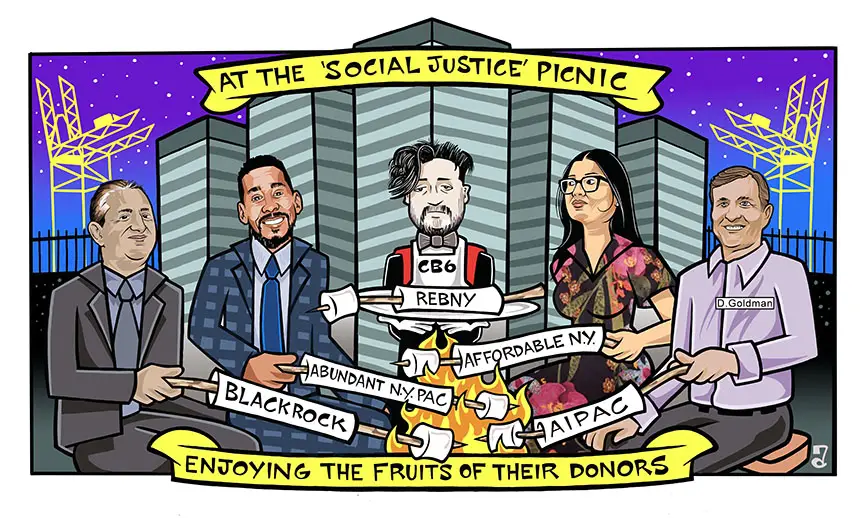
As this was happening, in the early spring of 2025, two camps began to take shape within the task force: those concerned with the rushed planning process and the lack of meaningful community engagement in one, and those who stood to benefit from the city’s plan in another.
Criticism began to pour in from seemingly every direction: Local elected officials, members of Congress, union leaders, city officials, maritime experts, and others came out against the project.
The Star-Revue reported on multiple rallies organized by grassroots groups in Red Hook and the Columbia Waterfront during the spring and summer. We also highlighted a plan to pay for the modernization of the port which didn’t require housing, put forth by Jim Tampakis, owner of Marine Spares International, industry veteran, and BMT task force member.
As this happened, the Mayor’s office, parts of task force leadership, and the EDC realized they didn’t have the votes they needed to pass their vision plan. Instead of returning to the drawing board, they postponed the vote—five times between the beginning of April and the end of July.
Arm twisting
The city and others supportive of the plan began a campaign to turn both public opinion and task force members. US Rep. Dan Goldman, chair of the task force, published op-eds in support of the plan, as did two maritime experts, union leader Frank Agosta (also on the task force) and Red Hook Container Terminal President Mike Stamatis (who runs port operations at the site).
The EDC also shared quotes from task force members supportive of the plan, including Red Hook Houses tenant leaders Karen Blondel and Frances Brown.
Behind the scenes, efforts were also made to get task force members on the fence to vote yes. Sometimes the carrot was used and sometimes the stick: Nate Bliss, ex-Mayor Adams’ representative on the task force, told another task force member, Hank Gutman, that if he didn’t vote with the plan, future expansions of his beloved Brooklyn Bridge Park could be in jeopardy, and EDC President Andrew Kimball threatened to not renew Stamatis’ operating lease at the Brooklyn Marine Terminal, if the task force didn’t vote yes.
On July 24, the vote was postponed a fifth time. This time, the group of 10 presumed no-voters initiated it, asking for more time to properly engage with the community and to fundamentally revise the plan and the rest of the planning process.
But that never happened. Instead, the EDC turned two more votes (Councilmember Shahana Hanif and Borough President Antonio Reynoso) and called for a sudden vote on Sept. 22, and passed the vision plan that includes a 60-acre electric port and 6,000 units of housing on site (majority market rate luxury apartments).
The next step of the process, the environmental review, has begun. Currently, the public comment period is open for the Draft Scope of Work, which will lay the foundation for what will be considered under the environmental review. Following pushback from the community and lawmakers, the deadline for the public to weigh in was moved from Dec. 11 to the end of this March.
Questions linger
A long process lies ahead for the Brooklyn Marine Terminal. It is uncertain how the new mayoral administration views the future of the site, and if Mayor Zohran Mamdani will want to put his stamp on the project.
At the end of the year, another potentially complicating factor appeared in the form of a lawsuit.
Three neighbors of the site filed a suit on Dec. 19, arguing that the EDC violated open meetings laws by not allowing the public to attend the task force’s meetings. The plaintiffs are asking a judge to halt further implementation of the vision plan while the lawsuit is pending, to annul the vision plan vote, and to declare that future task force meetings are to be open to the public.
The impact of the lawsuit remains to be seen, and the court has not yet ruled whether open meetings laws were violated. However, the New York State Committee on Open Government, the state government’s transparency agency, issued an opinion in September stating that the task force was a public body and its meetings should, thus, likely have been open to the public.
We will continue reporting on what happens at the site in 2026.
Author

Discover more from Red Hook Star-Revue
Subscribe to get the latest posts sent to your email.