Today, hearing Afrobeats punching through speakers in many NYC bars and clubs is the norm. The rise of Afrobeats in recent years tells an interesting story about music’s ever-evolving landscape. Afrobeats isn’t Dancehall or Reggaeton, yet these genres do have a shared ancestry, surprisingly or not. Much like hip hop, Afrobeats’ far-reaching roots have made the genre a poignant sound of the times. Here’s a bit about the history and success of Afrobeats.
West Africa is the birthplace of Afrobeats – Ghana, and Nigeria specifically. As a genre, Afrobeats or Afro Pop is a fusion of native West African music (Ghanian and Nigerian), jazz, Caribbean music, house and hip hop. However, you can’t discuss Afrobeats without mentioning the legendary Nigerian musician Fela Kuti.
Jazz horns swaying around smacks of percussion and crashing maracas, while he confidently chants.
Fela Kuti is often regarded as the musical godfather of today’s Afrobeats. It was Fela Kuti’s fusion of traditional Nigerian and Ghanian music, jazz, funk, and Caribbean musical styles that became popularized as Afrobeat, not to be confused with the more modern Afrobeats (with an s). Throughout the late 1960s and early 1970s, Fela’s Afrobeat would not only become popular music in West Africa and abroad, for Fela, it would also become a way to discuss social inequities.
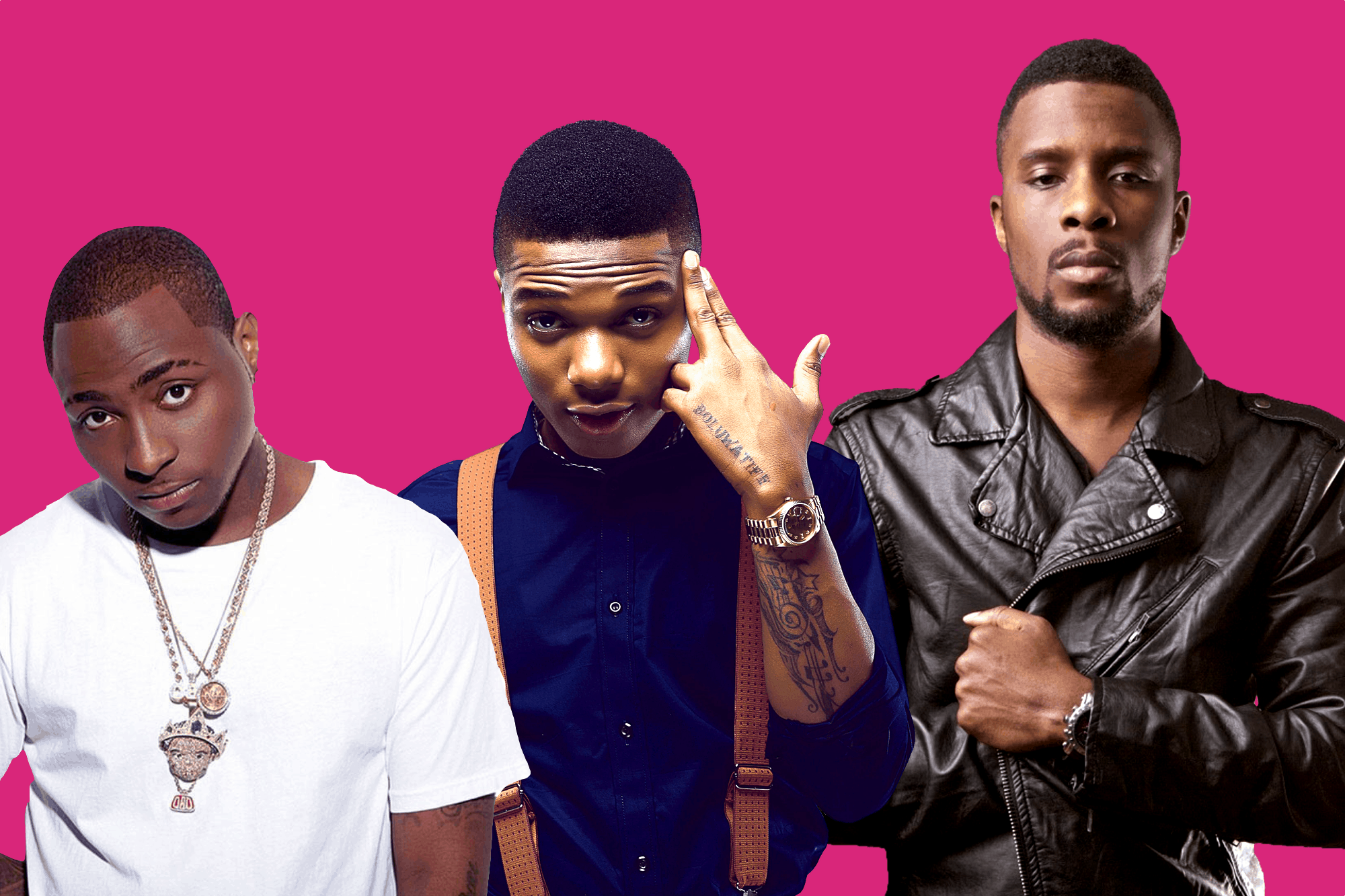
As in almost any genre, purists typically disdain the comparison of Fela’s Afrobeat to the modern soca- and house-influenced Afrobeats. But honestly, the difference between Afrobeat and Afrobeats comes down to time and the evolution of music. With Afrobeat, Fela incorporated the sounds of his time, while today’s artists utilize the sounds of theirs. With Afrobeats (with an s), young artists like Davido, Tiwa Savage and Wizkid incorporate house, pop, and soca to create new sounds. And while the result is often markedly divergent from Fela’s Afrobeat of the 1970s, his influence is an undeniable part of the recipe for today’s Afro Pop or Afrobeats.
Interestingly, despite Afrobeats’ current popularity, it hasn’t been that long since the genre was viewed as a niche. African popular music often tends to be consumed as a novelty. However, today, you can hear Afrobeats on albums like Beyonce’s Lion King soundtrack, The Gift, or Wizkid’s and Drake’s “One Dance.” To some, the explosion of Afrobeats may seem like an overnight phenomenon, but truthfully speaking, it’s been a long time coming. In 2011, Nigerian artist Da Banj released what was at the time, the most successful international Afrobeats song, “Oliver Twist.” “Oliver Twist” was an international success, garnering the support of Kanye West and clearing the path for the future adoption of Afrobeats in the US. Da Banj sang over the wobbly house-tinged track (Olee-Vah Tweest) in his Nigerian accent. “Oliver Twist” captured audiences worldwide without sacrificing originality.
Afrobeats’ (or Afro Pop’s) popularity definitely benefits from the current renaissance of black consciousness, and increasing commercial and cross-cultural success of black content – Black Panther, Girls Trip, Get Out, etc. In addition, social media has blurred borders, and connected communities throughout the diaspora – hashtags melanin queen and black boy joy abound. I recall being in Germany, preparing to watch Black Panther, and seeing the collective enthusiasm shared by folks all over the world – people creating videos and stories online and using Afrobeats to document their Black Panther experience. In New York City, I walk into my neighborhood bodega and listen to my Dominican cashier singing Daivdo’s “Fall,” word for word. Afrobeats is an anthemic genre for modern pan Africanism, a soundtrack for the African diaspora.
Ultimately, I hope the success of Afrobeats inspires the adoption of other styles and fusions throughout the diaspora. Here’s a couple of my favorite Afrobeats songs: “If” by Davido, and “Kélé Kélé Love,” by Tiwa Savage. And check out up-and-coming Ethiopian artist Gaga Siyum and his song “Di Di.”
Roderick Thomas is an NYC-based writer and filmmaker (Instagram: @Hippiebyaccident).
Author

Discover more from Red Hook Star-Revue
Subscribe to get the latest posts sent to your email.