
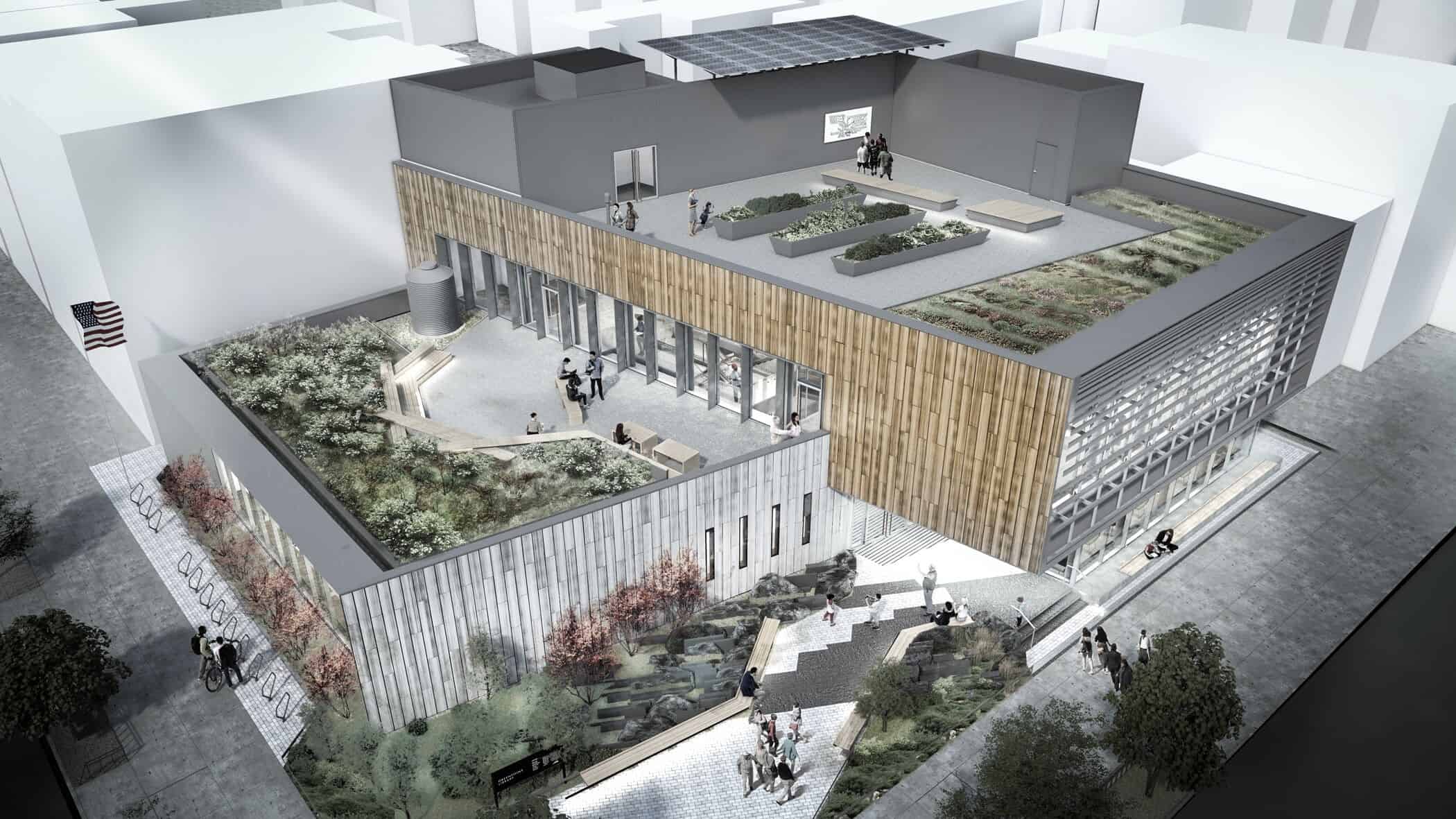
This fall, the Brooklyn Public Library (BPL) announced the upcoming demolition and reconstruction of the Red Hook Library at 7 Wolcott Street. In October, architects David Leven and Stella Betts of the firm LEVENBETTS visited the branch to showcase their new design, which marks their third job for BPL, following their work on the Brooklyn Heights Interim Library and the East Flatbush Library.
According to public documents (which don’t yet include the year 2019), LEVENBETTS has made annual donations of $1,000 or more to BPL since 2015. With BPL input, the New York City Department of Design and Construction (DDC) and the New York City Economic Development Corporation (EDC) manage the development of new and renovated libraries in Brooklyn.
BPL’s list of donors includes a considerable number of architects, construction firms, and developers. Like New York City’s two other public library systems, BPL operates as a city-funded nonprofit, not as a city agency. Its status as a 501(c)(3) organization allows it to accept tax-deductible contributions from individuals, foundations, and corporations. Charitable contributions accounted for $7 million in income in 2019. In the same year, the City of New York supplied $120 million.
BPL has contracted the architect Toshiko Mori on at least three occasions since 2010, mostly recently for the largest restoration of the Central Library in its 78-year history, which started in 2018. Toshiko Mori Architect PLLC has contributed $5,000 or more to BPL every year since at least 2012.
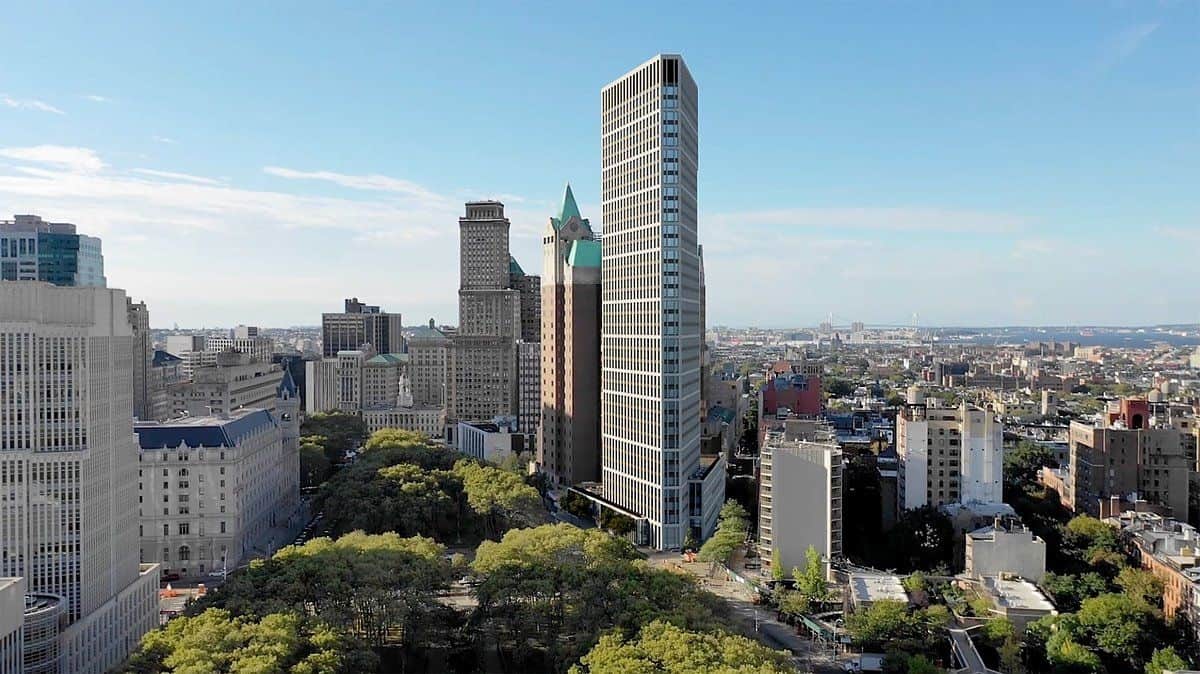
Marvel Architects, meanwhile, has donated a total of $17,500 or more to BPL since 2015, the year it began design work on the condominium skyscraper One Clinton, whose ground floor – thanks to the BPL-approved sale of the formerly public site to the developer Hudson Companies – will house a new Brooklyn Heights Library in 2020. Hudson Companies donated sums between $5,000 and $9,999 to BPL in 2015, 2017, and 2018.
Commissioned to design the new Greenpoint Library – due in 2020, thanks in part to construction manager Levien & Company, a 2018 donor ($1,000 or more) – architects Marble Fairbanks contributed amounts between $1,000 and $4,999 in 2016 and 2017. In 2014, before the hiring of Marble Fairbanks for the job, BPL solicited renderings for a potential redesign in Greenpoint from Beatty Harvey Coco Architects, which made financial contributions between 2013 and 2016 – two of them over $5,000.
Beatty Harvey Coco had renovated the Sandy-damaged Coney Island Library in 2013 with a crew from Westerman Construction, another donor (at least $3,000 between 2013 and 2017). Westerman Construction has also worked on the Central Library and branches in Red Hook, Gerritsen Beach, Sheepshead Bay, Gravesend, Williamsburg, and Greenpoint.
Most BPL branches occupy real estate belonging to City of New York, which owns the buildings and pays for their capital improvements from its capital budget. In 2018 and 2019, the City of New York spent a total of $69 million on BPL improvements and renovations. It has budgeted another $306 million over the next five years. While not a part of the government of New York City, BPL plays a significant role in determining how these public funds are spent and who receives them – making recommendations, conducting interviews, and approving the DDC or EDC’s selection of contractors.
BPL’s annual contribution income from private donors has more than doubled since 2016. While city agencies can also accept some gifts from private donors, the city’s Conflicts of Interest Board (COIB) doesn’t permit them in cases where the donor has conducted business with the agency in question. As a nonprofit, however, BPL sits outside the jurisdiction of the COIB.
A Library spokesperson stressed that the BPL’s “fundraising office is entirely and completely independent and separate from the office of procurement. Architects and other service providers hired by the library, through the procurement office, undergo an extremely rigorous multi-part selection process which takes place, on average, over a three-month period. The process includes multiple competitive bids and presentations before a committee of anywhere between five and nine stakeholders (for example, facilities staff and librarians). Each stakeholder completes privately, on his or her own, two evaluations during the process.”
While New York City’s community activists often pressure politicians to refuse donations from real estate developers, lobbying by the city’s architects receives little attention. That’s not necessarily the case nationwide: a recent investigation by the Chicago Tribune revealed that, between 2010 and 2018, “a who’s who of Chicago architects” contributed $350,000 in campaign donations to “City Council members who hold near-total power to determine whether their projects get built,” and several even hosted fundraisers for the city’s aldermen, as they’re known in Chicago.
Author

Discover more from Red Hook Star-Revue
Subscribe to get the latest posts sent to your email.