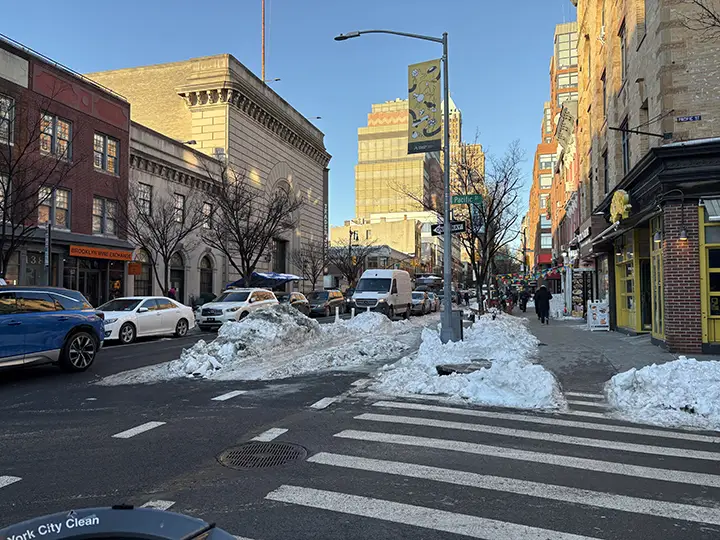
Red Hook, Brooklyn has been my home for four years via Long Island, Queens, and Harlem. Of all the neighborhoods I have lived in, Red Hook easily best represents the epitome of what it means to be a New Yorker. We are a blue collar, hard-nosed, resilient, and resourceful neighborhood.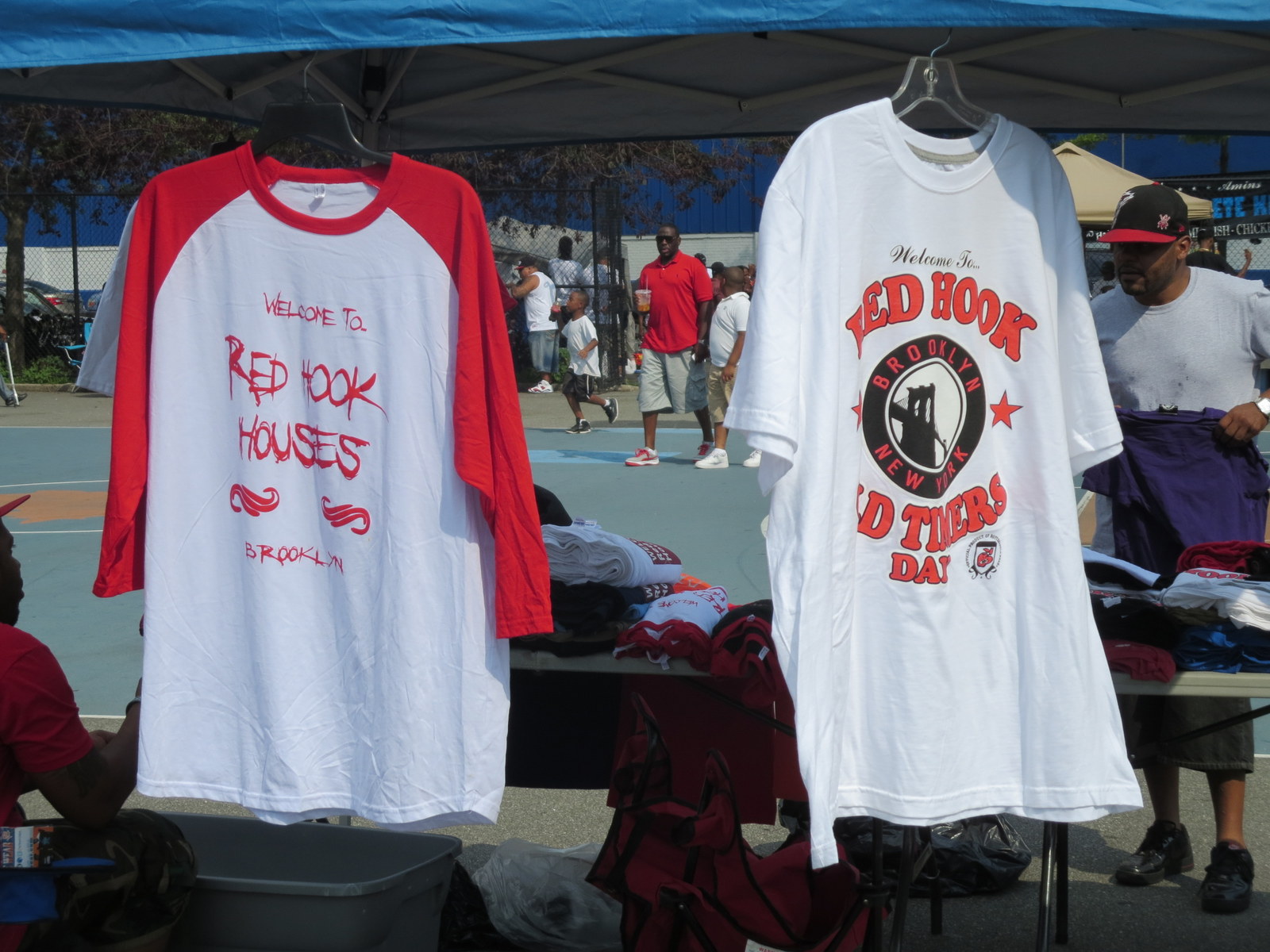
Some people believe Red Hook is a forgotten piece of industrial Brooklyn. I beg to differ. Some people believe Red Hook may just be the next epicenter of gentrification, merely the next object of desire for those that only see our land as a future waterfront to capitalize on.
In life, change is always constant, so it is possible developers will succeed in their endeavors. If that were to happen, it is not a given that others will buy into their dream. They may only produce a soulless piece of land at best. That is because it is us – the people – who make Red Hook. Not the public housing buildings, the streets, the Brooklyn Terminal, or the water that surrounds us.
I have heard talks of this neighborhood changing for years now. Some people are unsure if that is a good or a bad thing. If you speak to many longtime residents, the opinions are diverse. Some fear gentrification, while others embrace it. The one thing that is agreed upon is the uncertainty of what it may bring with it.
I believe the neighborhood is changing for the better in regards to safety, but losing the war in regards to utilizing all of our best resident’s talents and skills. In a neighborhood with 11,000 people, many of us do not know our neighbors. Thus, we do not know the opportunities available to all of us.
If there is strength in numbers, we would be able to revitalize Red Hook in a way never seen since the 1920s. The people united back then to make Red Hook the busiest port in the world. If you believe in cycles, like I do, then it is inevitable for Red Hook to thrive on that level again.
I believe we bottomed out in 1980s and 1990s, when we were a drug infested neighborhood. Thank God those days are over, which was a much needed relief – especially for the public housing residents. But having a safer community is not enough.
We have a multicultural community which includes Blacks, Hispanics, and Whites. A common theme I recognize in each group is the love for entrepreneurialism. Maybe it is because we are secluded and away from the rest of Brooklyn, but nevertheless many people in the area solely rely on the neighborhood for their exchange of goods and services. A large majority of the businesses in the community are owned and operated by local residents. They also employ many other local residents. I believe the owners take pride in taking care of their own and also care about the community we live in.
Let’s talk about how the area has improved over the years and what I believe can be done to hold on to our community for as long as we can before land developers eventually succeed in changing the landscape.
I will start with where I live, the NYCHA development. I used to visit my cousin in the East Houses as a kid in the 1980s. Back then, it was more common to hear gunshots over drug turf wars and police sirens responding to violent acts of crime than it is now. When I was a teenager in the 1990s, the Bloods gang had overtaken the houses and the ensuing gunshot battles were no longer about drug turf but gang affiliation.
Due to tough debatable police practices, a debatable oppressive court system, community leaders, the Justice League, and many different drug intervention groups, the Houses have become as safe as any other area in downtown Brooklyn, minus the isolated incidents of crime here and there. Instead of seeing teenagers who are hopeless, drugged up, isolated, and angry, the Houses are producing teenagers who are going to college, learning skills and trades, and participating in the community. There are more resources available to them than ever before and many of them do utilize them.
I socialize with many young adults in my community and most see hard work and education as the keys to success. The effect of everything previous generations have been through has deterred many of them from living a life of crime.
I have friends with limited resources who run their own online companies retailing music, sneakers, and many other enterprises which were unimaginable 20 years ago. Although not desirable, having the minimum to succeed has inspired creativity and the entrepreneur spirit to go along with it. With easy access to information because of the internet, many of the residents, like me, teach themselves the skills needed for growth.
If the library can reinforce our vision and stock more business books, people will definitely support them more. I believe with more book fairs, entrepreneur meetings, and e-marketing classes, we can bridge the gap that divides many of our residents throughout the entire area and create more networking opportunities that would benefit us all.
With 8,000 people living in Red Hook Houses, there is definitely much untapped potential waiting to be discovered. With the proper guidance, it could become a political and economic force due to the sheer volume of number of residents in one area.
Red Hook has seen tough times, and each time we have risen to the occasion. The most recent challenge illustrated how we band together to deal with adversity. Hurricane Sandy ravaged the neighborhood. Many people didn’t evacuate for a myriad of reasons. Some couldn’t leave family behind unassisted, others didn’t have the resources to leave, and some simply underestimated Sandy.
The support the community gave to each other during those times is admirable. Aid was distributed. People who otherwise may never have spoken to each other forged alliances for the greater good of all. That camaraderie made this community a better place to live. Just as Sandy was turning her attention on us she also brought with her the attention of land developers. Will this challenge bring out the best in us again? Only time will tell. One thing I do know, however, is that Red Hook is going to only continue to improve. Hopefully, we all will still be here to enjoy it.
Author

Discover more from Red Hook Star-Revue
Subscribe to get the latest posts sent to your email.