On June 1, aboard the NYC Ferry’s early-morning maiden voyage on the South Brooklyn route, Jim Tampakis felt inspired.
“Look at the water,” he instructed a friend. “No traffic. There’s no boat traffic at all.”
It being 7 a.m. rush hour, the Brooklyn-Queens Expressway was likely bumper-to-bumper. The subway a series of overstuffed cars upset by delays.
But here on the water, just beyond Red Hook’s Atlantic Basin from where the ferry launched, Tampakis saw potential in the underused expanse.
A long-time Red Hook local who heads Marine Spares International and Tamco Mechanical, Tampakis wants to return the waterfront to its historic purpose by developing a shipping network over waterways.
With Red Hook’s first e-commerce distribution center on the horizon, Tampakis sees nothing ideal about hundreds more trucks daily loading and unloading along narrow residential streets lined with cobblestone.
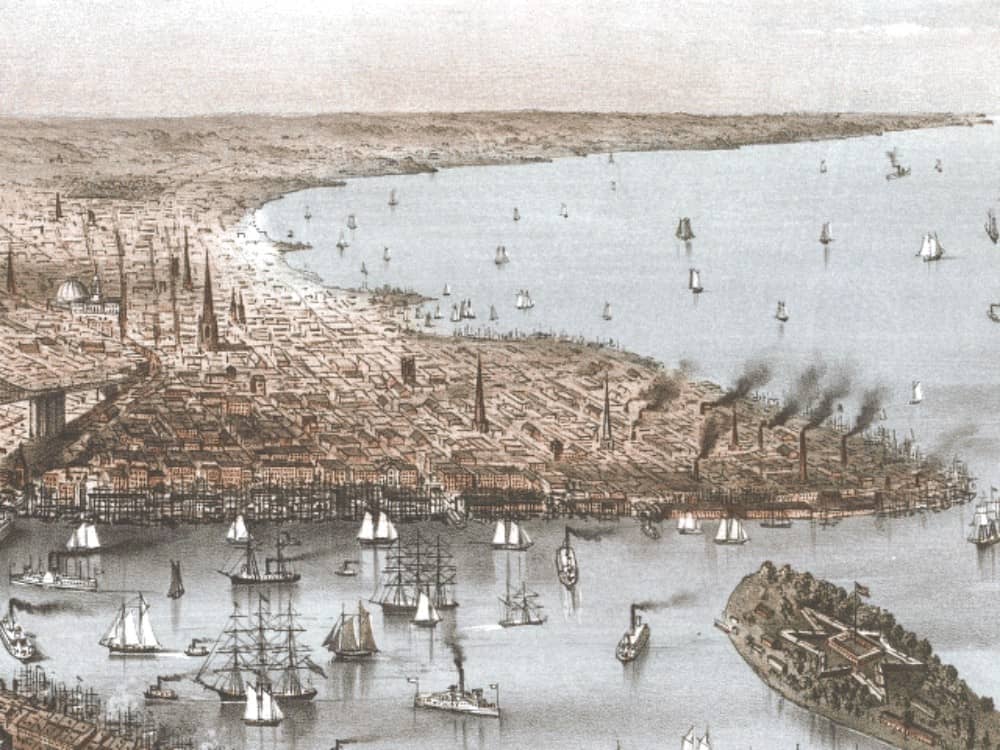
Trucks took over New York City when shipping and rail freight diminished in the mid-20th century. The big-boned vehicles carry over 90% of cargo that moves through the city, reports the Department of Transportation (DOT)’s Strategic Plan 2016.
New York City streets designed in the 1800s are left to cope with modern-day trucks in addition to pedestrians, cyclists, and other vehicles, including spikes in app-based rides like Uber.
“To remain a great global center, it’s vital for New York to improve its freight systems,” said Michael Replogle, Deputy Commissioner for Policy at DOT during a Cities Today interview in May.
“The big players in the private logistics industry are innovating for efficiency, but it’s harder for small truckers to do so…as a city, we are making progress using data, technology, and partnerships to support smarter traffic management.”
But unlike DOT’s plans to increase efficiency and curb the emissions for the trucks contributing to the city’s infrastructure headache, Tampakis’ idea involves amphibious options.
“The fear would be that we would have these tractor trailers coming into the neighborhood – and they’re all big 53-footers,” says Tampakis, referring to Sitex Group’s acquisition of Red Hook warehouses this May, which will undergo renovation to store and distribute products bought and sold online.
Tampakis notes that the tractor section of trucks adds around 20 more feet to their precarious lengths.
“So we have these monstrosities coming into the neighborhood in the wee hours of the morning, which the locals all hear…Their houses shake at 4 o’clock in the morning, because [the distribution centers receive these trucks] early in the morning.”
Tampakis calls for distribution landings similar to Red Hook’s new ferry landing at Atlantic Basin, with five to 10 in each borough’s littoral zone to ensure short trips across the water.
“This way they would be doing local deliveries, like they would be loading up a boat like a launch service. Products would be loaded onto these small containers – maybe aircraft containers, which they do now,” he says. Vans would complete the last leg of shipment through local deliveries.
Tampakis looks to Staten Island-based Mike Reynolds for precedent.
Reynolds owns Reynolds Shipyard, a company that transports supplies to oil tankers and relieves trucks from having to enter oil depots. In full support of Tampakis, Reynolds calls the underutilization of Red Hook’s waterfront for shipping “a huge waste of resources.”
Unlike in Staten Island, where Reynolds owns his shipyard property, the Red Hooker’s ambitious vision would require cooperation between regulatory bodies such as the city, Coast Guard, and New York Harbor, according to the local business owner.
Hatch
The Red Hook Container Terminal’s lease to Port Authority of New York and New Jersey (PANYNJ) expires in 2018.
For $3.4 million, PANYNJ contracted engineering consulting group Hatch to develop a 30-year port master plan for the container terminal site, to which it will defer. The plan’s content likely won’t be released until 2018.
Tampakis sent an email to Hatch introducing his idea in early June.
“With the start of the NYC Ferry, and use of the waterways which is long overdue, we can expand on waterway uses for transport services to various key locations throughout the city, and remove the much congested truck and delivery company traffic from the streets of New York,” wrote the maritime boss in his email to Hatch.
Tampakis says his plan would create “much needed vocational jobs” and reboot the waterfront’s manufacturing industries.
Tampakis has not received a response from Hatch as of press time.
Water – the green option
According to Tampakis’ ambitious vision, whoever develops the water-based distribution networks would receive subsidies from federal, state, and city government for helping alleviate pollution.
“When you have a vessel that’s burning clean as opposed to 100 tractor trailers on the road…The benefit to the environment is really great,” says Tampakis.
“The government is going to benefit because they’re going to do less repairs on the streets, the city is going to benefit because they’re going to have less vehicles in the tunnels and on the bridges…It’s a win-win situation.”
When the Star-Revue talked to a Sitex representative in May, the company confirmed that only ground shipping was planned for the distribution center at present.
“There’s a feasibility study that needs to be put in place,” says Tampakis, who remains hopeful about his vision for floating freight. “So that this way it gets done right – effectively and efficiently.”
The Star-Revue will follow developments to Sitex’s distribution center and its methods pursued for distribution.
Author

Discover more from Red Hook Star-Revue
Subscribe to get the latest posts sent to your email.