There was a period around and after the development and promotion of Wynton Marsalis as a public jazz star when there seemed a coordinated campaign to add a fancy slogan to jazz. Institutions, promoters, journalists, musicians—when talking about jazz in front of an audience, they would frequently qualify the term by stating that jazz is “American’s classical music.”
This always felt a little off key to me, like a sincere, true-enough statement made in a context that was an awkward fit. It’s the “classical” of it all, which is meant as praise but misses the point, and also barely hides a sense of insecurity. There’s the promotion of one thing as another thing that it can be said to equal, which is true but also comes off as special pleading, wish casting with a hint of being prepared for disappointment. There’s talking about an American thing in terms of what up until the 20th century had always been a European thing, with the implication that we need our own version of some old Europe thing. There’s also the total misunderstanding of what “classical” even means in musical terms, substituting for it the worst kind of social heuristic, that jazz is good enough to be a bourgeois marker of prestige.
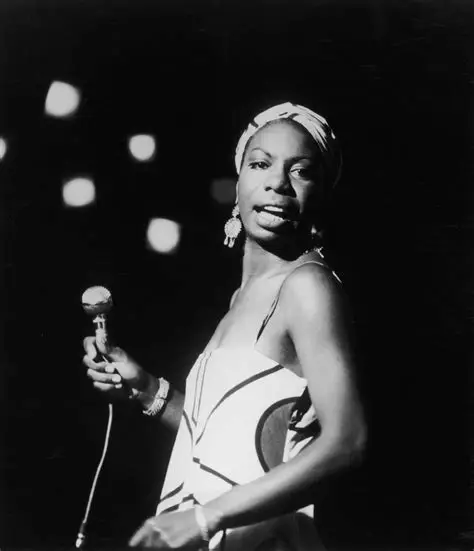
Although the statement of jazz-as-American-classical is less common than it used to be, memories of it and how often it was repeated returned to me with two recent events: one was Marsalis’ announcement that he would be retiring as artistic director of Jazz at Lincoln Center in July, 2027, and the other was the 24-hour broadcast on WKCR for Nina Simone’s birthday, Feb. 21. The former has been the embodiment of the idea—through his own promotion and that of his amanuenses Stanley Crouch, and his de facto and then-de jure direction of JALC; the latter not so much a refutation of the idea so much as an artist who showed that it is meaningless and irrelevant.
First, what is classical music? Like jazz, or any other music, there are arguments to be made around the edges, and like jazz it’s music that explains what it is through, well, what it is: a music that is centered on a body of compositional knowledge; that developed ideas and techniques through the centuries in a way quite close to how scientific knowledge has developed; and that has documented and perpetuated itself through the practice of documentation through notational language. There’s no need to examine style because classical music comes in all sorts of styles, from songs to dances to cute little melodies on the piano to operas to symphonies for 1-bit electronics.
Jazz has composers too, but it’s fundamentally a player’s music. The idea of organizing music in set structures and forms, even before notating it (and it’s worth pointing out that as a player’s music, jazz composers like the monumental Charles Mingus don’t necessarily have to hand out pages of sheet music to their musicians, they can play or sing parts to their musicians who then listen and play them back—this is a method of composing and arranging that many kinds of music around the world have used for thousands of years), is a framework in which to build the spontaneous musical developments of improvisation. Call it instant composition, as many people do, but that also looks away from the nature of jazz—the improvising isn’t about preserving ideas to be reproduced later, but filling the moment in time with spontaneous expression. Jazz musicians create spontaneous and ephemeral structures and forms when they improvise.
Improvisational ideas, the improvisational toolkit, has developed through time. Style has developed through time. Jazz is about what you have to say to me right now, and the style you say it in. It is an exploration of communicative language, idioms and dialects. In analogies to other arts, classical music is like painting, each work when finished is ready to be hung on a wall then viewed (brought out in performance) again and again. Jazz is like dance, it happens then when it’s over it disappears, it’s gone. The notational means of classical came hand in hand with larger and more complex instrumental ensembles, the point of writing it down for others to read later makes it like a novel. Jazz is smaller scale and succinct and intense, like poetry, poetry that you hear spoken because a lot of it never makes it into books.
Nina Simone was, in this respect, one of the greatest poets in American history. When she was young she played Bach and wanted to be a classical concert pianist. She seemed to have thrown everything, including her family, into making it into the Curtis Institute in Philadelphia, and when she was rejected it didn’t just dash her hopes but changed her. She turned to jazz, a music she had previously rejected.
Now, a word about skill: you have to be a damn good musician to play jazz at just an acceptable level. And you also have to be a tremendous musician to be a classical concert pianist. But these are two different kinds of playing, and there are great jazz pianists who can play the notes of classical pieces but not in a way that makes sense, for example Keith Jarrett playing Bach’s Goldberg Variations or Brad Mehldau playing Schumann or Fauré. Simone had the chops, and if they weren’t the right ones for classical then fortunate us. Because we got to hear her play American music.
Not American classical music (that’s Ives and Copland and John Adams), but American music: jazz, blues, folk, soul, spirituals. She played jazz but was actually not so much, or just, a jazz musician. Her self-taught singing and the material she favored connected to folk and Black and white roots music, and especially the blues, and then later soul. And by singing folk and blues, and writing songs like “Mississippi Goddam,” she was upfront about being an American musician making American music about her country, what it was and what it could be. And although what she did was nowhere near classical music, and her vocal style was absolutely nothing like it, she was close in quality to a singer she admired, Maria Callas. Neither was conventional within their own art, and both cut through the normal artifices of their idioms to sing directly and intimately to listeners.
Simone was exemplary of the greatness of American music, the Americanness of it. The birthright of artists here is that they can invent their own manner, means, and path, with no obligation to follow the linear development of the arts in Europe; American classical music didn’t really exist until Charles Ives reinvented it from scratch in the late 19th century. Simone invented a music that pushed American qualities to the heights of pleasure and power.
Simone, and the music she represents, need no special pleading. Call it “classical” in any way makes it too polite, especially for her. When she started to make music about civil rights and racism, she started to make angry music that the white institutions of classical music didn’t want to hear, and still don’t. But she said the music gave her “a purpose more important than classical music’s pursuit of excellence.” The right classical people would have understood her, though. He never heard her, but what the great classical composer Antonin Dvorák did hear when he spent time in America, prompted him to urge American musicians to look to their own country, not Europe, because he heard incredible, native voices here. Celebrate them as they are.
Author

Discover more from Red Hook Star-Revue
Subscribe to get the latest posts sent to your email.