
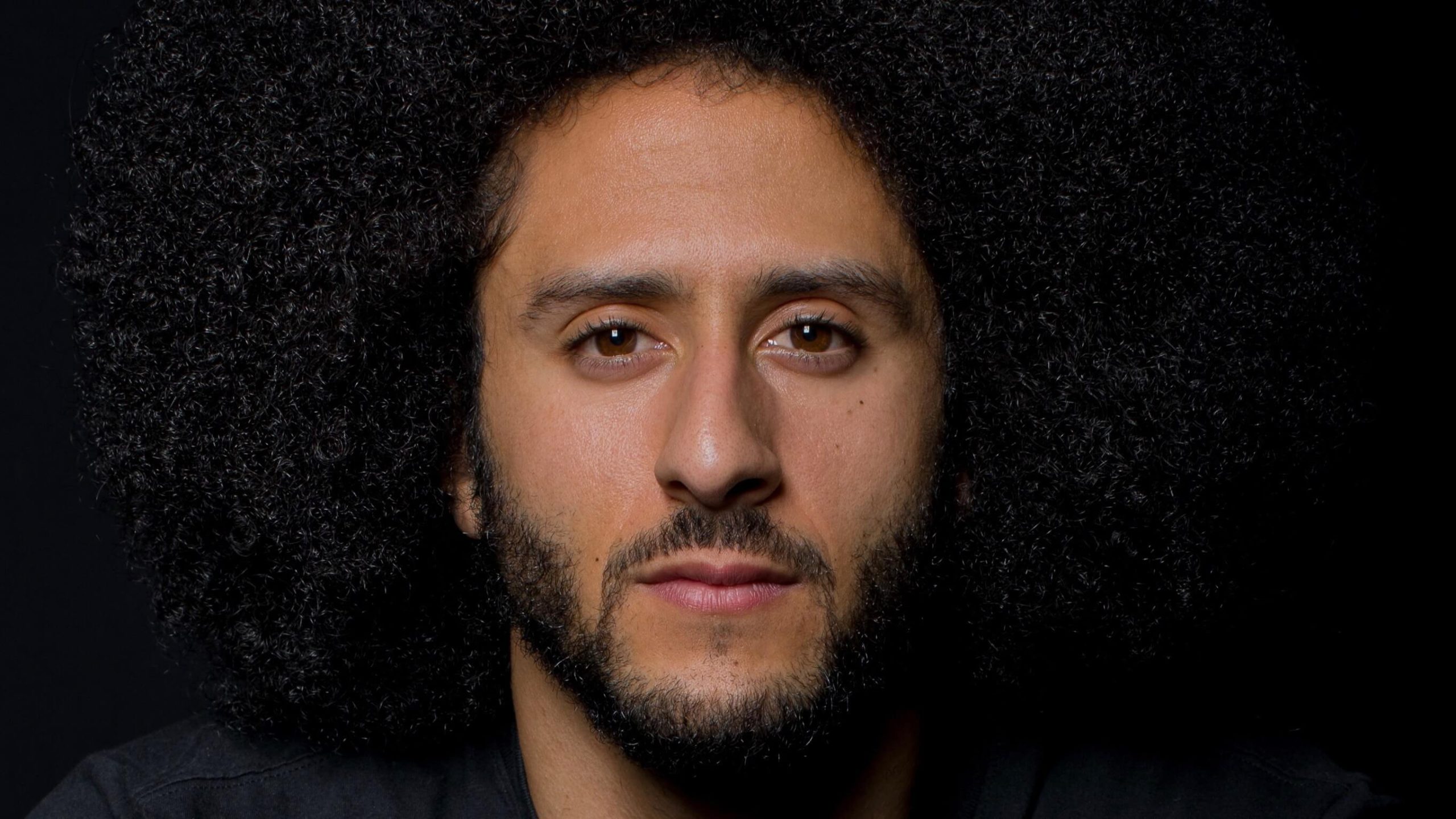
When Colin Kaepernick took a knee in support of racial equality, he faced national outrage and criticism. The backlash surrounding his choice to kneel in solidarity with the Black community was roaring. Some white football fans burned his jerseys, posting videos on social media expressing their disdain and disappointment in his views. Politicians and media personalities like Donald Trump called for Kaepernick’s removal from the NFL. To date, 2017 would be Colin Kaepernick’s last year playing in the NFL. However, Kaepernick’s racial issues with the NFL were not his first experiences with racism in sports, a truth well illustrated in Netflix’s limited series Colin in Black and White, directed by Ava Duvernay. At this year’s screening of Colin in Black and White, I had the privilege of not only previewing the show but hearing from Ava Duvernay as she was interviewed by ABC’s Robin Roberts (Good Morning America).
At the beginning of the series, we see a young Colin Kaepernick in his early teens played by actor Jaden Michael, living with his adopted parents in Wisconsin before moving to California. Early on it’s clear that Colin is adored by people in his surroundings. Kaepernick’s life is shown to be filled with love, sports, and an endearing midwestern charm.
One of the many critiques Colin Kaepernick has received throughout the years has been on the topic of his ‘Blackness.’ Some have labeled his involvement and struggles with racial equality as simply a consequence of the current racial climate ––– a trendy result of Black Lives Matter and other racial justice movements. However, in the series, we see a different story. Colin in Black and White shows a young Kaepernick wrestling with his identity in very white American settings. Colin’s hair, in particular, played a key part in his earliest struggles with racial equality.
Like many children of African descent born to, and adopted by non-Black parents, hair is often a challenge for their caretakers. In the early 2000’s NBA legend Allen Iverson’s signature braids (cornrows specifically) and personal style brought him a swarm of media attention, quite often negative press. Iverson’s natural hairstyle was called unprofessional, and like many Black men, he was casually labeled a thug. Colin Kaepernick grew up idolizing the young NBA legend, he emulated Allen Iverson’s basketball skills and style. The politics of Black hair is used to set the stage for the challenges Kaepernick would face as a biracial Black young man in America. Despite his light complexion and relative racial ambiguity, Colin’s otherness in his mostly white surroundings and hair especially, set him apart. His hair was arguably his Blackest identifier.
Soon Kaepernick would also be branded a thug and unprofessional, not for his behavior, but his braided hair.
Despite the criticism Colin faced from his coaches and parents for his natural hairstyles, we still see a young man maneuvering the joys and nuances of Black hair care. From getting his hair braided in the homes of young Black women, to his first black barbershop experience. Colin’s journey into his Black perspective is very entertaining and heartwarming to watch.
Colin’s parents, though early on portrayed as loving caretakers, struggled to understand their son and his Blackness. We see his mother especially wrestle with Colin’s need for connection to his Black identity. What is perhaps also present yet not overtly stated in the first few episodes, is her longing to be everything he needs, his ‘real’ mother. The subtext of her discomfort is a kind of maternal insecurity–– am I not enough?
Kaepernick’s parents are shown to be suburban white folks who are aloof of the many ways they should protect their son. However, Colin also confesses that he also moved through life with a learned white audaciousness, admittedly with limited success. Nonetheless, racial discrimination and police aggression is something Colin would face without parental protection as a young teen.
The series masterfully tackles microaggressions as a general topic and as experienced by Colin Kaepernick specifically. Ava Duvernay weaves in her signature documentary style, infographics, and edutainment with a coming of age series and stylish visual narration done by Kaepernick himself (think Cinematic Bernie Mac monologues).
Robin Roberts: [ How did you come up with the idea to put the show together the way you did?]
Ava Duvernay: [ you know, I have experience doing documentaries and shows like Queen Sugar. So all of this was organic and part of trusting the process. The idea to weave the show together like this wasn’t necessarily written down. You just have to trust your gut.]
The cinematography in Colin in Black and White is superb. Colin Kaepernick’s highly stylized visual narration was very reminiscent of the Matrix with a cool blue overtone and crisp lighting. This could have been difficult to blend with the warm and familiar lighting used throughout the series, as we see Colin living his life as a teenager. However, it all blended quite nicely. The contrast between visual narration, scripted series, and documentary style makes for a very entertaining show.
Without a doubt, Jaden Michael who plays a young Kaepernick is undeniably a star. His portrayal of Kaepernick was stunning. It felt like watching a young Leonardo Dicaprio Colin in Black and White may be his first moonwalk moment (see Micheal Jackson) as an actor.
Personally, so much of the show resonated with me. I reminisced about my own experiences with microaggressions as a teen, as well as overt racism. I remembered my high-school policy on unacceptable hairstyles, all of which included mostly Black hairstyles–––– no braids, no big afros, and restrictions on dreadlocks. I also remember getting my hair braided in cornrows for the first time (never did it again) and realizing I was too tender-headed for the tight cornrows. Also, my forehead was too big for the style.
Colin in Black and White is a superb portrayal of the former NFL stars’ early years. The show lets us into the world of the young Black athlete who later became an icon for equality. Watch Colin in Black and White, now streaming on Netflix.
Roderick Thomas is an NYC based writer, filmmaker, and Host of Hippie By Accident Podcast.
(Instagram: @Hippiebyaccident, Email: [email protected], Site: roderickthomas.net)
Author

Discover more from Red Hook Star-Revue
Subscribe to get the latest posts sent to your email.


One Comment
What I find most hilariously hypocritical about Kapernick is that the man is literally using a male supremacist platform (the NFL) to protest white supremacism. The man is simply not self-aware enough to be repulsed by his own hypocrisy. When will we acknowledge that male supremacism and white supremacism go hand-in-hand?