I look at most things through the lens of what role government could – or should – play in any given situation. I plead guilty to confounding and even irritating those acquaintances that don’t share in my interest. The business aspect of sports is no exception; it’s been on my mind even while watching the NBA and NHL finals.
I was specifically mulling over what additional role government should play in enforcing deals known as Community Benefits Agreements (CBA). Such agreements are usually entered into when a franchise and its development team seek to build a new stadium or arena. In New York past issues and controversies have swirled around the Barclay’s Center, to that mall with a baseball field that is the new Yankee Stadium and so forth.
However, CBAs are not specific to sports, and in rough terms, contains covenants that a developer enters into with a “community” (usually through a nonprofit) in exchange for that community’s support or acceptance of a project. Projects generally are ones requiring a zoning change that triggers a Uniform Land Use Review Process (ULURP).
This process includes reviews by the Department of City Planning, the local community board, the Borough President’s office, and the City Council before final sign off by the mayor. In fine-tuning the proposal, communities may request and receive commitments for a park, a school, local hiring practices and various other things that are deemed beneficial to a community.
Saying and agreeing to such things is nice, but the true measure of the CBA- as is the case with many community related issues and concerns, is a matter of enforcement and disclosure. There have been many instances in which CBA details are not known to the public, and thus hard to enforce. Once a project is approved, there is far less incentive by the developer to honor the agreement, and government tracking may get lost in the press of new business.
At the city level, Public Advocate Tish James is leading the charge on INTRO 1132. This bill would create and maintain a publicly accessible online database tracking all written commitments made by the mayor or any agencies to the council, community board, and borough president as part of any city ULURP. The bill would also require annual updates as to the status of said commitments.
As the vice chair of my community board, and as an executive director of a community development organization, I would especially welcome such information. Along with this push at the city level, there should be further enforcement mechanisms implemented by the state. I remain hopeful that this could happen in the near future. The State Legislature -despite glaring recent failures to enact meaningful ethics reforms – is poised to elect more new faces. With such new blood, perhaps the utterance of the word “Albany” will cease evoking scorn amongst the citizenry.
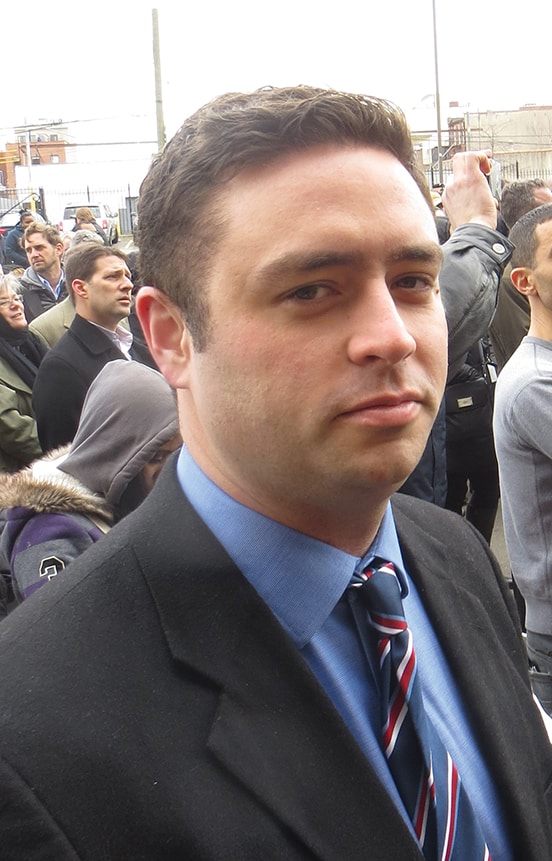
This ember may turn to flame over in the 44th Assembly District (Park Slope, Windsor Terrace Ditmas Park). After 32 years of earnest and incorruptible efforts Assemblymen James Brennan has decided to retire and pass his mantle on to Robert (Bobby) Carroll whom he has mentored for many years.
The Assemblyman and Robert’s father Jack, have formed the bulwark of the Central Brooklyn Independent Democrats (CBID) that remains one of the outposts, of reform politics, along with the Independent Neighborhood Democrats.
They will undoubtedly continue to speak out forcefully under new leadership. Among the issues raised will be CBA enforcement.
When I spoke to Bobby this past week, he was firm in his support of enforcing CBAs. He said “The State should enact legislation that ties compliance with the CBA to future funding, bonds, or variances. If a developer or corporation does not comply with the CBA, future government funding, bonds or variances should be withheld until the developer comes into compliance.
We must hold developers and corporations accountable to the agreements they make with our communities. Without such a mechanism these agreements will continue to be broken at will.”
I believe that in the future the pace of positive change will be accelerated, because our democracy won’t be sustainable in the face of ever-diminishing faith in government. We cannot wait another 30 years. Instead of reading of our legislature’s shortcomings, I look forward to opening up a newspaper and reading about this new trend of elected officials keeping their word and insuring that developers keep theirs.
Author

Discover more from Red Hook Star-Revue
Subscribe to get the latest posts sent to your email.