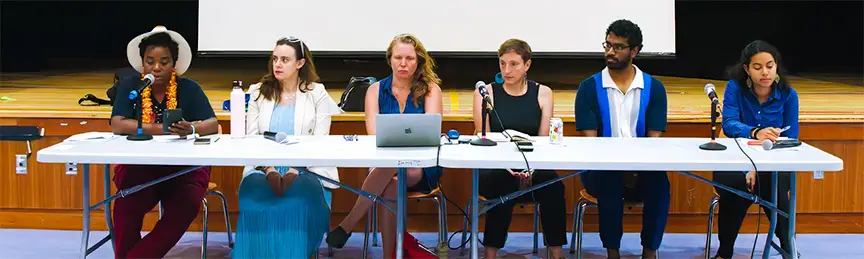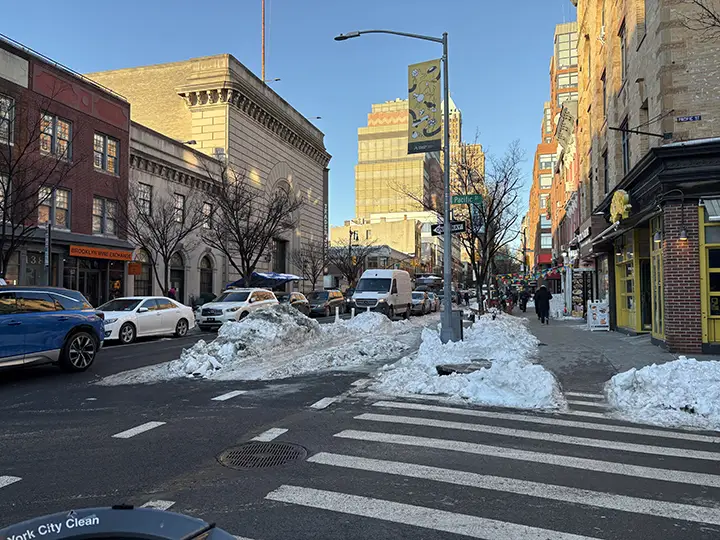
The most recent Community Board 6 meeting featured the ongoing battle over Court Street’s new redesign, a narrowly-passed motion on a neighborhood traffic concept and an approval of the annual district needs statement.
During the meeting’s public comment session, Carroll Gardens resident Edward Straka expressed skepticism about data pointing towards crashes on Court Street and shared his experience on the road since the reconfiguration.
“Emergency vehicles are compromised as they end up being stuck in traffic because there is nowhere for cars to pull over as a single lane entity,” said Straka. “Which leads to my next point — Carroll Gardens was caught blindsided by this implementation, particularly the merchants.”
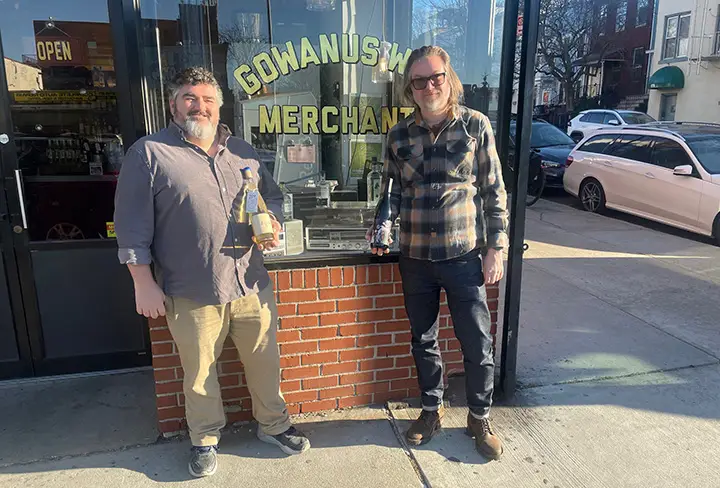
In late October, the Court Street Merchants Association filed a lawsuit against the city demanding a stop to the redesign. According to a Streetsblog article, Supreme Court Justice Inga O’Neale declined to halt construction, saying that she might have ruled differently if the suit was filed earlier in the redesign.
“I have navigated the street by foot and by bike and I am relieved that there is not a barrage of double-parked cars on the street and there’s now a protected bike lane,” said Boerum Hill resident, Diane Martins, adding that she wasn’t dismissing the impacts on businesses in her praise for the street changes.
“It is a completely different street, it’s loud, it’s noisy, it’s aggressive,” said Andrea Romeo, the owner of Painted Swan, a home decor shop on Court Street.
Romeo mentioned that three customers called her to cancel their visits to the store after they gave up on trying to find parking, which some say has become increasingly difficult since the redesign.
“My employees come to work on a bike, I want them to be as safe as they can be — however, the way this was done seemed almost disingenuous.”
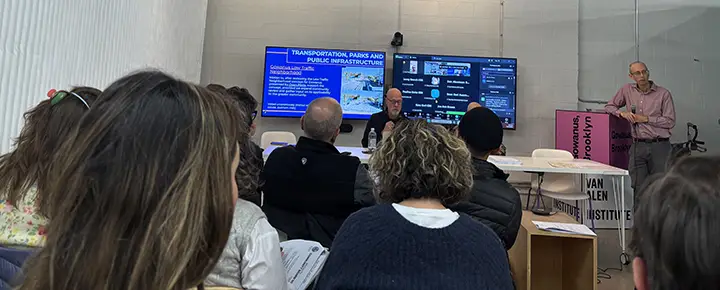
Road changes remained a hot topic at the Nov. 12 meeting, with a motion to support a Department of Transportation study of low traffic neighborhoods, a concept that diverts traffic away from residential areas.
“So the idea is you can take a neighborhood and make it impossible to drive through it,” said co-chair of the board’s transportation committee, Tony Melone, explaining the concept in a presentation. “That neighborhood is basically for people who live in the neighborhood who can get deliveries or get emergency services that need driving into the neighborhood.”
In a low-traffic neighborhood, through-traffic gets rerouted back onto larger roads that carry cars longer distances. These roads are known as boundary roads, as they would make up the border of the low-traffic neighborhood. The Gowanus example shown in the presentation from Open Plans, a non-profit that advocates for safer streets, suggests traffic being directed towards Third Avenue to the east and Smith Street to the west.
“I understand ideally you reduce traffic, but that’s not going to happen overnight and people do need to drive,” said board member Katie Muehlenkamp, who questioned the logistics of the plan.
CB6 chair Eric McClure said that Muehlenkamp’s concern was also one in London, where there are over 100 low-traffic neighborhoods.
“There really wasn’t any uptick in traffic on the boundary roads,” said McClure, citing a study from the British Medical Journal.
Several other board members questioned the concept with similar worries related to traffic impacts and others chimed in to remind members that it was simply an idea and not an official plan.
“It’s simply a concept and there is no DOT proposal to do this,” said McClure.
Traffic change concept passes
While the concept was presented and supported unanimously at a recent transportation committee meeting, the full board vote reflected a mix of sentiments. The motion to support the study of the traffic idea passed with 15 in support, 12 against, and three abstaining.
Each year, community boards in New York City draft a Community District Needs statement outlining funding priorities for their districts. For fiscal year 2027, CB6 outlined its top priorities being new construction and preservation of housing, investments in climate resilience and transportation, and increased social services.
Board treasurer Dillon Shen-Cruz reviewed the needs statement, highlighting disparities in access to public services in different parts of the district.
“Healthcare access is also spatially unevenly distributed within our districts,” said Shen-Cruz, citing the only major hospital in the district being NewYork-Presbyterian in Park Slope. “That’s really hard to access for people who live near the waterfront.”
The board unanimously approved the needs statement.
Discover more from Red Hook Star-Revue
Subscribe to get the latest posts sent to your email.