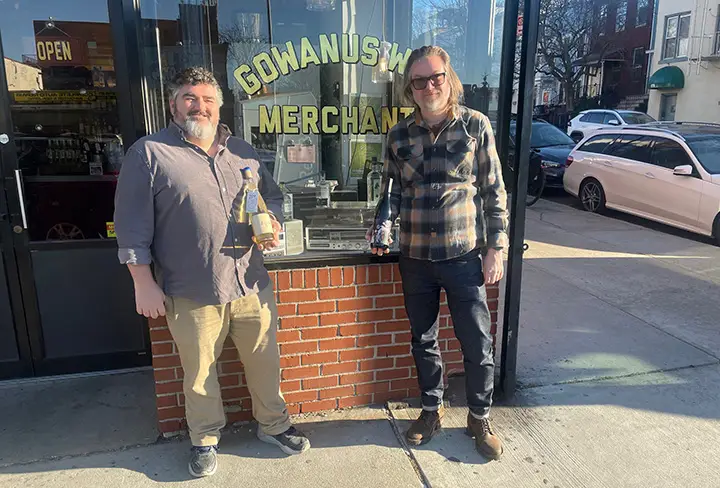
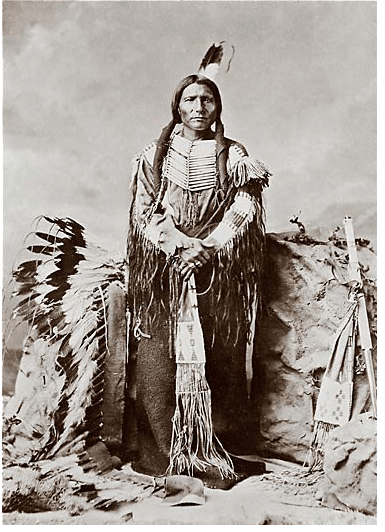
I met Thunder, also known as David Midthunder, through my longtime friend Jeff LoMaglio
“Is Thunder going to be ok talking to me?” I asked timidly. “I’m an outsider,” I added, hoping that my interest would not come off as intrusive or inauthentic.
“He’ll talk to you because you’re my friend. We’re family. It’s that simple,” said Jeff.
When I looked up Thunder on the Internet, I saw that he’s been an actor, an activist and movie consultant. He has acted in Comanche Moon, Into the West, Westworld, Hostiles, The Lone Ranger, The Book of Eli, The Last Stand and Maleficent: Mistress of Evil and others.
When I spoke to Thunder, I told him that I wouldn’t be asking him about his acting career. I wanted to focus more on his knowledge of Lakota history and traditions.
[slideshow_deploy id=’12813′]
“I look like a stereotypical Indin,” he joked, imitating how whites said the word Indian. “Most of my acting parts have been Indian characters
Thunder is an enrolled tribal member at the Fort Peck Indian reservation in Montana. He graduated from Stewart Indian School in Nevada and went on to pursue a degree in Cultural Anthropology at the University of Utah.
“What is the best term to call your people?” I asked.
“We call ourselves Lakota. Not Sioux, as we are also known. Sioux is the term the Europeans gave to our people. It is considered derogatory.”
“Why did you come to New York in the nineties?”
“As an actor, that’s the place to be. While I was trying to get parts, going on auditions, I was driving a truck. Like I said, people know I’m Indian just looking at me. One day driving a truck, a few Mohawk brothers walked past me. They asked if I’d want to work on the skyscraper rigs. Sure, I said.”
“I’ve heard that there were many Indigenous men who worked on building skyscrapers. Why was that so?” I asked.
“I don’t know. I grew up riding horses, being a bull rider. I even learned how to surf from my Hawaiian brothers when I lived in California. Being a high-rigger comes naturally to me.”
“Were you afraid of the heights?”
“I was careful.”
“Was there a robust Indigenous community in New York City at that time?”
“Definitely. Mohawk’s especially. Many Mohawks and other Indians would come down from upstate NY reservations and Canada to work on the rigs. At that time, I got involved in the American Indian Community House. Among other things, the American Indian Community House provided resources for people coming down from the Mohawk reservation to better enable them to live in the city. The American Indian Community House is still highly active.”
In researching Indigenous history, I came across the work of Joseph Marshall III. Born and raised on the Rosebud Sioux Reservation, Joseph Marshall III has written extensively about his Lakota and other Indigenous peoples. Among his many books are Crazy Horse Weeps, The Lakota Way, Hundred in the Hand and more. Marshall writes about the differences in Lakota and Western education and culture. How Lakota are taught to be respectful and responsible toward the land. How everyone in the village was a teacher – not just your parent or guardian, for example.
In Crazy Horse Weeps, Marshall reminds us that Indigenous rights are still under siege. The Dakota Pipeline Protests (DAPL) in 2016 and 2017 were represented by Indigenous tribes from all over the country. This outpouring of support showed the profound unity among Indigenous people. But the DAPL also demonstrated that corporate greed and indifference in America has shown no slow down. “The DAPL is simply a continuation of the subjugation and rape of the natural environment and its resources to enhance and benefit white culture, no matter the probability of harm to the land and water or to marginalized people,” wrote Marshall in Crazy Horse Weeps.
Knowing Thunder’s parents were involved in social justice activism, I asked him about American Indian Movement (AIM).
“I’ve read about (AIM) in the nineteen-seventies. How would you say Indigenous Rights have advanced since then?”
“Organizations like the American Indian Movement (AIM) have always encouraged education. Now we have brothers and sisters who are lawyers, scientists, teachers and so. Now, rather than non-violent protests, tribal people are working through the courts, fighting for land and sovereignty rights,” said Thunder.
I mentioned that I had just read that a northern California Indigenous tribe’s sacred land has been returned to their ownership, thanks to the help of a conservancy group.
I read a quote from an article I’d seen a few days earlier.
“We are going to conserve it and pass it on to our children and grandchildren and beyond,” said Tom Little Bear Nason, Tribal Chairman of the Esselen Tribe of Monterey County. “Getting this land back gives privacy to do our ceremonies. It gives us space and the ability to continue our culture without further interruption.”
“Exactly,” said Thunder. “This is what I’m talking about. We need to use every means possible. For instance, my daughter uses her platform as an actress to promote Indigenous Rights issues. I don’t do any social media. But I’m glad to see this generation evolving.”
“You speak Lakota, right?”
“I speak Lakota and all of the related languages.”
“Do your kids speak Lakota?”
He answered affirmatively.
“How do you think Lakota teachings should be carried forward?”
“Lakota teachings are about how to be a better human being. They are universal. Having a relationship to the land. Feeling the responsibility of coexisting with the human and non-human world. The rest is unique to each tribe, to each community and family.”
Interestingly, Crazy Horse had a vision that someday the Lakota would rise again and be a blessing for a sick world. He saw a time when all the colors of mankind would gather under the Sacred Tree of Life and seek its wisdom. Crazy Horse foresaw the Lakota being central to the coming together of all people.
And this, I believe, is what is happening. We are at a crossroads where, as Thunder said, “being a better human being,” is not only a desired goal but now vital to our shared coexistence on this planet.
Author

Discover more from Red Hook Star-Revue
Subscribe to get the latest posts sent to your email.