
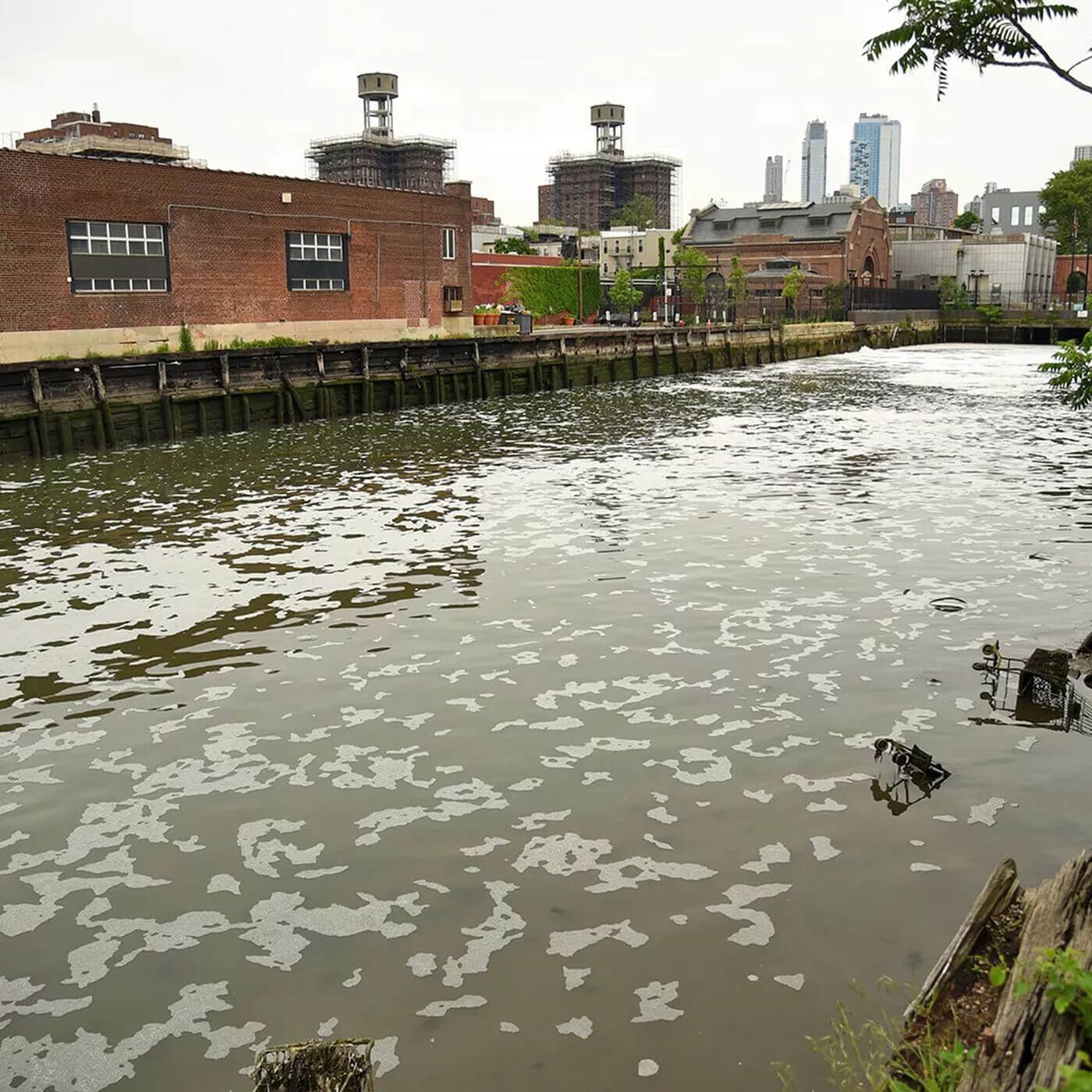
The Environmental Protection Agency (EPA) will begin dredging the Gowanus Canal in mid-November, scraping out the thick layer of tar and feces that sits at the bottom of the waterway. But Christos Tsiamis, the EPA engineer who heads the cleanup, warned that a new layer of gunk could start accumulating after dredging is done in 2023, as the completion date of the two retention tanks meant to prevent recontamination could be pushed back. In June, the Department of Environmental Protection (DEP), the city agency overseeing the tanks’ construction, which is already behind schedule, requested an 18-month extension from the EPA. Work on the retention tanks is funded entirely through water bills paid by New Yorkers, the DEP wrote in an email to the Star-Revue. The lower water consumption and unpaid bills resulting from the pandemic have cut the city’s revenue, requiring that it review “all current and future capital projects.”
During a virtual meeting last week with the Gowanus Canal Community Advisory Group, a local organization, Tsiamis explained that the EPA is still deciding whether it will grant the city’s extension request. At the meeting, members of the organization vented their frustration at the prospect of another delay and at the city’s general foot-dragging in fulfilling its part of the cleanup. “What kind of teeth does the EPA have against New York City?” asked community member Louis Kleinman, who expressed his desire for the federal agency to take a hard line with the DEP. “Can we put somebody in jail? What can you do to goose these people up?”
The only teeth the EPA has bared so far are a series of stern-worded letters it sent the city this summer. In one such correspondence dated July 28, the agency’s regional administrator, Pete Lopez, warned that the DEP was in “significant non-compliance” with its obligations relating to the construction of the smaller of the two tanks, which will be located along the middle of the canal. In the same letter, Lopez asked the city to provide additional information in order to evaluate its extension request. DEP Commissioner Vincent Sapienza responded in August by providing a construction schedule for the larger of the two retention tanks, which will be located at the top of the canal and have a capacity of eight million gallons. Sapienza stated the DEP would furnish a schedule for the smaller, four-million-gallon tank later this year, once the city has assessed the pandemic’s impacts on its budget. In a separate correspondence, DEP lawyers urged the EPA to “move forward with the design and contracting work rather than publicly debating whether the City and DEP are in compliance with their obligations.”
Lopez did just that. On September 2, he directed the DEP to establish a schedule for the completion of both tanks and to procure a contract for the design of the smaller tank, a step that the city had stalled on for several months. In his September 16 response, Sapienza lamented the EPA’s “deeply disappointing” and “myopic” directive. “But if this is truly EPA’s priority,” he wrote, “DEP will comply with your instructions, and my staff will promptly complete the procurement of the design contract.” The DEP estimated it will take five years to obtain the design and permitting for the smaller, while work on the bigger tank should be done by 2032.
Reprimands penned on official letterhead aren’t the EPA’s only recourse. There are considerable monetary penalties for noncompliance with Superfund directives, and the EPA has made the city aware of them, Brian Carr, the federal agency’s assistant regional counsel, said to members of the community advisory group. The EPA is taking the city’s financial burdens into account and weighing them against instances of noncompliance that predate the pandemic as it deliberates on whether to grant the DEP its extension request, Carr said. “The agency’s going to make a reasoned decision and the regional administrator’s correspondence indicates the EPA’s willingness to do that.”
Should too much time elapse between the dredging of the canal and completion of the tanks, Tsiamis said, the city would have to carry out additional maintenance dredging to decontaminate the canal again. “That will cost New York City a lot of money.”
“And who would put their feet to the fire to do that?” asked Margaret Maugenest, a community member. “If it weren’t for you [the EPA], they’d be doing nothing!” Carr clarified that the EPA intends to make maintenance dredging an enforceable requirement for the city.
Author

Discover more from Red Hook Star-Revue
Subscribe to get the latest posts sent to your email.


One Comment
Pingback: The Briefly for October 25 - 26, 2020 – The "Vote or Die" Sunday Edition – The Briefly - Your Daily NYC News Digest