
With the US Open in town, it’s not uncommon to get caught up in the exciting matches and maybe pick up a racket yourself. Tennis players are considered “overhead” athletes who use their upper arms and shoulders in an overhead throwing or swinging motion – but the work and power actually starts in the lower body.
According to sports health experts from NYU Langone Health, the root of upper extremity injuries that tennis players may experience (i.e. shoulder joint, scapular and rotator cuff issues) can be linked to repetitive stress and a lack of lumbopelvic strength and stability conditioning. Proper preparation is vital to ensure long and healthy careers – whether you are a tennis prodigy, like Venus Williams or Roger Federer, or just like to play for fun in friendly matches.
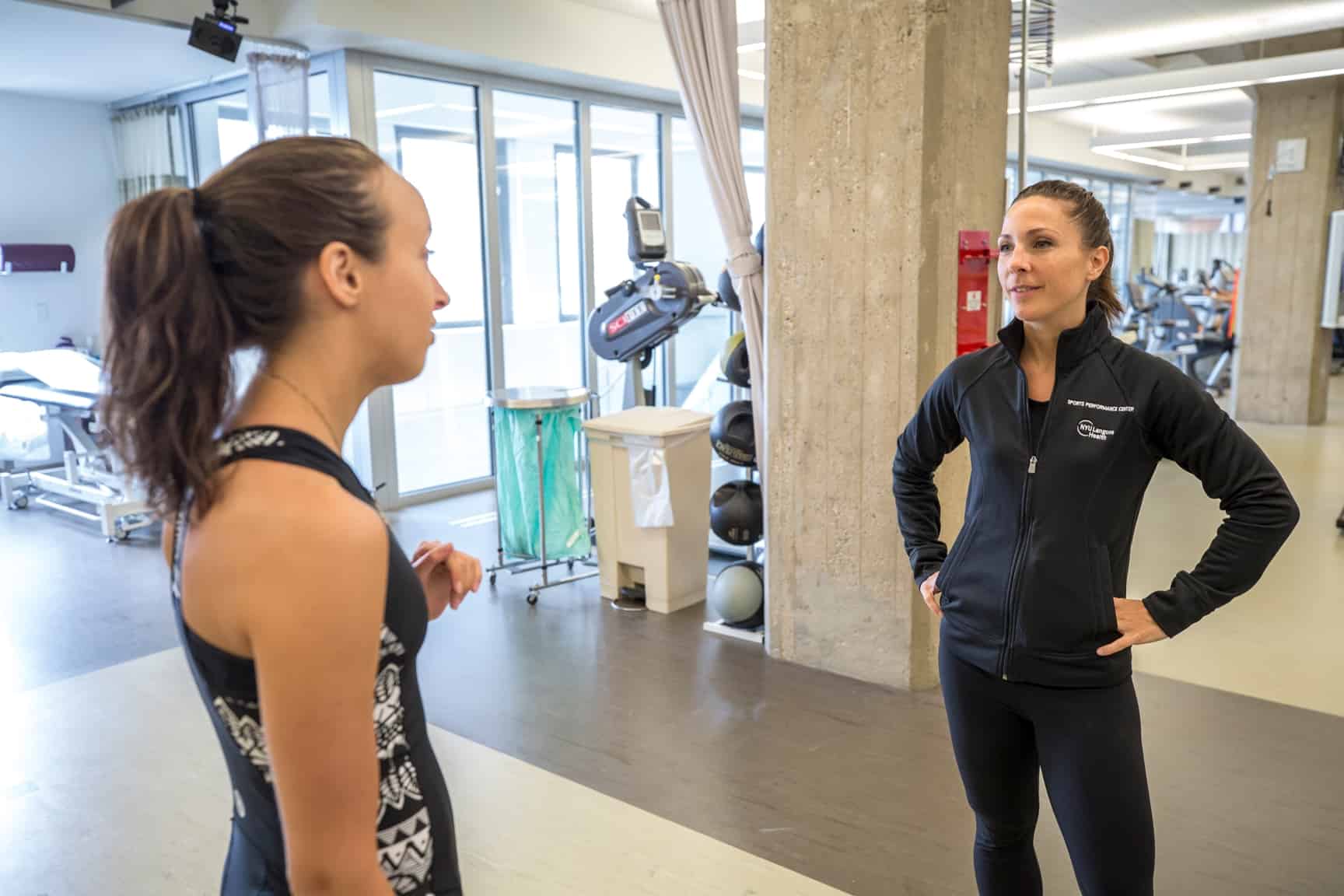
Heather Milton, an exercise physiologist at NYU Langone Health, develops specialized programs to help athletes reach their maximum potential and ability and designs injury prevention programs for at-risk athletes. She spoke with us before the US Open began in late August and provided some advice on how to improve personal tennis performance.
RHSR: What are the best ways to avoid [those injuries]?
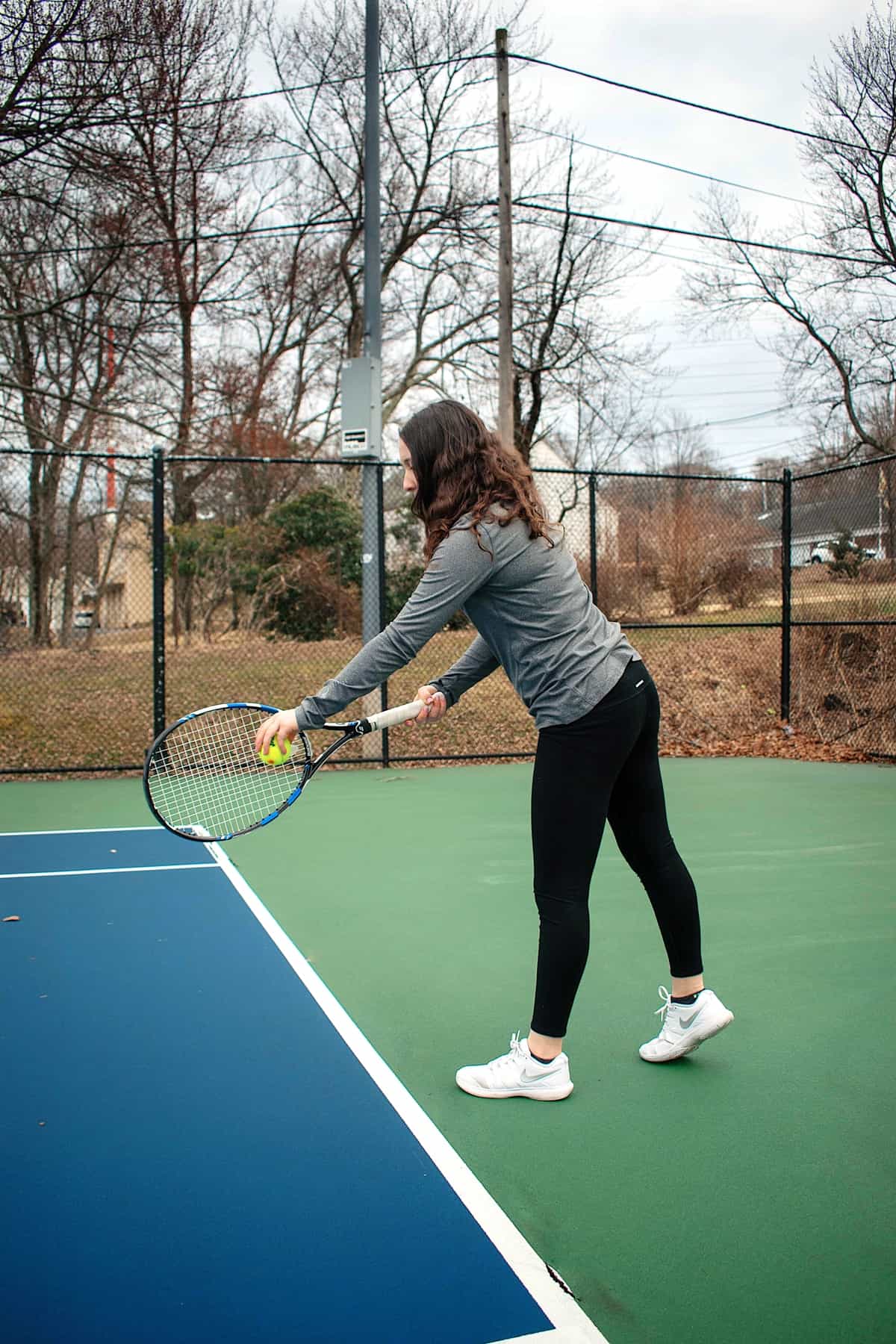
HM: It’s more so about making sure your body is best prepared for the exercise you’re doing – making sure the shoulder joints are stable and able to withstand what you’re asking it to do [i.e. serving and hitting]. A lot of times we’ll see people, specifically more recreational players, that will not play all winter and then, as soon as the spring hits, they’re going out and doing more than their bodies are ready for. That’s when we tend to see the most injuries. In terms of what to do to avoid it, be consistent with training and make sure you’re not adding too much [training] volume too quickly. So if you haven’t played for a while and are now on the courts, it’s making sure you’re not doing multiple hours in a row or multiple days in a row – that you’re giving your body enough time to recover in between. As you do that, the tissues and all the stabilizing structures have enough time to recover and become stronger.
RHSR: How can players improve ball velocity?
HM: It’s twofold. One – there’s research that tells us that [after] starting a pretty standard strength and conditioning program for as little as eight weeks, two to three days per week, you can see an increase in ball velocity. So that’s doing lunges, squats, rows, chest presses [to ensure whole body conditioning], and again that hip, knee and ankle flexion and extension in the lower body. The other thing you want to consider is what your sequencing of movement is for anything – whether it’s football, tennis or [baseball].
We want to see that the force is actually starting to be initiated, not only through the lower body, but at your hips.
Then that transfers to movement at the torso, [which] transfers up the arms. We do a lot of drills and more neuromuscular training and really condition that.
RHSR: Anything else that’s important to consider?
HM: Doing a dynamic warm-up is something that for all sports is super important, and I think more people are learning that now. There is an older mantra of doing static stretching before you start exercising to prepare, and we really want to see people doing things that are more dynamic to activate all the muscles that ought to be working. For instance, working from the ground up and doing [muscle] activation patterns for cores, glutes, lower bodies and shoulders. [It] benefits your performance and also decreases injury risk.
Top photo of Milton with triathlete Jori Goodman. Photo courtesy of NYU Langone Health.
Author

Discover more from Red Hook Star-Revue
Subscribe to get the latest posts sent to your email.