Displacement Is No Myth
Across the country, gentrification continues to be a sexy political topic for those least vulnerable to its effects, booming in and echoing out of consciousness. Regarding gentrification and the Black church in NYC, displacement is top of mind.
For those most negatively affected by gentrification; lower-income, and long time residents, mostly people of color, gentrification is not just a talking point. The displacement and pricing out of African Americans from their neighborhoods has had a detrimental impact on Black communities and notably, Black churches.
Gentrification: The restoration and upgrading of deteriorated urban property by middle-class or affluent people, often resulting in the displacement of lower-income people. Gentrification is not simply the renovation or restoration of a neighborhood, it’s high-contrast classism ––– smudging of cultural identity.
The Layers of Inequity
In an interview with the Star Revue. Pastor A.R. Jamal of Red Hook’s New Brown Memorial Baptist Church discusses gentrification’s impact on his neighborhood and the legacy of the Black church.
Reverend A.R. Jamal: “I was a little boy when I first moved to East New York in Brooklyn. My mother and I had to become Catholic because the Catholic church ran the neighborhood at the time, so we became part of the neighborhood. Today, that’s not the case. White people are moving in, but they don’t go to Black churches, they don’t shop in Black stores, so these businesses and organizations eventually shut down. In Brooklyn, a lot of churches are closing because of gentrification and Black people are moving back to the south.”
People from all ethnic and socio-economic backgrounds seek housing they can afford – that is understandable. However, gentrification cannot simply be defined by the financial motivations of neighborhood newcomers. Black neighborhoods have been neglected, underfunded, and overpoliced for generations, to separate gentrification from this context would be ahistorical.
Gentrification furthers the legacy of marginalization of people of color, by building on top of decades of redlining; a process that allowed white families to move into suburbs and attain more wealth via the equity from their homes while preventing black families from doing the same. Today, the underfunded neighborhoods that never built up sufficient wealth are targets for contractors, whose sole goal is their bottom line.
The Legacy of the Black Church
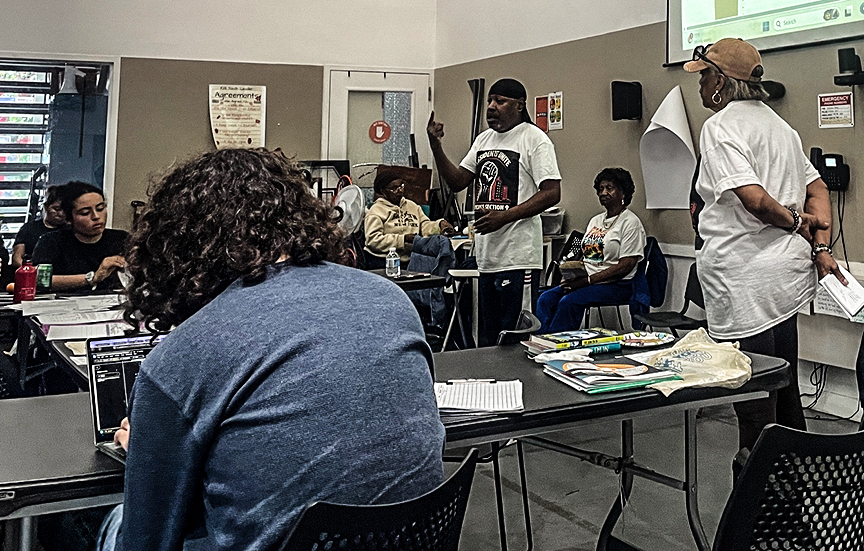
The Black church has been a center for community organizing during the hardest times in Black American history. For Reverend A.R. Jamal, marching with Black Lives Matter was not only a priority, it was also in alignment with the historical function of the Black church. Along with other pastors, Reverend A.R. Jamal recently formed the United Christians for Justice, an organization focused on improving their communities through mentorship, classes and education.
The Reverend went on to discuss the importance of protest and why some questionable ‘allies’ seem more fixated on anarchy than racial equality.
“It’s important that young people don’t get drawn into the nonsense, or violence, they need to stick to the cause. I see Black Lives Matter is being treated as just a slogan by some of the folks who call themselves allies,” he says.
Jamal continues: “The white folks protesting don’t go to Black churches and barbers, etc. I remember Dr. King discussing agitators and distractors while the FBI was surveilling him. The point is, you can’t scream Black Lives Matter and not care about the displacement of Black communities.”
Performative allyship is self-serving and a deterrent to the movement. Anarchist dreams of some young white males, in particular, are parasitic to Black Lives Matter. The movement is not about living out a reenactment of a post-apocalyptic video game.
New York City’s Affordable Housing
The Reverend’s critiques extend beyond the gentrifiers and ‘allies,’ to New York City Mayor, Bill de Blasio, who has been called out for the neglect of poorer New Yorkers. According to critics, de Blasio and other city officials repeatedly ignore the ballooning problem of citywide gentrification.
Every day new buildings go up, with rental prices that far exceed the income of most residents, and city officials don’t seem to have a real solution. De Blasio’s deals with contractors to provide guaranteed affordable housing, seem to be aimed at aspirational middle-class folks seeking to intermingle with rich folks and not affordable housing.
Reverend Jamal continued: “De Blasio tries to pretend that he’s down. So what if he has Black children, he’s interested in the money he’s getting from contractors, he doesn’t care about us. Affordable housing is a joke. $2,500 for a studio, $3,000 for a 1 bedroom, who can afford that? That’s what they call affordable housing. When will it end?”
One of the biggest misconceptions about lower-income neighborhoods is that the residents don’t care about their surroundings or the revitalization of the neighborhood. This is false.
In reality, folks who live in lower-income neighborhoods often rent and have no equity in their environment. Often, the few neighborhood homeowners are either targets for buyers, interested in gentrifying the neighborhood, or are themselves, newcomers, to the community.
According to a 13-year long study by the NCRC, 7 cities, including New York City accounted for nearly 50% of gentrification in the U.S. Findings from the study suggest that buyers and investors are not necessarily looking for an economically booming neighborhood, but rather, one that has potential –– ‘cheaper’ property costs and opportunity.
Sunday Service
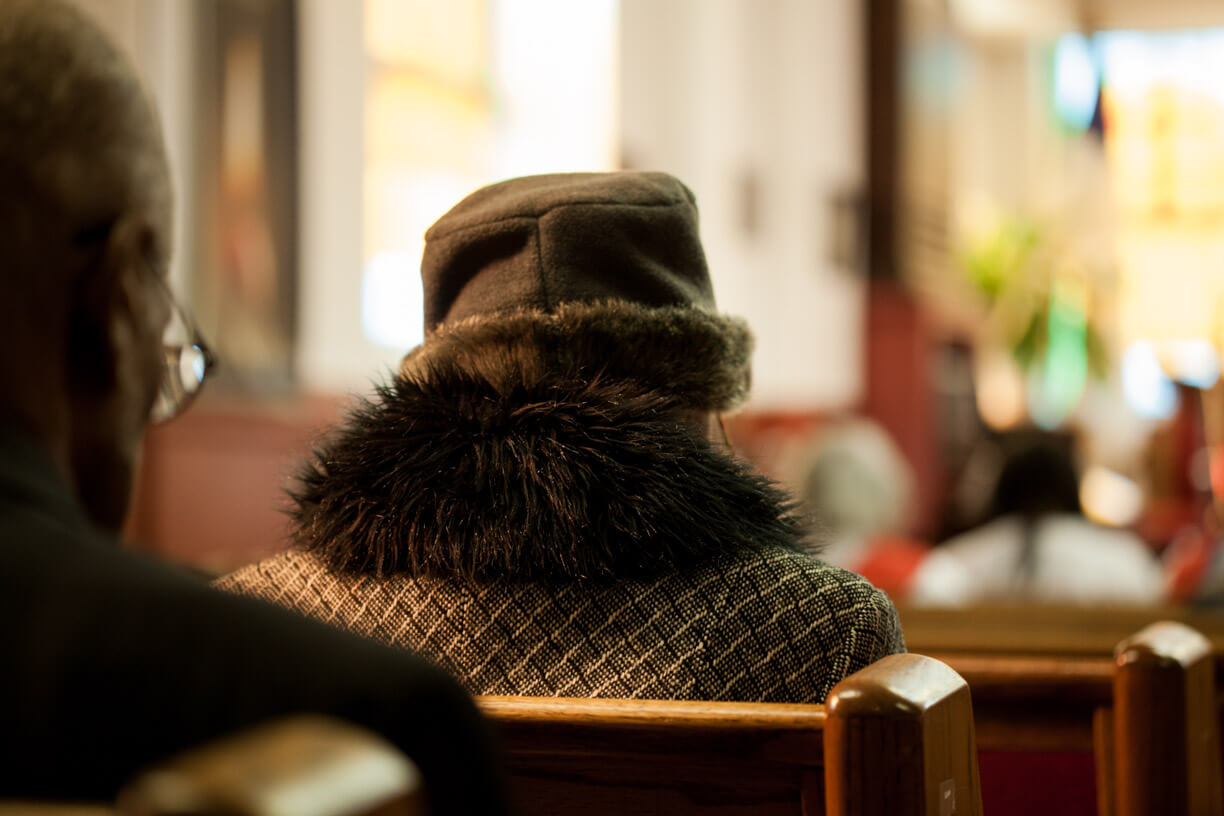
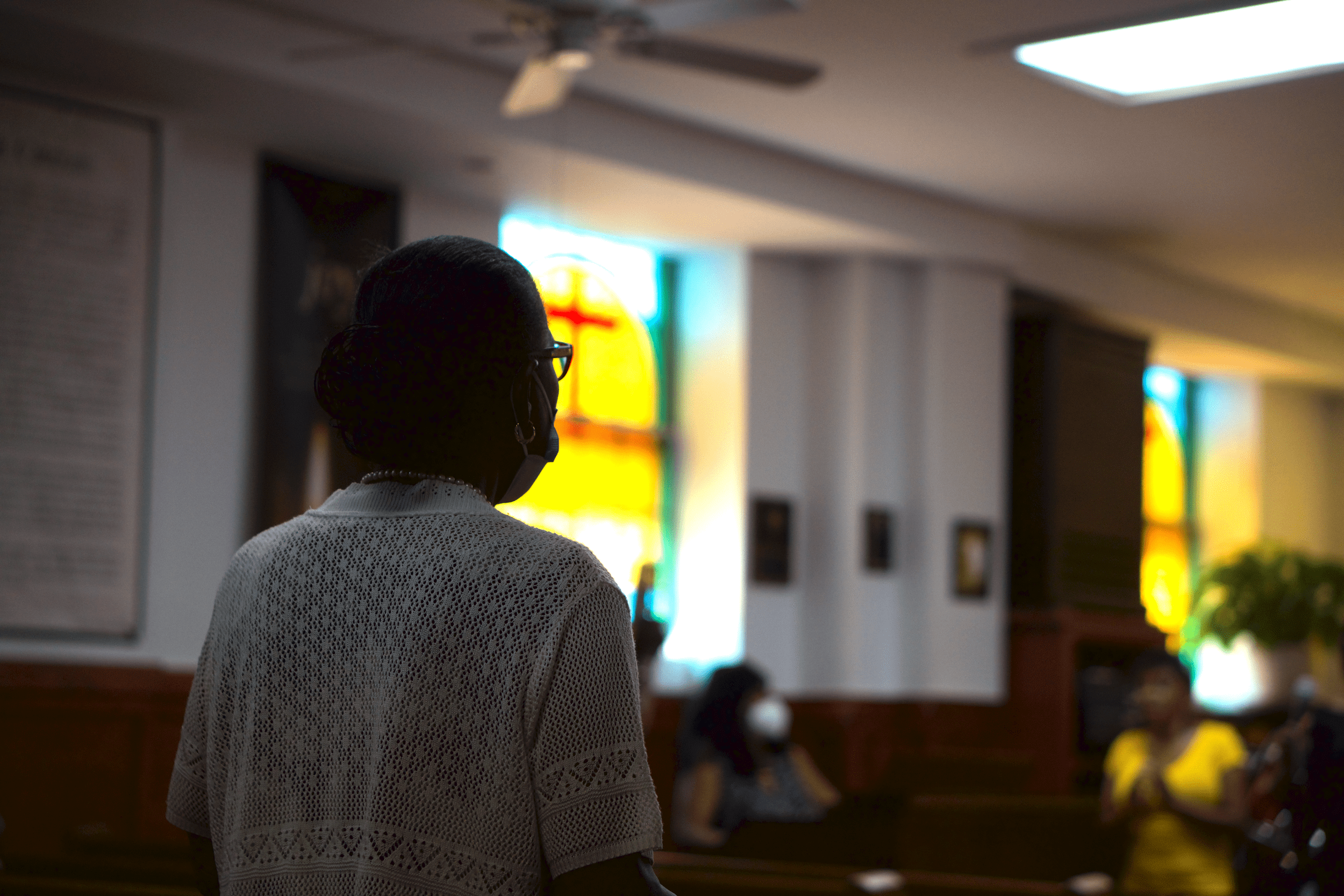
On Sunday, July 26, 2020, I walked into New Brown Memorial Baptist Church to the sound of a roaring praise team during Sunday service. I stood by the door watching the small congregation, all wearing masks and socially distancing throughout the pews. I thought, how could anyone think communities don’t care about their own wellbeing and their surroundings?
Reverend Jamal, begins to preach, “Saints, churches are closing down. It’s not just because of the virus. We’re going to push through. Black people have been resilient for centuries, this virus isn’t going to stop us, we believe in a higher power!”
“Last month Oprah discussed one of our brother’s books, King Kong Deacon, by our brother, James McBride. We are full of creativity, there is legacy and history in our communities, so we have to keep pushing.”
Homeownership for many people is a distant dream, especially in areas where renting has been the cultural norm. Moreover, many people aren’t knowledgeable about the paths to homeownership that may be accessible to them, and ways to build equity in neighborhoods (see Nipsey Hussle).
Without much help from the city government, it seems that divesting from hypercapitalism and investing in ownership within your own communities, ie. homes, apartments, stores, etc. appears to be the most viable way to fight gentrification.
Author

Discover more from Red Hook Star-Revue
Subscribe to get the latest posts sent to your email.