Buses are a lifeline for people in Red Hook, a neighborhood severed from subway service. The B57 and B61 buses are the only bus routes here and it turns out not all stops are created equal.
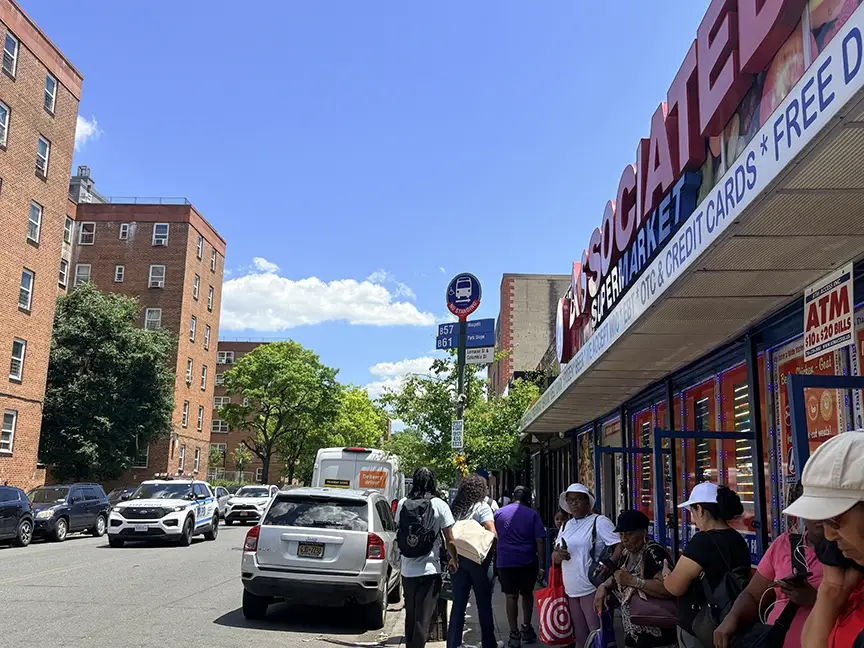
Janet Andrews, a lifelong resident of the Red Hook Houses toured the neighborhood bus stops with the Star-Revue, noting the disparity in where bus countdown clocks are placed along the route. Andrews said the lack of clocks on Lorraine Street near the Red Hook Houses is a particular issue.
“This is the main traffic over here on the west side, Lorraine Street, when it comes down to the buses,” she said, as people waiting for the bus packed the sidewalk at Lorraine and Columbia streets in front of the strip’s row of businesses. “As you’re walking across the street from Columbia to Lorraine Street, people would be able to see how far away the bus is.”
Red Hook resident Vakeen Warmsley said seniors often ask him to check bus arrivals on his phone, underscoring the need for a countdown clock at the bustling stop.
“A lot of people don’t have a phone or can’t access the phone off of WiFi,” said Warmsley. “We definitely need one over here.”
Warmsley noted that most of the bus stops with clocks are on Van Brunt Street and on Clinton Street, near where the buses continue their routes into Carroll Gardens.
What, we don’t count?
“It’s like, what happened to us?” said Warmsley.
While bus arrival information is provided by the Metropolitan Transportation Authority (MTA), the physical signs are installed by the NYC Dept. of Transportation. When asked about the disparity in bus clock locations, DOT spokesperson Mona Bruno told us that the existing clocks in Red Hook were installed by request.
“All New Yorkers deserve equitable access to quality mass transportation, and as NYC DOT develops a next generation of bus countdown clocks, future sitings will be guided by ridership with an emphasis on equitable distribution,” Bruno said via email.
On Van Brunt, countdown clocks are at every stop in the northbound direction from Dikeman Street to Verona Street. Looking at Google Streetview, the clocks were installed 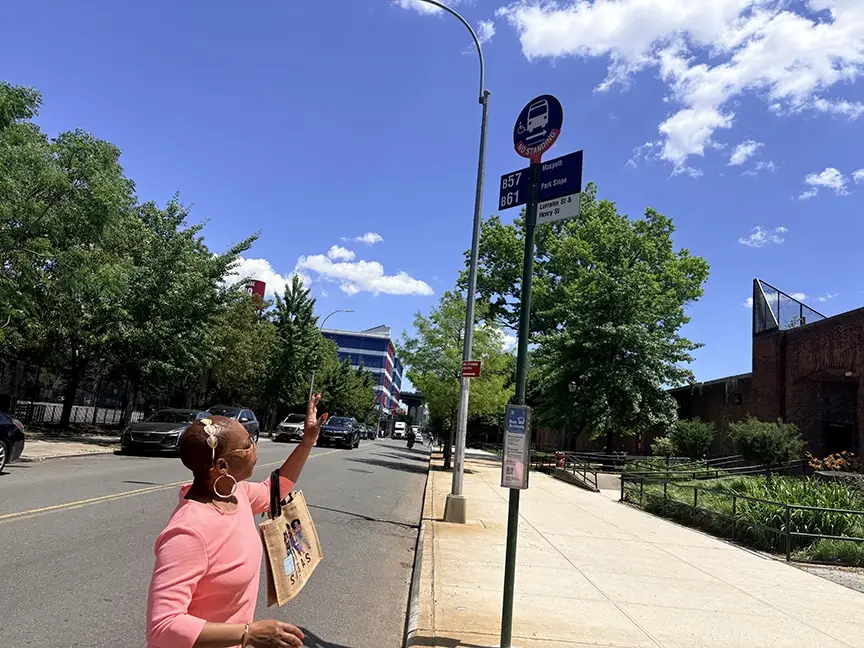
sometime between the fall of 2019 and the winter of 2020.
“You know they’re not going to install one at every stop in the hood,” said Andrews, referring to the placement of clocks near the Red Hook Houses.
In 2021, DOT developed the NYC Streets Plan to boost equity in transportation access. The plan identifies “Priority Investment Areas” (PIAs) to target future transit investment, based on income, the population of people of color, density, and the department’s previous investment history. According to the DOT, future clock installations will be based on ridership and PIAs, which are categorized into different priority tiers. With Red Hook grouped into a PIA with whiter, wealthier areas of Brooklyn, it’s included in the lowest-priority tier, suggesting it’s a lower-priority area.
“Different areas in Red Hook get more attention than the neighborhood itself,” said Andrews, reacting to the information about PIAs.
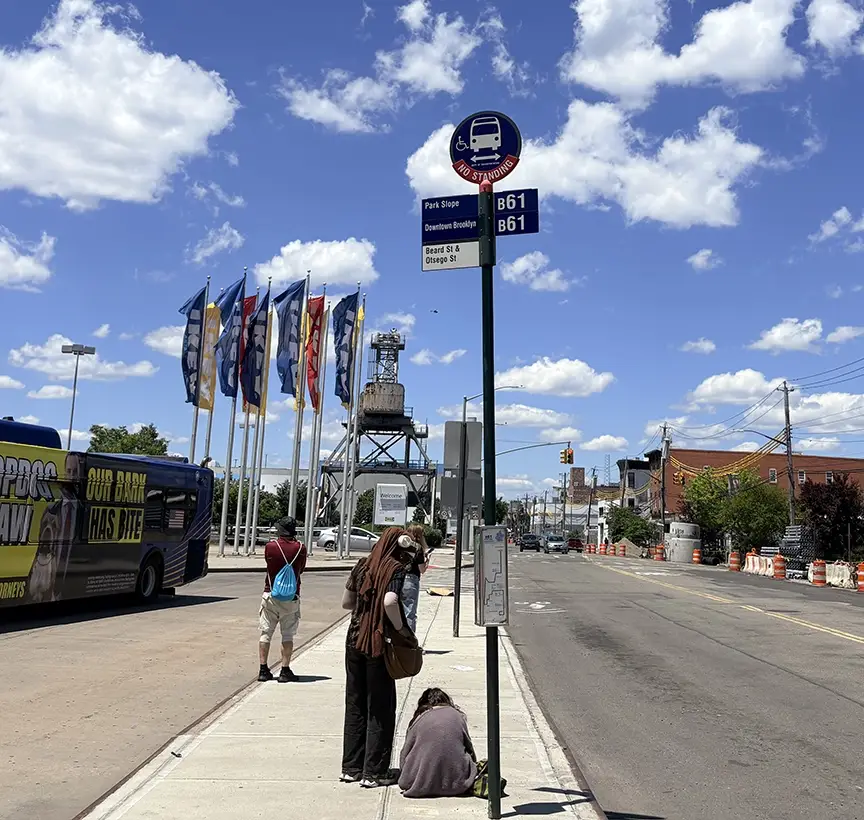
At the Beard and Otsego stop facing IKEA, countdown clocks are also non-existent.
“A lot of the time, buses get delayed… it would be helpful to have them out here,” said Asa Keipa, waiting for the B61 with her friend, Beatrice Devry Michaelson.
Blocked by scaffolding
There are two other countdown clocks in the neighborhood: one at Clinton Street and Lorraine Street and at the next stop on Mill Street. While it’s a plus for bus riders there, its usefulness is hampered by scaffolding that blocks the clock when viewed from the sidewalk.
“Oh, come on, they’ve got to do better than this,” Andrews said, reacting to the blocked clock.
The DOT didn’t answer our question as to whether this would be considered a safety hazard.
Andrews said she did a similar walkthrough in April with a staffer from Assemblymember Marcela Mitaynes’s office to express her concerns. She said she has yet to hear back from Mitaynes’s office about the status of her inquiries.
Star-Revue ghosted
We reached out to Mitaynes’s office to confirm this and whether they’ve communicated with the DOT about Andrews’s concerns. Multiple emails and calls to her office from the Star-Revue went unanswered. In our inquiry to DOT, the agency didn’t address our question about whether it had communicated with Mitaynes’s office about Andrews’s bus qualms.
Andrews said it’s critical that the neighborhood’s needs are addressed, given the contributions public housing residents have made to the community.
“Nowadays, outside people look at Red Hook as IKEA; Fairway,” said Andrews, harkening back to the popular grocery store that once stood before Food Bazaar. “But you’re missing the grounds right here—NYCHA people are Red Hook, too.”
Author

Discover more from Red Hook Star-Revue
Subscribe to get the latest posts sent to your email.