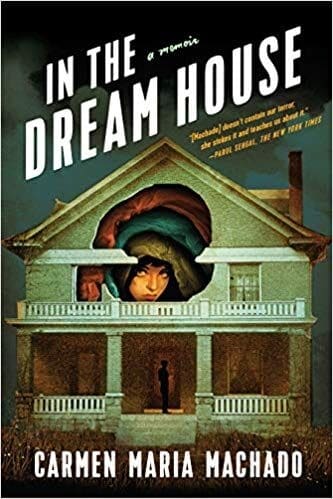
Carmen Maria Machado is a queer writer who gained a widespread following from her experimental collection of eight short stories: Her Body & Other Parties; (2017) a finalist for the National Book Award. Machado’s debut is dark, playful and experimental. In “Especially Heinous,” Machado rewrites 300 episodes of Law & Order: Special Victims Unit, and in “The Husband Stitch,” Machado plays with the idea of masculine control by rewriting the story of a girl with a ribbon tied around her neck to keep her head attached to her body. Her latest work, In the Dream House, explores a different type of danger, this time recalling a violent relationship Machado experienced on and off during graduate school.Not only is her second book nonfiction, but it is deeply intimate,exposing the type of verbal, psychological, and physical violence that can wreak damage upon any relationship.
Released by Gray wolf Press in November, In The Dream House is a mixture of memoir, vignette, and academic rigor. The plot is simple. Machado meets “the woman” who validates her, provides a brilliant and electrifying sex life but also locks her out of the house, screams insults, and threatens to kill her. But Machado can’t stay away and for every insult there is a moment of tenderness. In the relationship the woman tells Machado she is beautiful and worthy but then repeatedly calls her phone, accuses her of infidelity, slams doors and gets high before meeting Machado’s family for the first time. The woman’s erratic behavior is enough to drive anyone away and readers will find themselves urging Machado to run.
What I found most interesting about In the Dream House was not the content, but the persistence with which Machado reflects on her ex-partner, and her own participation in an abusive relationship. She is honest in her exploration of the relationship and in admitting her own participation in the dynamic. Much of the memoir is tonally similar to the compulsive diary of someone who frequently relaxes with Kahlil Gibran but is also willing to look inward–you get the sense that the memoir was written for catharsis while seeking absolution. There is a manic quality to the book that mirrors the instability of the relationship. As Machado writes, “Sometimes you have to tell a story, and somewhere, you have to stop.”Many lines read like poetry–“ …warm blood down the back of your throat; milk, and metal”–and the writing can feel dizzying, lacking the crystalline quality of memoirs I most admire such as Gornick’s Fierce Attachments or Wolff’s This Boy’s Life.
However, In the Dream House is a brave and incredibly painful journey inside the contours of a relationship that feels primarily bad. I found myself desperately hoping that writing the memoir made Machado feel better. The narrative takes a surprising Shakespearean turn and I can rest easy knowing Machado is now safe and happily married.
Machado seems most intent on dispelling Utopian notions of lesbian relationships, or any relationship at all. Machado wants to remind us that violence happens everywhere. We must remain vigilant and vocal, and her memoir is a reminder of this necessity for knowledge and advocacy.
Author

Discover more from Red Hook Star-Revue
Subscribe to get the latest posts sent to your email.