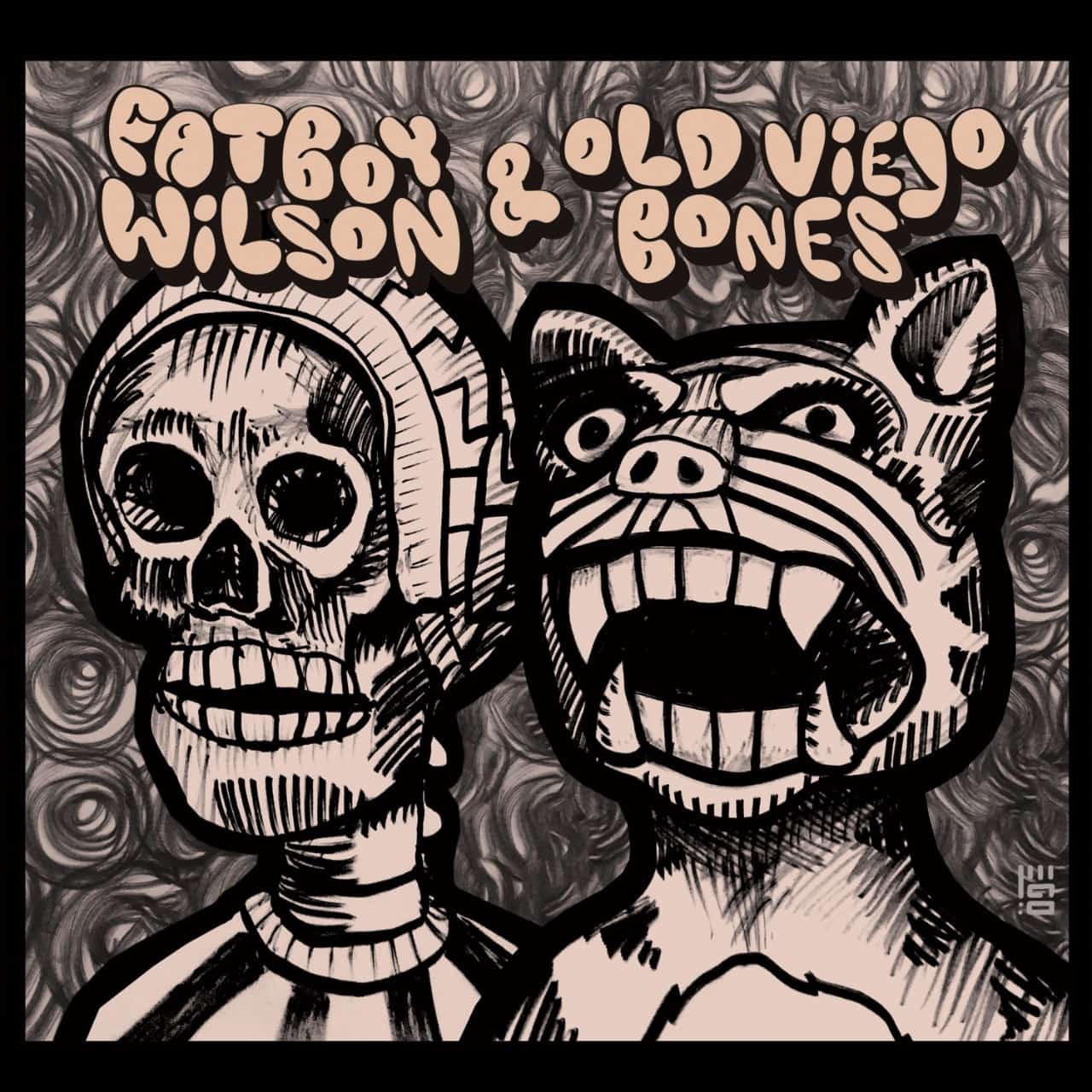
Jalopy Records has recently released the debut album Fatboy Wilson & Old Viejo Bones. Samoa “Fatboy” Wilson and Ernesto “Lovercat” Gomez (aka Old Viejo Bones) are an acoustic duo who specialize in old-time, folk, Americana, blues, and more.
Wilson sings and plays baritone ukulele while Gomez sings and plays guitar and harmonica. The sound of this recording is true to their live act with no studio trickery. Recorded in a day at Wilson’s house by Frankie Sunswept, the album features covers and originals that speak of a wide variety of subjects including social justice, environmental issues, and the joys of smoking weed and drinking booze.
Gomez describes “It Don’t Hurt Nobody,” a track on the album: “It’s an original that Samoa wrote about acceptance, tolerance, and not being a freaking bigot. ‘It don’t hurt nobody if I change my sex; it don’t hurt nobody if I wanna smoke a little weed.’ It’s good stuff.”
Wilson’s “Ballad of Luis Reyes” and “Ridgewood Blues” depict her experience of living and working in contemporary New York, while Gomez’s song “Black Snake” reflects his experience on the Standing Rock Sioux Indian Reservation in North Dakota, opposing the construction of the Dakota Access Pipeline.
There are twelve tracks in all, which can be heard and purchased at jalopyrecords.org or directly from the group at live shows. The duo performs regularly at the Jalopy Tavern but also often at the Starr Bar in Bushwick and Windjammer in Ridgewood.
Both Gomez and Wilson are established performers on the New York Americana scene, though they were exposed to roots music in different ways. Wilson explains, “My family came together during the folk revival in the ‘60s in Boston. We listened to Benny Goodman, Woody Guthrie, the Carter Family, Sonny Terry, and Brownie McGhee, so my ear was really opened up.”
About her childhood, she says, “I grew up in a commune outside of Boston. I started performing when I was 12 years old on the street with my family by busking.”
Folk legend Jim Kweskin was instrumental in her development as a performer. “He’d gather all the kids to sing together. We had maybe one guitar and 30 people singing in unison. I call him my uncle, even though we’re not related,” recalls Wilson.
Gomez is from Union City, New Jersey, and remembers “listening to salsa, merengue, cumbia, a lot of Spanish music and commercial radio, hard rock, Howard Stern, rap, hip-hop, freestyle, et cetera. I was break dancing when I was 12. Rap music stuck to me more than anything, and then later club music. I was going to kids’ clubs for teenagers to dance, but had no clue about folk music until later. When I picked up the harmonica, I got into Little Walter, Sonny Boy Williamson, and then a friend turned me onto the Yazoo series Before The Blues, which changed my whole music perspective.”
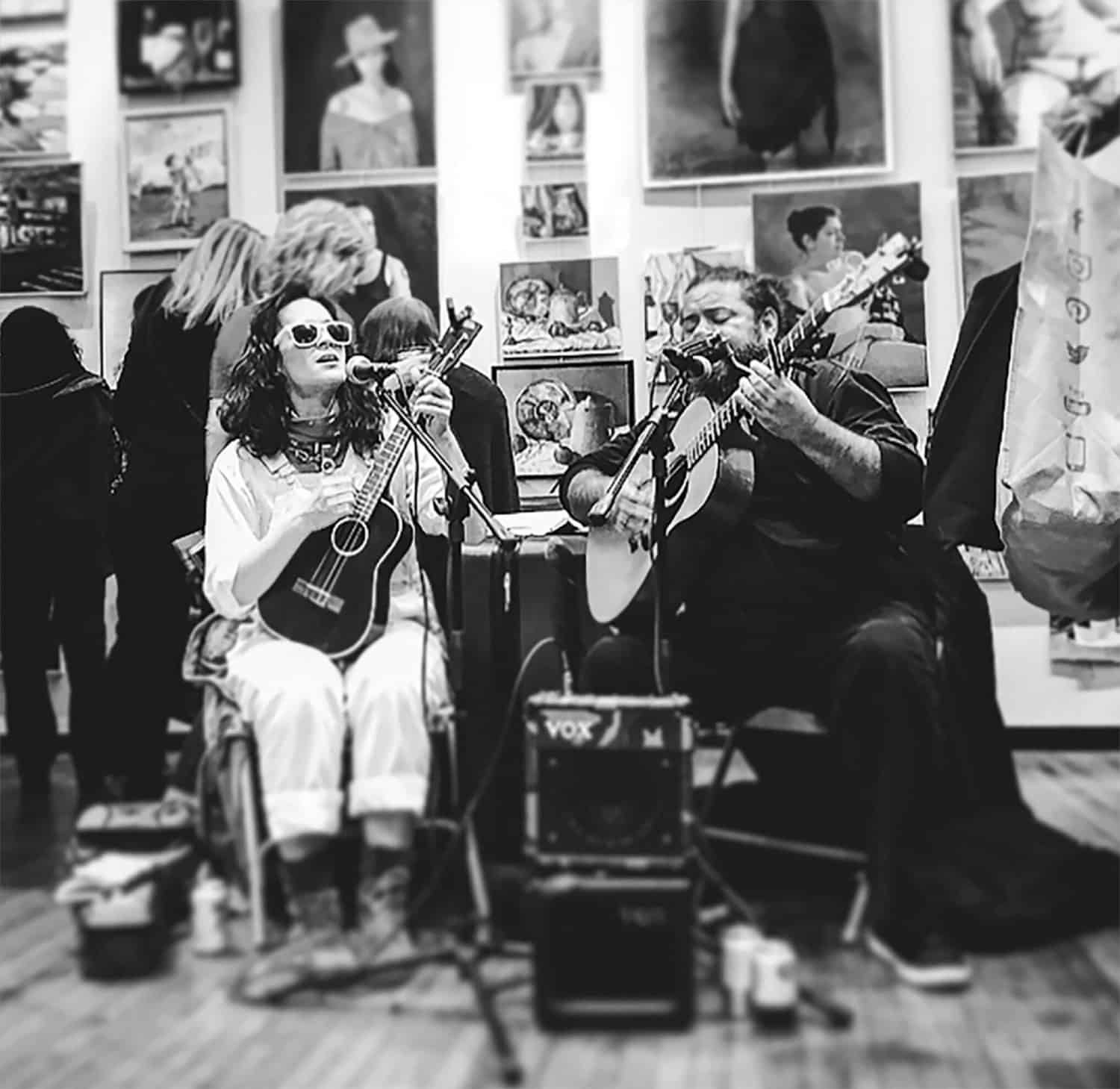 Gomez and Wilson met at an event curated by local musician Ernie Vega at The Gaslight Cafe, with whom they both play in other bands. They started jamming and soon realized they had the makings of something serious. Wilson states, “We’d been playing together for about two years, and we thought that it’d be really cool to make EPs to sell for $5 each, like trading cards. We’d been in New Orleans, and were into doing Exquisite Corpse drawings.”
For the unfamiliar, Exquisite Corpse is a technique invented by the surrealists where participants gather words and images and assemble them collectively, resulting in unique artistic compositions. This particular aesthetic was integral to the Gomez-Wilson collaboration. Both are visual artists, and Gomez designed the album cover art influenced by “pre-Columbian art and graffiti.”
Initially, the duo created CDs with two traditional and two original songs in a very DIY fashion, many of which they gave away as calling cards, but Eli Smith at Jalopy Records encouraged them to release all of the material as one cohesive record.
About their punny stage names Gomez says, “It was a joke. We were at Ernie Vega’s open mic at Jalopy. We signed up with funny names and wanted to go up without him knowing who we are. Our friend and musician Feral Foster likes to call musicians he admires ‘Fat Boys.’ He gave Samoa that name, and we thought it was great. I wanted something redundant so chose “Old Viejo Bones.” “Viejo” is Spanish for “old.”
Fatboy Wilson & Old Viejo Bones will be playing the Mid-Winter Jug & String Band Rendezvous on February 14 and 15 at the Jalopy Theatre, and February 16 for Major Minor Folk U at Starr Bar (every third Sunday). Whether they’re known by their stage or given names, this dynamic duo is well worth seeing live, and their album is highly recommended for fans of Americana.
Author

Discover more from Red Hook Star-Revue
Subscribe to get the latest posts sent to your email.