
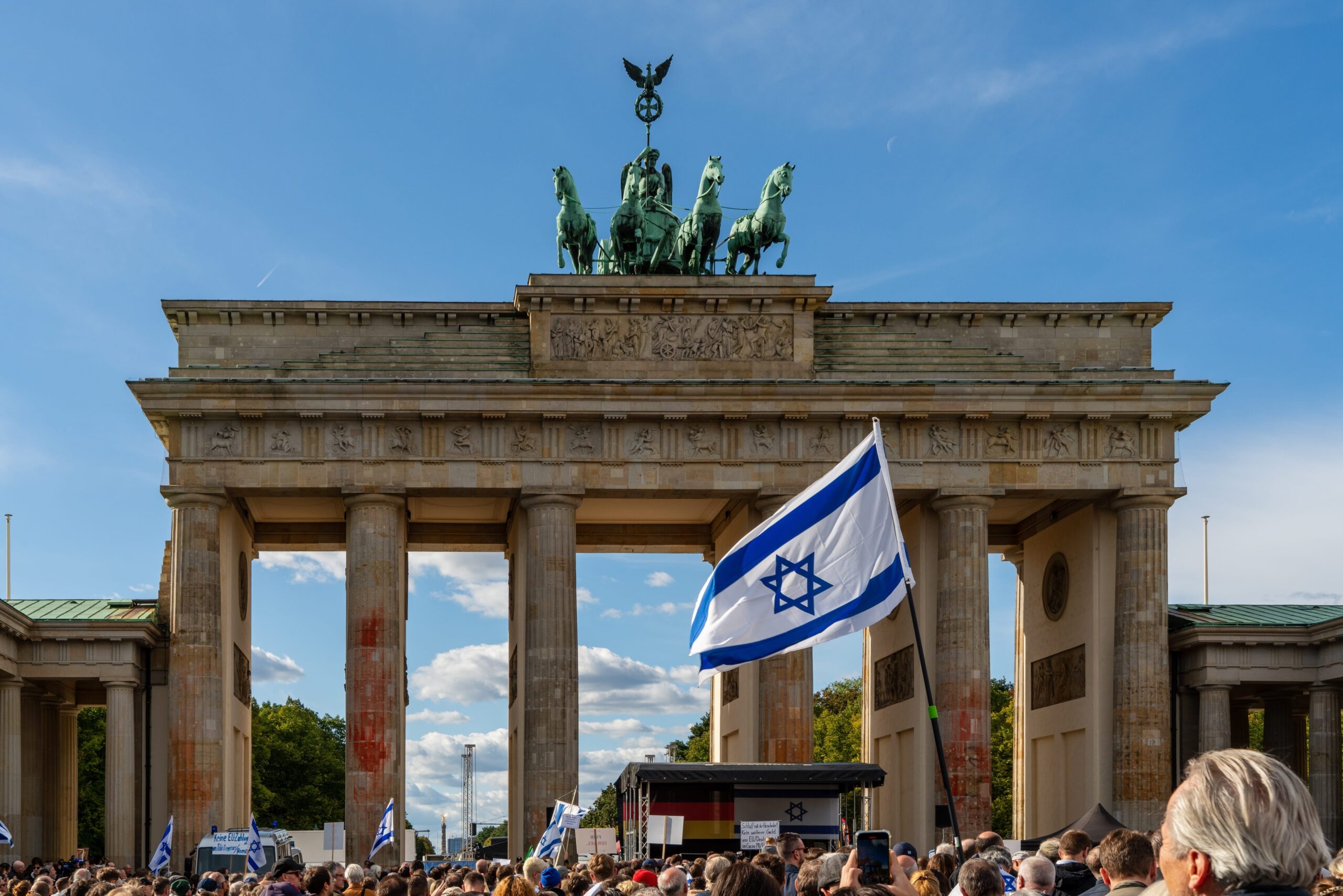
Since WWII, Germany has been the closest ally of Israel in Europe. The historical shame coming from the Holocaust crimes pushed Berlin/Bonn to support Israel in all the wars that happened with its Arab neighbors. Weapons, intelligence and diplomacy—Germany has assured them all to Tel-Aviv.
Right now Germany keeps its so-called “special relationship” with Israel. Several Federated States have prohibited pro-Gaza demonstrations, the display of the Palestinian flag or the keffieh (typical Palestinian hat) in public schools. In Berlin, slogans like “Free Palestine” or “Stop the War” are strictly banned.
There is no European country where the government is not supporting Israel in the current war, but strategies differ. Italy and France chose not to ban demonstrations. Both countries have historically closer ties to the Arab World rather than Israel. Moreover France has a huge population coming from Maghreb that was already the protagonist of several riots this year. Paris certainly fears that they would erupt in case of a stricter policy.
Neither Italy nor France have that historical sense of guilt rooted in their public opinion. While both countries shared huge responsibilities in the Holocaust, the official historiography focused more on the few happy endings than the overall disaster.
In Germany history is studied exactly and in its brutal fashion. According to prize-winning journalist Masha Gessen, that led to the spreading of a Gruendlickeit attitude, namely the Prussian spirit to execute everything, efficiently and orderly.
Masha Gessen published an essay in the New Yorker which included saying that such an attitude created the basis of the bureaucratization of Holocaust memory, which prevents Germans from understanding how Nazi-era persecution is not dissimilar from that carried in Palestine by the Israeli Armed Force.
The essay sparked outrage in Germany, where all the political parties, from the far-right Alternative for Germany to the leftist Greens are condemning Hamas’ terrorism and urging Muslims to engage publicly against anti-semitism. No one dares make any comparison ever, neither with Ukraine, nor with any other war scenario.
Pierre Rimbert, on the French Monde Diplomatique, described the latest German moves on the Israel-Hamas war as a “policy of the worst in the name of the good.”
Germany is the target of harsh criticism about this in some circles throughout Europe, but it is hard to see that this will change anything. If younger generations experience any doubts on the current war, that remains a small minority. Fridays 4 Future Germany, a cluster of the most progressive youth of the country distanced itself from Greta Thunberg as soon as she condemned the Israeli military presence in Gaza.
No person or movement can publicly be legitimatized without supporting Israel. The Holocaust memory is still strong and as soon as you distance yourself from the righteous attitude you are ousted.
Back in September the deputy Governor of Bavaria was at the center of a media storm after it was publicized that he had anti-Semitic flyer found in his schoolbag when he was 17.
The puzzle about how to deal with Zionism and anti-Semitism is historically the core of the moral problem in discussing Israeli actions.
Germans cannot speak of the Israeli-Palestinian situation without emotion, because when they do they are speaking of themselves, of the tragedy that their great grandparents allowed and helped perpetrate.
Supporting Israel seems an inner duty and not a political calculus. Newspapers are full of articles about how to talk about it, how to name something, what nouns to avoid: the German Gruendlickeit is really being driven to its maximum tolerance and we will see throughput 2024 where eventually it will end up.
Author

Discover more from Red Hook Star-Revue
Subscribe to get the latest posts sent to your email.



One Comment
Pingback: Masha Gessen essay outrages German sensibilities, by Dario Pio Muccilli, EU correspondent – Red Hook Star-Revue