Masked killers, demons from another world, Beasts of Unusual Size: these are the things that go bump in the night, the denizens of horror films. Terrifyingly unknowable and unknowably terrifying, these monsters live in the dark, emerging only when least expected to destroy whichever horny teens disturbed their slumber. As evidenced by the recent box office success of “It,” “Halloween,” and the “Conjuring” franchise, people love these films.
Escapist fantasies at their most literal, they provide a low-stakes outlet for primal terror. For a few hours, the viewer forgets the petty anxieties of everyday life and instead becomes prey. Unlike those poor teens, the audience emerges unscathed, flush with adrenaline and secure in the knowledge that there are no nearby shadows in which a werewolf can skulk. “Midsommar,” the second film from director Ari Aster, is no such horror film. In Aster’s world, horror is not the unknown creature shrouded in darkness, but the thing bathed in sunlight, which we see and have always seen, but choose to ignore.
Haunted by trauma, Dani accompanies her emotionally unavailable boyfriend and his graduate student friends to the north of Sweden. There, they hope to visit a small pagan commune, study its nine-day Midsummer festival, pop a few hallucinogens, and maybe seduce a Scandinavian babe or two.
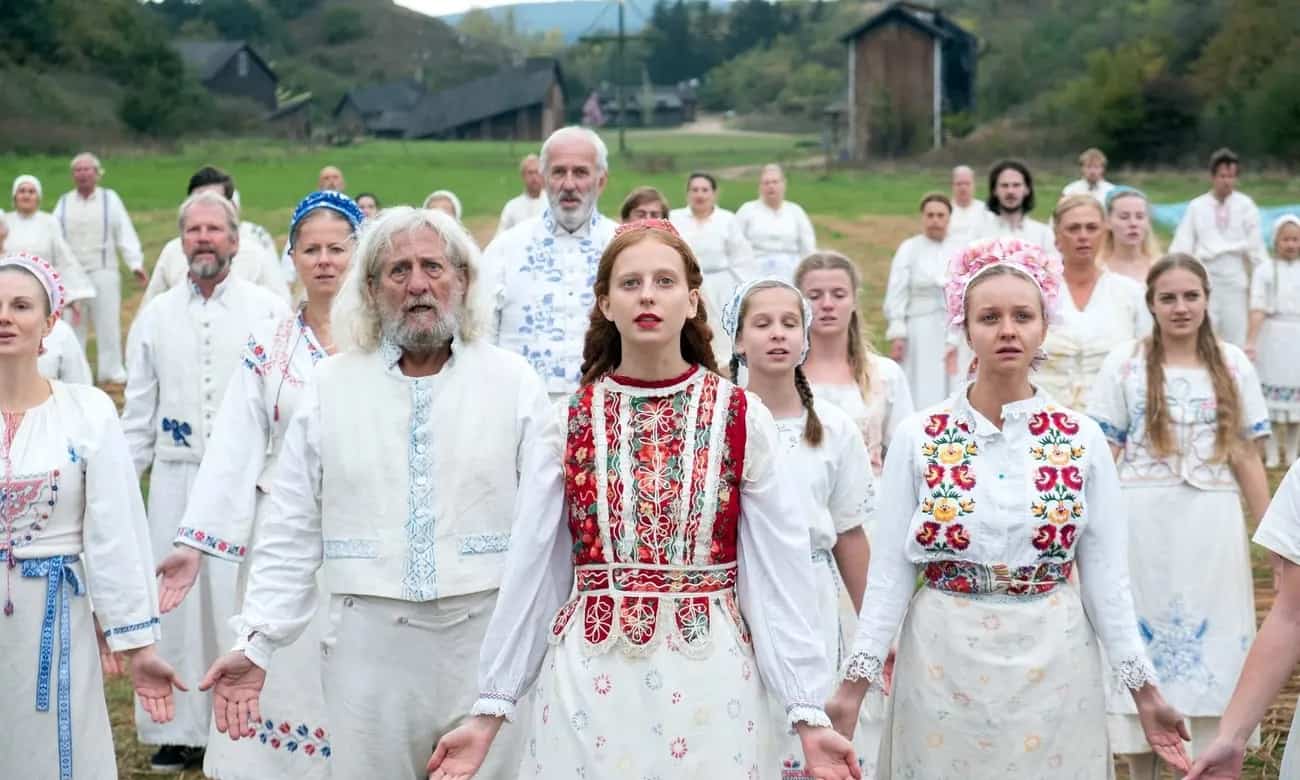
 As in all folk horror movies, Dani discovers a savagery at the heart of the village and its residents, called the Hårga. Unlike in most conventional horror movies, the sun never sets. Aster cannot hide the Hårga’s wickedness in the darkness of a moonless night. Instead, he illuminates for the viewer a roadmap of physical and emotional destruction, then pauses at every landmark along the way. When two village elders stand at the top of a cliff above a waiting crowd, we know they will jump. When the camera lingers for just a moment on the man carrying an enormous hammer, we know he has no intention of striking nails. The ensuing violence is not worse than we could have possibly expected, but exactly as terrible as we feared. For perhaps the first time, neither Dani nor the audience can look away from the carnage around them.
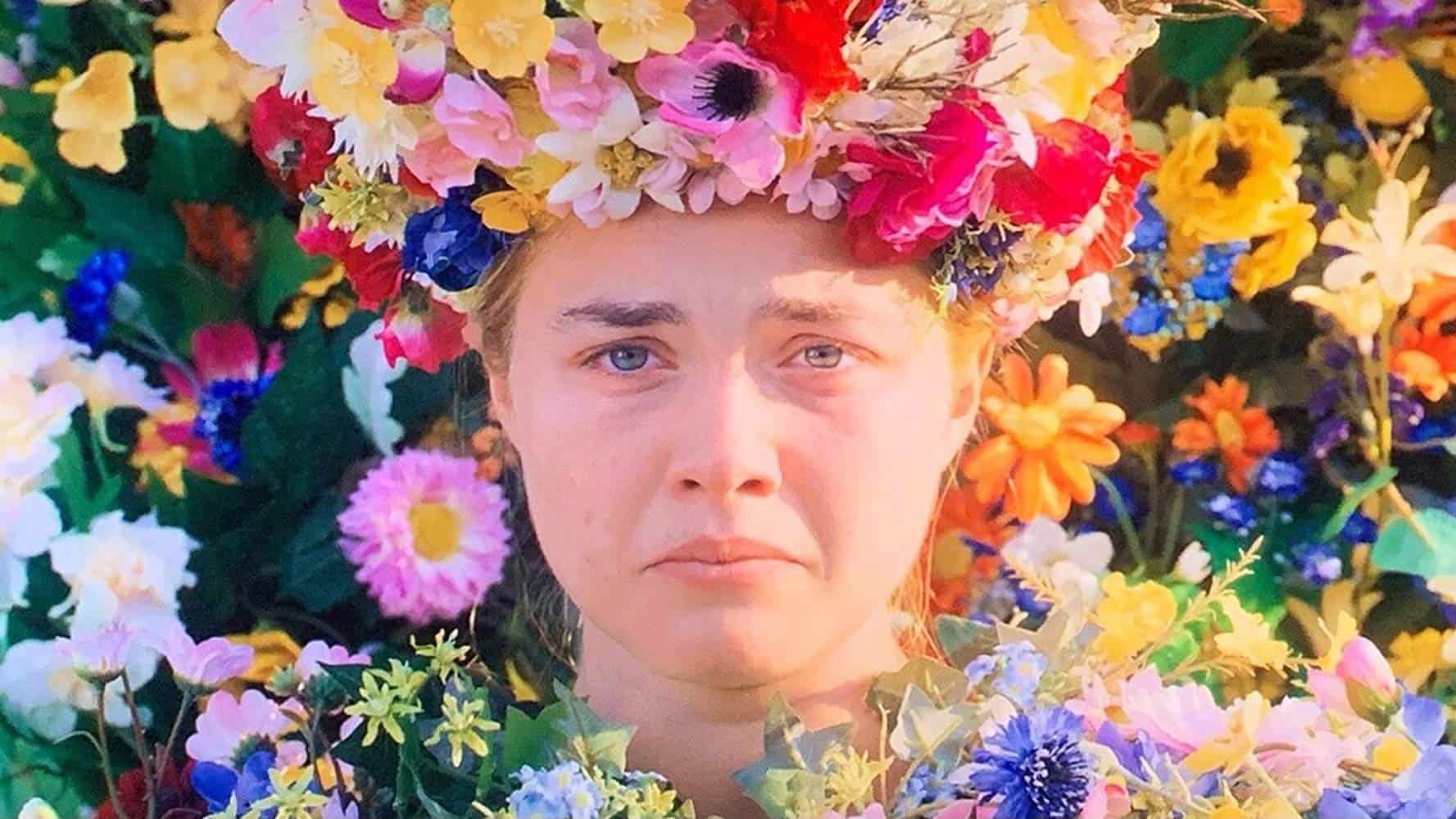
That said, all this talk of the grotesque does “Midsommar” a disservice. For all its wretched brutality, the film is an ingenious combination of craft and performance. No mere scream queen, Florence Pugh’s Dani slips from breathless wonder to choking horror, then from howls of anguish to shrieks of liberation.
[pullquote]Despite the inherent absurdity of a murderous pagan cult, Aster grounds the film in a consistent and familiar world, which lends greater weight to the emotional and physical violence that the viewer might otherwise dismiss as empty spectacle.[/pullquote]
What’s more, Aster effortlessly incorporates the visual language of hallucinogens into his narrative. Eschewing the kaleidoscopic visuals and feverish editing favored by Stanley Kubrick, Aster’s psychedelic sequences blur the line between humanity and nature (we see trees breathe and grass grow through Dani’s feet), creating visions of harmony which the Hårga exploit to ingratiate themselves to their American guests. However, the intrusive images of an impending bad trip also infuse the otherwise gorgeous commune with an air of creeping anxiety.
And the commune is gorgeous. Although hardly the first horror flick filmed mostly in sunlight, “Midsommar’s” palette of high-contrast greens, blues, whites, and reds more closely resembles “The Wizard of Oz” than “The Hills Have Eyes.” Aster also crafts tangible geography in his film; when Aster cuts between multiple characters, he provides glimpses or echoes of what’s happening elsewhere, and reveals where every character is in relation to each other. Despite the inherent absurdity of a murderous pagan cult, Aster grounds the film in a consistent and familiar world, which lends greater weight to the emotional and physical violence that the viewer might otherwise dismiss as empty spectacle.
And yet, I feel conflicted about “Midsommer.” Steadier and more unflinching in its brutality than his 2018 debut, “Hereditary,” Aster’s tale of bad relationships and worse vacations fascinates and repulses me in equal measure. That said, film criticism is, to some extent, an exercise in consumer recommendation, and I cannot recommend “Midsommar” without caveats. Vicious, cruel, and deeply disturbing, Aster’s film argues that we must confront hard truths at any cost. A baby will not save a marriage; a toxic friendship cannot be salvaged; that persistent cough is more than a chest cold. To look away is to allow the foundations upon which we build our lives to rot away and collapse. Sometimes, though, it’s a comfort to stick to the shadows.
3.5/4 Stars
Author

Discover more from Red Hook Star-Revue
Subscribe to get the latest posts sent to your email.