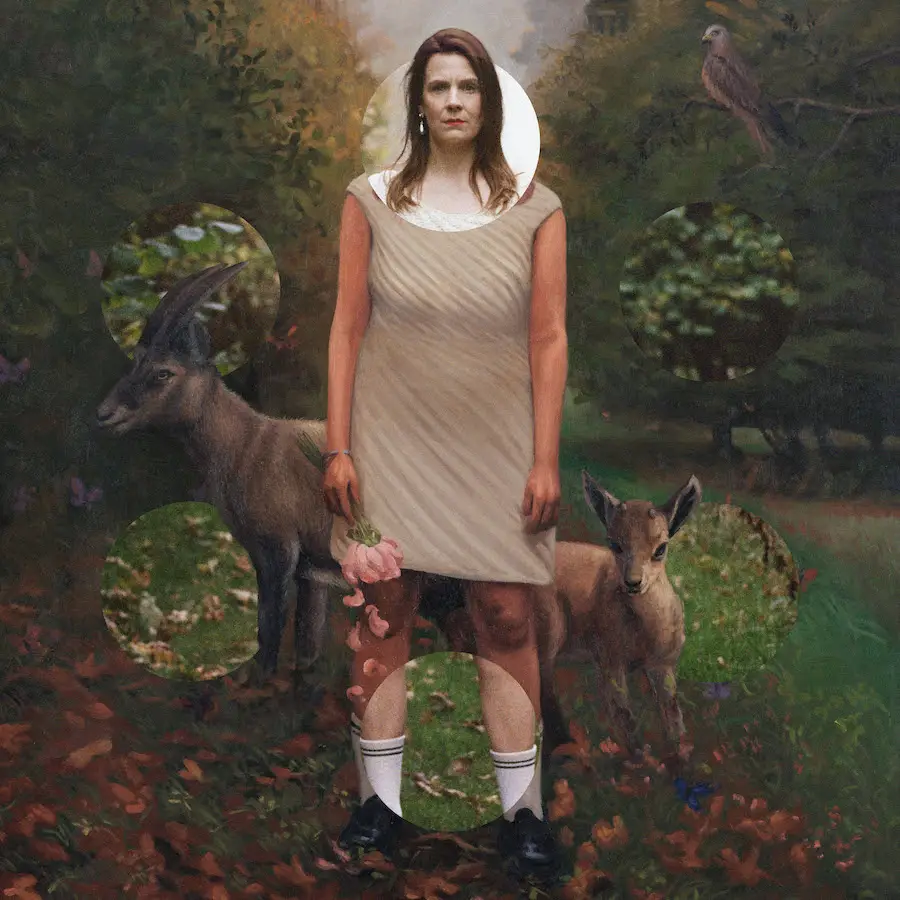
The world’s a mess; it’s in my kiss. “How to speak mother tongue when mother is gone?” German-Turkish singer/composer Alev Lenz repeats on the opening track of her 4 in a Cycle of Thirds (digital self-release out Jan.16) against a simple backing track of saz and upright bass. It’s an urgent question plaintively delivered in a beautifully sad song reminiscent of such ’70s British folkies Fairport Convention and Steeleye Span. But there’s a foreboding drone running through—a B, in fact. The tone bed isn’t electronic, it’s the resonant reverberations of activated strings on British composer Max Richter’s Steinway grand piano. The 12 songs on the album (recorded in Richter’s studio) are built around the 12 notes of the octave, each richly wavering in turn in a subtly unsettling progression. Some might recognize the delicate tensions Lenz conjures from “Fall Into Me,” a song she did for the science fiction TV series Black Mirror a decade ago, which set the mold for the Cycle of Thirds songs.
There’s something cosmopolitan about the systematic song cycle, in its worldview and structuring. It’s compositionally complex, with layers of vulnerable vocals, but never gets overcomplicated. Lenz’s songs are sparse without being simple. Zöhre Ülger’s saz (a variety of lute common in Turkish folk music) and Nina Harries’s bass, along with Zara Hudson-Kozdoj’s cello and Lenz’s own piano—there are no drums present— set the song foundations, but the album is about the voices, and Lenz’s wizened lyrics. She sings about turmoil, but lives well below it. “I don’t speak to the domestisizer” she repeats, neither fighting nor compliant. There’s an awareness of the lost ways of her parents and an uncertainty about what the future will bring running through the record, making it like a big, stark question mark yet somehow comforting, if only for the moment.

The roots of Toni Geitani’s sound world aren’t far from Lenz’s Turkish heritage, although the execution is quite different. Born in Beirut but based in Amsterdam, Geitani has a cinematic scope in his sonic constructions and the 17 tracks on Wahj (self-released cassette, download, out Jan. 30)—are rich with sonic imagery, both ancient and contemporary. The title translates from Arabic as “radiance” and there’s a glow about the record, although (as with Lenz’s songs) it’s more an album about surviving than celebrating. Geitani is trained in traditional vocal techniques as well, and deftly samples and alters older recordings from the region. He brings in some guest string and reed players, but for the most part, Wahj is his own, abstract construction, with traces of ’90s illbient and chill-out vibes, augmented by occasional heavy beats, and with connections to the great experimentation coming out of the region (Maurice Louca, Nancy Mounir, Praed, Nadah El Shazly). Geitini is also a filmmaker and Wahj is a 75-minute statement. Several interludes are under two minutes and seem to serve as scene-changers, and some of the scenes ring with emotional resonance. Even without understanding the text, the radiance shines through.
Back in 1979, Talking Heads brought a new global consciousness to pop music. They were already notable for being mixed gender (that used to be uncommon!). With Fear of Music, and with co-producer Brian Eno, they brought in African rhythms for the opening track “I Zimbra.” Over the next two albums, they expanded that sound and footprint, more than doubling their membership with the addition (among others) of guitar whiz Adrian Belew, P-Funk keyboard maestro Bernie Worrell and three additional percussionists.
Truth is, even as a jittery new wave act, they were funky, thanks in no small part to Tina Weymouth’s smart bass grooves; with Remain in Light and Speaking in Tongues, they just put their hearts on their sleeves. In 2018, Benin-born New Yorker Angélique Kidjo paid back the respect with a fantastic full-album cover of Light. Now, with Naive Melodies: A Talking Heads Tribute (LP, CD, download from BBE Music Jan. 23), 18 more artists continue the diasporic payback to the Heads catalog. The album opens with a sweet, string-laden instrumental rendering of “Heaven” by producer/composer Miguel Atwood-Ferguson. Liv.e takes on “I Zimbra,” making it float gently over a soft rhythm, then drops a guitar solo that calls back to Funkadelic’s Eddie Hazel at the end. Georgia Anne Muldrow conjures a soulful, witchy groove for “Girlfriend Is Better.” Rogê uncovers some indie folk at the core of “Road to Nowhere.” Aja Monet sets “The Book I Read” as spoken word (with jazz band accompaniment), expanding and expounding upon the text to suggest what book it was and ultimately confirming that reading is, indeed, fundamental. Bilal takes what was already essentially a spoken word piece, “Seen and Not Seen,” and gives it a griot impetus with bits of psychedelic soundtracking. Theo Croker offers a spiritual jazz reading of “Born Under Punches,” with Theophilus London taking the lyrics as an insistent, intelligent rap. And Dominique Johnson takes “Take Me to the River” back to its gospel-R&B roots. But perhaps most successful is the one no one should have touched. Astrønne’s “Psycho Killer” reinvents the song entirely, from melody to emotional impact, with ethereal backing voices and slow beats. Other tracks fall a bit flat, as may be expected. The 70-minute program might not demand a lot of top-to-bottom listens, but there’s plenty of party mix fodder to make it worth the while.
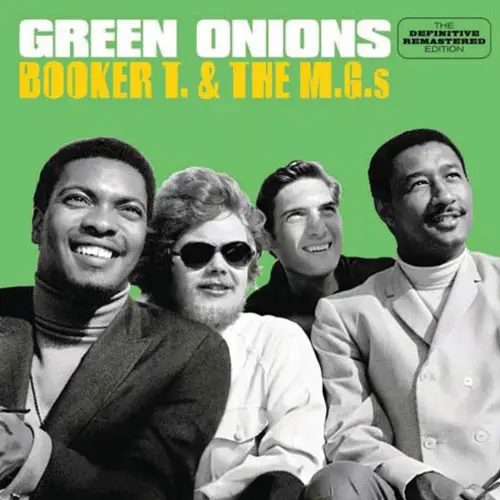
Blue Onions. If I’m ever heard calling some jive from the jukebox or trifle off TikTok the greatest song ever, I hope somebody is nearby to remind me of Booker T. & the M.G.’s. I first heard their timeless and forever catchy tune “Green Onions” on the soundtrack to the 1979 movie Quadrophenia, at least a couple of years before I got to see the movie and with little understanding of what it was doing on what I thought of as an album by the Who. The song charted in the States in 1962 but only made it to the UK Top 10 after the release of the movie. It was well engrained in my heart and mind by the time it showed up in Twin Peaks: The Return in 2017, played during a prolonged scene of someone mopping a barroom floor. The four members of the band share writing credit for the upbeat blues, but it’s Booker’s funky organ shot through with Steve Cropper’s electric guitar stabs that make the tune memorable. Cropper did much more in his long career, of course. He co-wrote “Knock on Wood” and “Sittin’ on the Dock of the Bay,” played with Ringo Starr, was called “perfect” by Keith Richards and appeared in both Blues Brothers movies. But “Green Onions” alone would be laurels enough upon which to rest in peace. Cropper died in Nashville on December 3 at the age of 84.
Author

Discover more from Red Hook Star-Revue
Subscribe to get the latest posts sent to your email.