Songs of love and pain and monsters. Thank God, or some benevolent power, that Daniel Johnston staked his ground long before the era of social media. These days he’d be consumed and forgotten in a matter of days—memed, mocked and left by the side of the road. But anyone who heard of Johnston back in the ’80s and ’90s likely did so by word of mouth. His cassettes, with photocopied drawings glued to the plastic shell cases, weren’t easy to come by. And the contents were surprising when you did: this guy from Texas who played piano and guitar with more force than finesse singing songs more often than not about unrequited love. The lyrics could be awkward, clumsy and painfully honest in the space of a couplet. He’d veer into absurdity in the service of a rhyme. He clearly knew how pop songs worked—structure, chord progressions, wordplay—and sometimes, in his brilliantly simple way, he nailed them.
Johnston loved pop music and wanted to be a star; you could practically smell it if you made it to one of his shows. And he did find a level of fame. He played South by Southwest and appeared on MTV. Kurt Cobain was photographed wearing a t-shirt with Johnston’s hand drawn alien frog from the Hi How Are You cassette. A 2004 tribute album, The Late Great Daniel Johnston: Discovered Covered, included takes on his songs by Beck, Death Cab for Cutie, Sparklehorse with the Flaming Lips, Teenage Fanclub with Jad Fair, TV on the Radio and Tom Waits. The 2005 documentary The Devil and Daniel Johnston is both heartbreaking and essential viewing, delving deep into the mental illness which no doubt helped his star to rise. Johnston died in 2019 at the age of 58, but his legacy lives on through the Hi, How Are You Project, a nonprofit organization dedicated to mental health awareness and education.
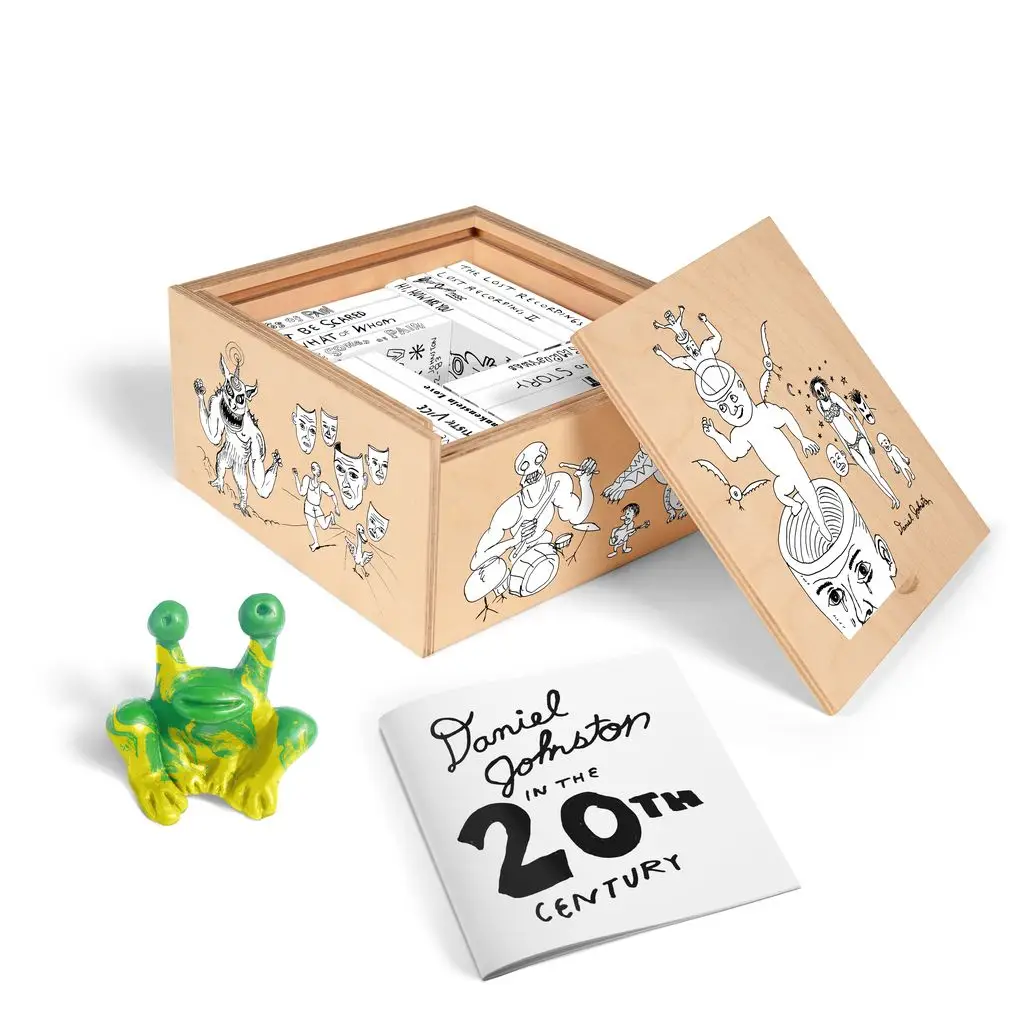
That record, properly Hi How Are You: the Unfinished Album (self-released in 1983) is one of 16 cassettes remastered for In the 20th Century (cassette box, download out from Joyful Noise Recordings October 31). The set comes housed in a hand-crafted wooden case, screen-printed with Daniel’s artwork, hand-numbered in a limited edition of 999 and including a toy. It’s far from complete, even for the 20th Century releases, but it is a lot, from 1992’s The What of Whom through 1998’s Frankenstein Love. Alongside the songs are Johnston’s spoken introductions and rudimentary tape collages. Leave judgment behind. Rarely are songs so heartfelt.

Do you remember 1985? As one old documentary would have it, 1991 was “the year that punk broke.” But some old punters would tell you it was over by 1978. Split the difference and we end up right about in 1985. The Minutemen released their last studio album that year; their singer and driving force D. Boon was gone by the end of the year, The Meat Puppers reached their trippy apogee that year with Up on the Sun before going down in flames, Hüsker Dü, The Replacements and X were schlepping their way toward the big-label indie graveyard, and the new thrust of hardcore bands was changing all the rules. (Anarchy, schmanarchy, there were always rules.)
Hüsker Dü roared out of Minnesota in 1982, taking their name from an old board game (Danish for “do you remember, with the hilariously nonpunk umlauts added, maybe as a nod to Motörhead at a time when punk and metal seemed miles apart). Their debut album, aptly titled Land Speed Record, was 17 tracks in 27 minutes, recorded live at Minneapolis’s 7th Street Entry, the smaller room at First Avenue, a club made famous in Prince’s Purple Rain movie. In 1984, the Hüskers achieved magnificence with the 23-track double LP Zen Arcade. The following year, they released a near perfect flare of pop-tinged fury in New Day Rising. But like the Puppets, the ‘placemats and X, they were soon sliding down the other side of the mountain. In September of that year, they released Flip Your Wig, their first album that seemed forced.
The new set 1985: The Miracle Year (4 LP, 2 CD, download via Numero Group Nov. 7) makes a strong argument for that being the height of Hüsker Dü with a full live show and a second disc of assorted live tracks, 43 in all and in all their glory. The January 31 set finds them back at First Avenue, on the main stage this time. They kick off with “New Day Rising,” the first track off the album that had been out for about two weeks: a quick two-step from the late drummer Grant Hart and squeals of feedback from Bob Mould’s guitar, fast and frenzied. The studio album, like Zen Arcade before it, was taut, produced and organized. The live set is about passion over precision, as it should be. No one expects live albums to be better than studio recordings, at least not in the rock world. You’re there for the human experience; The audience that night got some older songs, and five songs from the forthcoming Flip Your Wig, including the fine “Makes No Sense at All”—plus three ‘60s covers (a Byrd and two Beatles, with Soul Asylum’s Dave Pirner stepping up to sing “Helter Skelter”). The set ends with their take on “Love is All Around”—the theme song from the The Mary Tyler Moore show—perfectly cheeky punk with a message they endorsed. (Sonny Curtis, who wrote “Love is All Around,” also wrote “I Fought the Law,” a hit for the Bobby Fuller Four in 1966 and covered by the Clash in 1979; the unwitting punk legend died Sept. 19 at the age of 88.) The second disc collects tracks from a U.S. tour that year. It’s great to have more, but the full arc of the First Avenue show is what sells it.
The “miracle” in the set’s title is maybe meant to conjure the year that Hüsker Dü’s punk broke. Fans are divided about the final three years that followed but in 1985, they were fire emoji, and here’s the proof.
Not everything new is old again, but I’ve gone on too long again, so quickly, then:
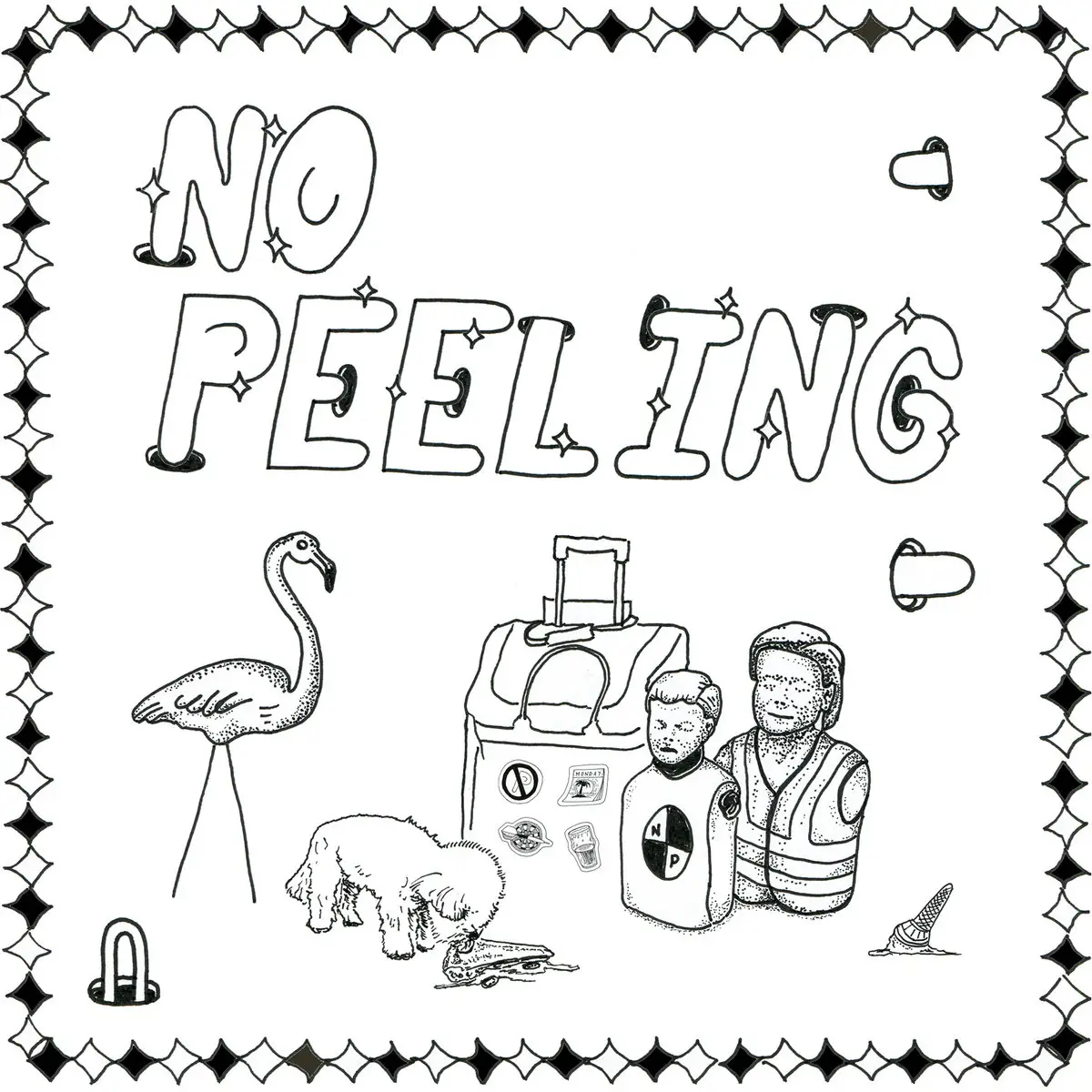
No Peeling’s self-titled debut (7” vinyl, released last month on Feel It Records) is made up of seven no-filler, no-frills, enormously catchy songs, impressive since the whole record’s just over 8 minutes. (it works out to about 76 seconds per song; for the record, Hüsker Dü’s Land Speed Record averages a bit over 90 seconds per song.) The British fivesome aren’t slamming out hardcore, though. Their little gems of songs are more like an amped up Fiery Furnaces, with everyday concerns (getting drunk, bored CPR manikin) and quirky keyboards, not to mention single-named singer Sophie’s sometimes deadpan delivery.
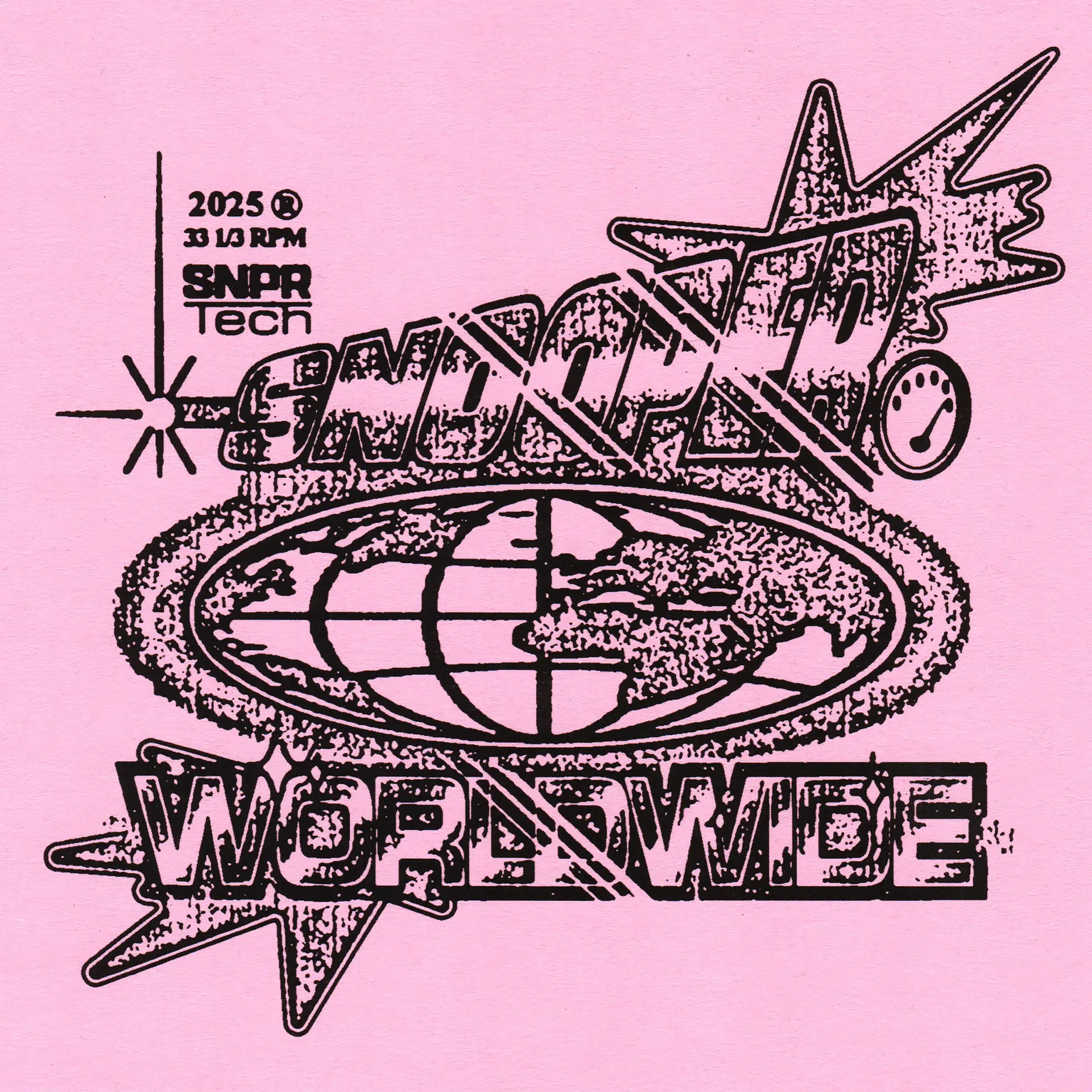
Worldwide, the second album from Nashville five-piece Snooper (LP, download out from Third Man Records Oct. 3, average song length 2:20), reigns in a bit more punkish energy but shares the infectious melodicizing and madcap electronics. There’s a poetic, post-punk paranoia in singer Blair Tramel’s lyrics (and she fits a lot of them in each song), but the driving abandon keeps things upbeat. Worldwide hits hard and relentlessly, the kind of fun Thelma and Louise must have had going over that cliff (and there’s another Beatles cover in there as well).
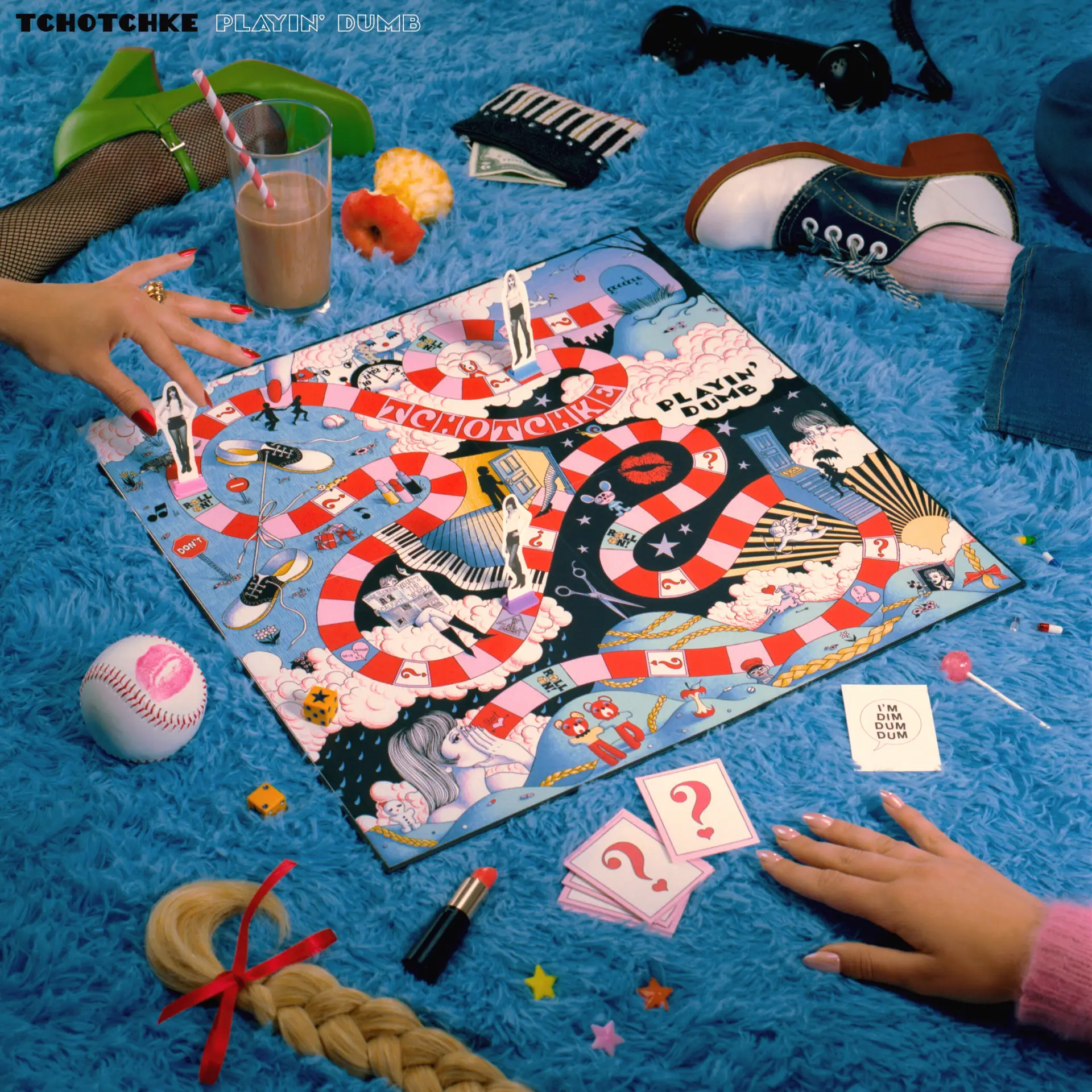
Playin’ Dumb is the perfectly titled new album (LP, download from Tchotchke Records Oct. 3) by LA-born, NYC-based trio Tchotchke—perfect in the way Dolly Parton’s “Dumb Blonde” was or, even more aptly, Paul McCartney’s “Silly Love Songs.” McCartney wrote a charming and sophisticated pop tune that everyone roundly dismissed because he was telling us all the way through it that it was silly. The three women of Tchotchke are no dumber than Dolly. Like her (at least in song), they’re just playing it that way. The 11 songs on the album (average length 2.75 minutes) are cute but truly sophisticated pure pop, with Brill Building harmonic richness that cradles you while you think you’re listening to dumb fun girl group songs. It’s truly wonderful. But don’t take my word for any of this. Snooper and Tchotchke know how to make great videos as well, or how to find people who do, and No Peeling has a gone-before-you-know-it clip for “Can I Pet That Dog.” Look them up, the manic bliss is contagious.
Author

Discover more from Red Hook Star-Revue
Subscribe to get the latest posts sent to your email.