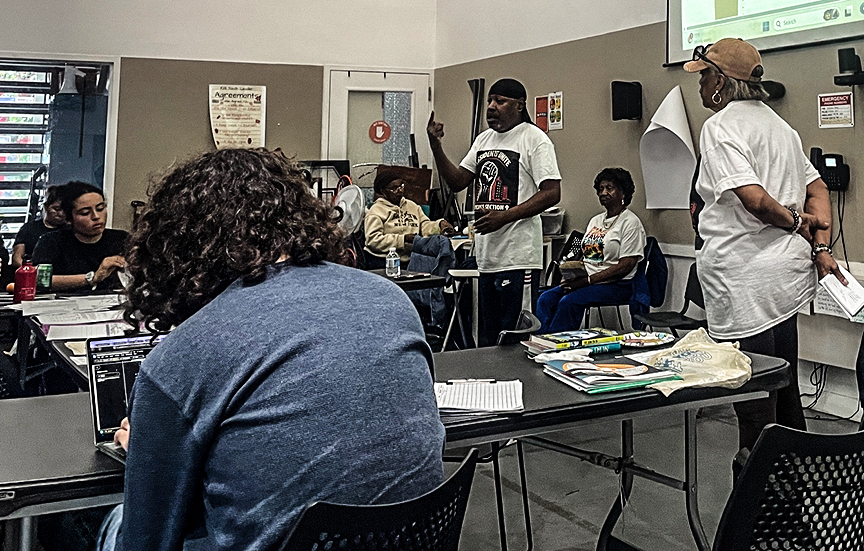
On February 13 at Red Hook’s PS 15, the Environmental Protection Agency (EPA) gave a presentation to address issues of transparency with its proposed plan for cleanup of the Gowanus Canal. In response to the EPA’s clarifications, which concerned the manner in which toxic sludge would be deposited in a contained disposal facility (CDF) here, the community had one message: “You talk too much.”
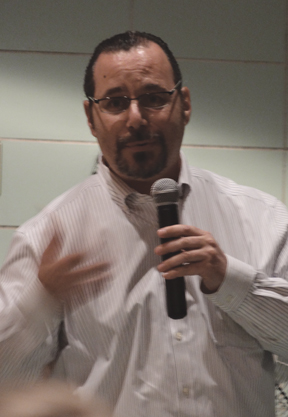
“You’re very intelligent, but you repeat yourself a lot,” Red Hook resident Christopher Morson told Project Manager Christos Tsiamis, who designed the plan, delivered the presentation and has been one of its chief advocates.
“I know it’s all business, it’s all money” said Morson, referring to the $37 million that would be saved by responsible parties like the city and National Grid if waste is dumped in the Red Hook landfill instead of being shipped away—like sludge with higher toxicity adjacent to neighborhoods like Carroll Gardens.
“If I shake your hand, I can remove your belt and your money in your pocket if I’m quick enough. And I feel like you’re not actually doing anything different here,” Morson added.
For his part, Tsiamis agreed that he “talked too much”—but only because he was trying to communicate in good faith about “technical issues.”
But even beside the applause that greeted Morson’s comment in PS 15, there is a growing body of evidence that Morson’s sentiment is echoed by the Red Hook community.
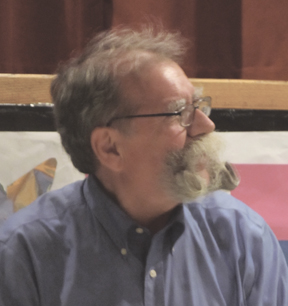
“Prudence would say, don’t dump toxic waste here. Prudence wouldn’t say, there’s absolutely no risk,” said Red Hook resident John Battis, referring to Tsiamis’ assertion that the EPA’s formulation of coalesced sludge, sand and cement was completely safe.
The mixture would be blended and treated on-site, adding Morson’s moniker “easy-bake oven” to the CDF lexicon, which already contains “monolith” for the giant concrete husk that will be flattened against the shoreline property of the Gowanus Bay Terminal (GBX).
If the CDF land is added to the GBX, the use of that property will be determined solely by John Quadrozzi, Jr. The options he is considering for the land include another concrete mixing plant for his company NYCEMCO and an “eco-industrial park.”
In that sense, the landfill would explicitly benefit Quadrozzi as a private property owner without legally enforceable guarantees the community would likewise receive benefit. And although Quadrozzi could owe up to $20 million in fines for illegal dumping into Gowanus Bay, Tsiamis has stated that Quadrozzi’s environmental record “did not present any red flags.”
To Craig Hammerman, District Manager of Brooklyn Community Board 6 (CB6) Tsiamis’ clarification is itself significant.
“I think it’s quite telling that the question of the private property owner’s fitness with regard to environmental violations doesn’t seem to be an issue for the EPA,” he said. “There are a lot of unanswered questions. It seems like a lot of discretion will be given to the private property owner, so that’s something we all need to consider as a community.”
Where community is concerned, activist John McGettrick believes the losses to be had are great.
“Quadrozzi is proposing to use the land for heavy industrial uses. Building concrete and asphalt plants will lead to more truck traffic, and dumping wastes raises concerns with odors and dusts in the recreation area. This would degrade one of the most heavily used parks in the city,” he said, referring to the ball fields beside the GBX site.
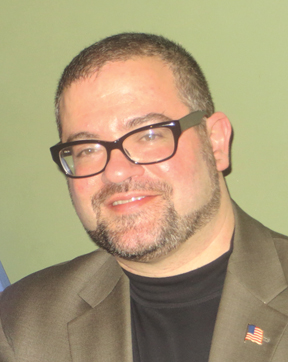
Quadrozzi’s friends appeared to number few in PS 15 on February 13, where he attended. Accordingly, EPA Community Involvement Coordinator Natalie Loney suggested the EPA’s view that “the trend is that the community does not want this.” But even if, as Tsiamis suggested, the EPA will not “ram any proposal down [Red Hook’s] throat,” just how scientific is the EPA’s review of community “acceptance?”
The EPA plots acceptance based on the aggregate number of written comments “for” and “against” its proposal. While this neatly solves the problem of giving undue credence to the voice that shouts the loudest, it carries the risk of debasing the value of the responses from people who would live nearest to the landfill—as taken against the responses of all persons in affected communities along the Gowanus as a whole.
“Which community are they calculating opinion from?” asked Battis in a phone interview with the Star-Revue, guessing that communities removed from the CDF’s vicinity would go along with the plan. He noted, however, that if only people on the side of Hamilton Bridge closest to the CDF were asked, no one would be found in favor.
The differences in community perception of the EPA’s proposal thus far have been striking. At EPA presentations in Carroll Gardens, an engaged community has largely approved of the plans. Residents, satisfied with the EPA’s address of their concerns, have in turn showered Tsiamis and his team with praise.
In Red Hook, however, residents have yet to receive even basic answers to their demands for a calculus of the costs and benefits posed to the community by the plan. Many suspect Tsiamis, the plan’s architect, of obfuscating motivations of cash and convenience in presentations that are overtly technical.
They also question the EPA’s timing: on February 13, many Red Hook residents were forced to choose between either the EPA meeting or a New York City Housing Association (NYCHA) meeting in the Miccio Center. Catholics had to choose whether to forgo mass on Ash Wednesday, one of the holiest days on their calendar.
In sum, according to Battis, the community doesn’t feel “respected” by organizations like the EPA.
“The EPA has no proper mechanism for what the community feels. The scientist said, if residents of Red Hook reject this, it won’t happen. But my feeling is that won’t be respected,” he said.
Tired of the abstract “good” Tsiamis promised would result from Quadrozzi’s economic developments on the CDF—and the ambiguous total of “30, 40 or 50 jobs” in low-level labor the CDF would provide over roughly a decade of cleanup—the community once again demanded transparency. To Battis and others, Tsiamis appeared “anxiety-ridden,” “uncomfortable,” and “defensive,” in response to this demand. Unlike the meeting in Carroll Gardens, it seemed like there was, in fact, “something he was selling”—“something he himself did not believe in.”
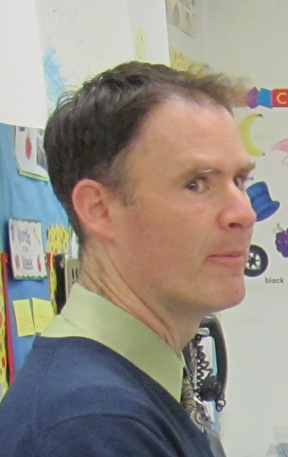
And so there was applause that Wednesday night, when Morson told Tsiamis: “You just talk too much. And I think you’re bullsh*tting.”
In a community that is still in the process of scrubbing the wash of sludge that soaked its bricks and basements after the hurricane-induced flood, residents are reluctant to entertain the idea of depositing more toxic material on their coastline, and into the hands of a private property owner who stands to gain personally, but whose “fitness with regard to environmental violations,” as Hammerman put it, are in doubt.
Author

Discover more from Red Hook Star-Revue
Subscribe to get the latest posts sent to your email.