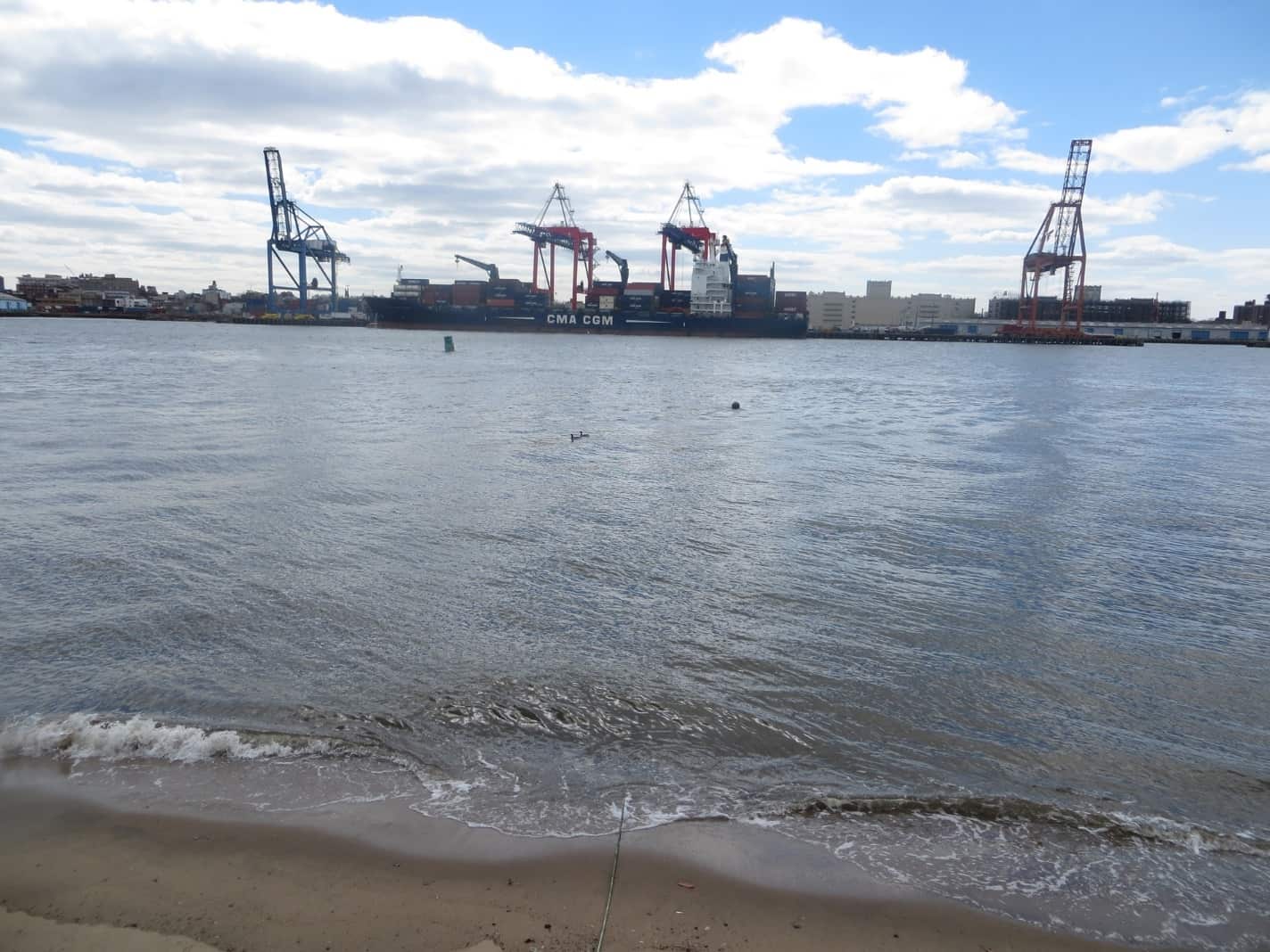
In the spring, the Red Hook Container Terminal added a new weekly container service to its roster of clients. Each Monday for the past two months, a vessel from Miami-based carrier Seaboard Marine’s North Atlantic-North Central America loop has docked in Red Hook, the last port of call on a route starting in Guatemala, with stops in Nicaragua, El Salvador, Honduras, Philadelphia, and Newark.
The Red Hook Container Terminal will also continue to receive two other services: one from the French shipping company CMA GCM, which links Brooklyn to Europe and Australia, and a Seaboard Marine service from the Caribbean.
The Port Authority of New York and New Jersey owns the Red Hook Container Terminal, its only deep-water port on the east side of New York Harbor; a private company, Red Hook Terminals, operates it. Last year, Red Hook Terminals signed a new five-year lease with an option for a five-year extension – a relatively short contract by the standards of the Port Authority.
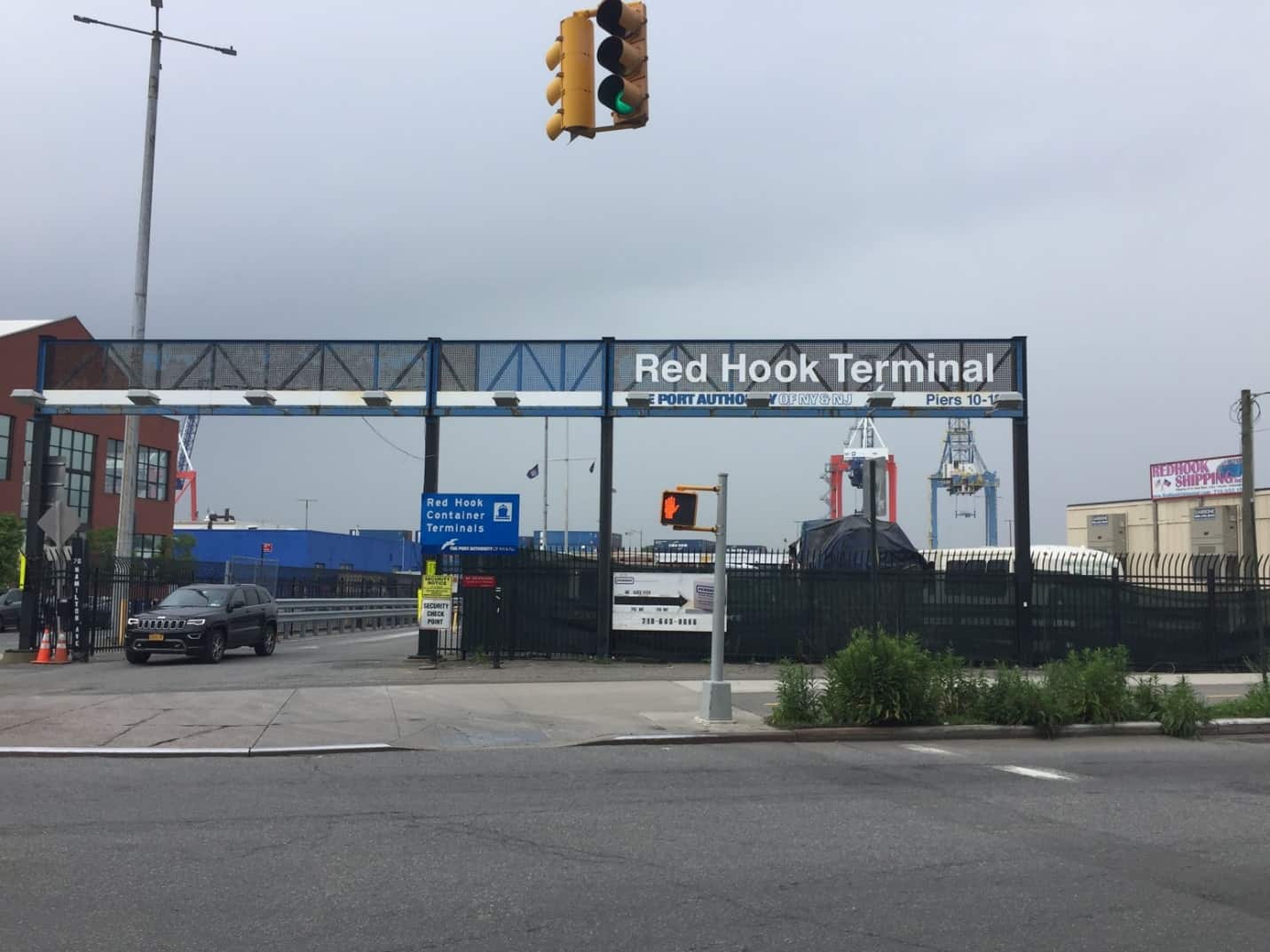 The smallest of the Port Authority’s container terminals, the Red Hook Container Terminal has kept alive the long tradition of Brooklyn’s working waterfront, but it handles significantly less volume than Port Newark-Elizabeth Marine Terminal. Real estate developers, who covet the site for its views of Manhattan, regularly call attention to its financial losses. U.S. Representative Jerry Nadler, a longtime ally of maritime industry whose congressional district spans Red Hook’s shoreline, defended the terminal when Governor Andrew Cuomo suggested closing it in early 2018.
“The Port Authority operates to fund transportation. Transportation doesn’t need to make money; transportation needs to break even,” Robert Gottheim, Nadler’s district director, told the Star-Revue in June. “We need to have goods brought into the largest consumer market in the world, which is the east side of the Hudson River, where two-thirds of the population in this region live.”
He added, “It’s very important for economic development to have this facility operational. It’s very important for the jobs. It’s very important to take trucks off the road. Any more container service that the Red Hook Container Terminal can bring in is good, and we support that, and I’m glad that they are doing better economically all the time.”
Local 1814 of the International Longshoremen’s Association union, with Frank Agosta as president, represents the Red Hook Container Terminal’s longshore and maintenance workers. According to Agosta, the addition of a third service is “going to help us tremendously.”
By his account, activity at the facility already “has increased quite a bit” recently. “The first seaboard service that went into Red Hook, the first ship that came in, I believe we had less than 40 containers on that vessel,” he remembered. “That was about 10 years ago. And we’re up to about 800, 900 containers on a vessel now.”
Agosta continued, “I think we started out with a little less than a hundred on this new ship,
and we’re already seeing a gradual increase. With a new service, you have to build up your
customer base. The word is out now; you get more customers interested in it – it’ll just grow.”
The uptick in business has been good for jobs. “We’re in the process of hiring now. Over the past year to 15 months, we’ve brought in – I believe – 36 new individuals working at Red Hook. Some of those people were hired locally,” he said.
In addition to seafaring vessels, the Red Hook Container Terminal receives daily barges from across New York Harbor, and here too, the volume of cargo has increased this year. Last fall, the United States Maritime Administration created the North Atlantic Marine Highway Alliance, which, in conjunction with the New York City Economic Development Corporation’s Freight NYC plan, seeks to increase the use of barges for local transportation of goods, citing the environmental benefits over trucking.
“There’s a need for the Red Hook Container Terminal,” Agosta affirmed. “The Red Hook Container Terminal will be around for a long time.”
Author

Discover more from Red Hook Star-Revue
Subscribe to get the latest posts sent to your email.