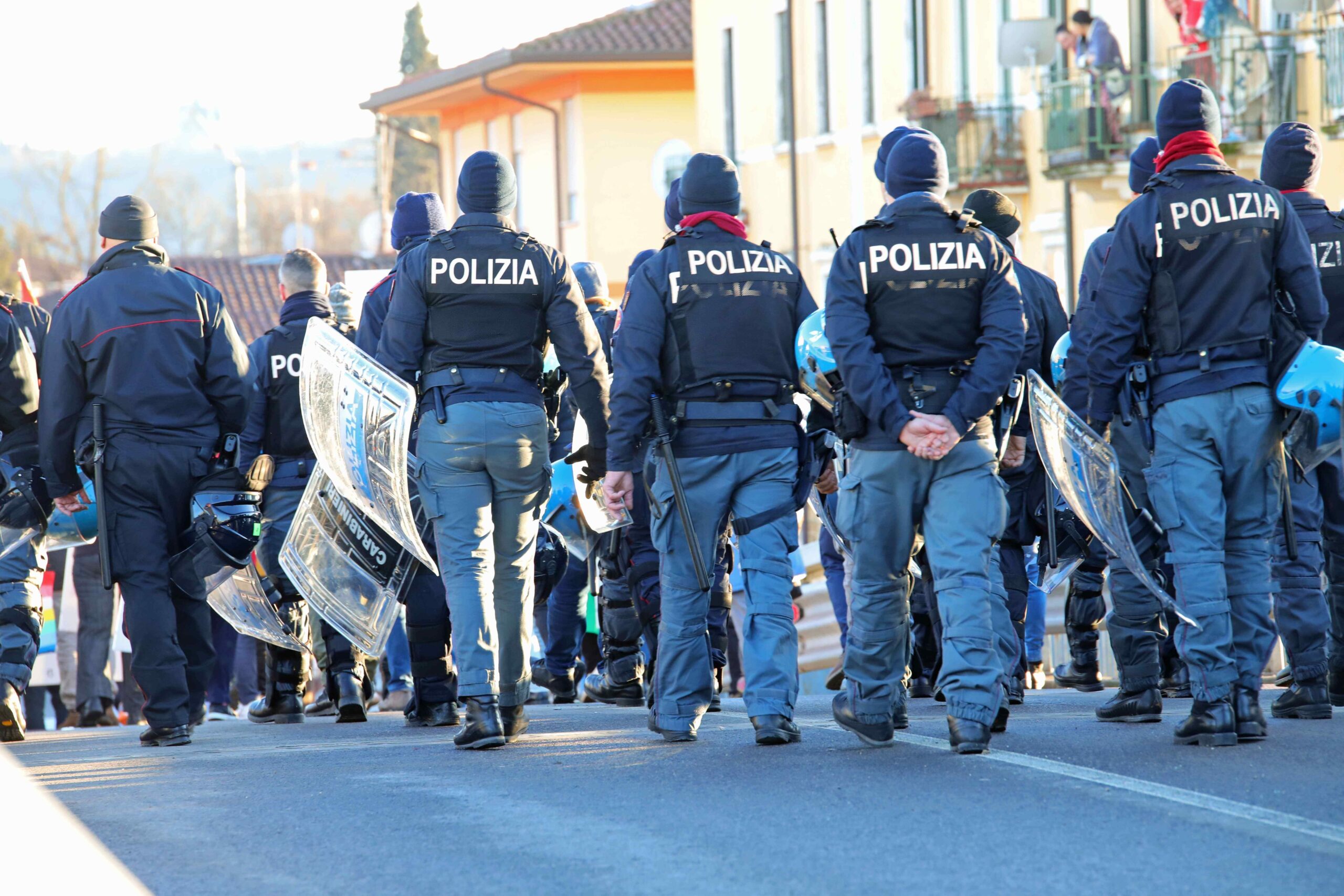
As the Gaza war continues, Europe is hit by demonstrations organized by pro-Palestine activists in every town, notwithstanding its size or importance. In Pisa, a leading university city, last February 23rd, a small and peaceful demonstration organized by local students ended up with many 15-19 year olds beaten by police with truncheons. The case, starting as a local news, soon became of national relevance, pushing even the President of the Republic to comment on the facts and probably altering the results of a regional election held a few days after.
The clashes
“We had a little bit of music and were eager to be heard. We wanted to go to Piazza dei Cavalieri, as it houses one of the most renowned global cultural institutions, the Normal School, (a public research university)”, says Francesco, 19, who was there at the rally. “We demonstrated against the support our government keeps giving to Israel”.
There were no more than 200 people, mostly students at this rally. Minor protests clashes had happened before, but mostly between the demonstrators and some pro-Israel people passing by, with the police a minor factor.
This time the police adopted a different approach.
As soon as the crowd reached the entrance of the square, in a narrow street called San Frediano, they asked the 20 policemen standing in front of them to allow them to pass. The police did not reply positively and because the crowd did not move they started attacking them, injuring 13 people. Still, the students did not give up and assembled at a university facility nearby. Together they started a protest against police repression that ended up bringing 6,000 people to the streets on March 3.
“The answer of the civic society has been clear”, says Enrico Bruni, a local city councilmember, “The episode shows a cleavage between the youth and the institutions of the city. Moreover, if the police believes that a hundred students are a danger , we should be worried for the health of our democracy”.
National consequences
The case soon became of national relevance, thanks to social media and the efforts of the Pisa activists who immediately worked to spread the word. The news quickly arrived to the President of the Republic Sergio Mattarella, who commented: “The prestige of the police corps is not measured on the truncheons but on its ability to implement public security while advocating in the meantime the freedom to demonstrate publicly each one’s opinions. The truncheons on the young are a failure”.
This episode started a political case, as the government chose not to align with the President’s words and the official line to defend the police in any circumstance.
On March 1st the government expressed its media strategy, as the Interior Minister, questioned in Parliament, complained about a general climate of aggression towards the police which risks “hurried judgements”. The clashes put the government, led by PM Giorgia Meloni, and the Presidency of the Republic, two organs independent from each other, in a harsh institutional conflict – normally unusual due to the ceremonial role of the President.
The government stance led many commentators to say that the violence used in Pisa is a result of the climate of repression pursued by Meloni, a stance that it is however difficult to prove as in Italy there has been no major repression or ban to pro-Palestine demonstrations as has happened in Germany.
It can be said that the habit of the center-right to justify any attack towards the leftists is indeed of support for similar practices of violence. It is an association that many are doing and that probably has already cost Meloni one election: the regional one in Sardinia, held two days after the clashes, where the center-left candidate won by just two thousands votes, an amount that analysts say may have been moved by the Tuscany city’s facts.
It is unlikely that the latter will have further implications, but it is clear that on this issue Meloni’s cabinet showed an ambiguous attitude, not fit for a serious government, but rather for a party still trying to defend its conservative credentials and its hatred towards the other side of the Parliament.
Pursuing a similar action line, the government is likely to radicalize its already radical electorate and alienate the youth vote, who are presumably scared of a government that is not able to say “sorry” or condemn a similar act of repression.
Author

Discover more from Red Hook Star-Revue
Subscribe to get the latest posts sent to your email.