News from the neighborhood.
Red Hook & Gowanus
Subscribe to get the Star-Revue’s newsletters throughout the month.
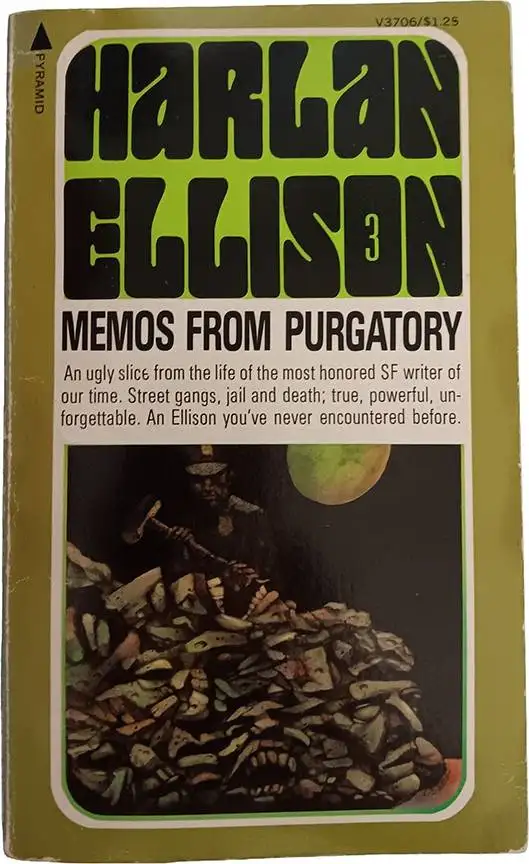
The writer Harlan Ellison had a long, wide-ranging career that spanned science fiction short stories (such as “‘Repent, Harlequin!’ Said the Ticktockman”), television scripts (like the Star Trek episode “The City on the Edge of Forever”), and post-apocalyptic novels (including “A Boy and His Dog”). However, few know about his first novel, “Web of the City”—a gritty, realistic novel about a boy involved with a street gang on the streets of Brooklyn. Even fewer know that, as research for the novel, Ellison joined a real gang, the Barons, on the streets of Red Hook for ten weeks—an experience he related in his memoir, Memos from Purgatory (1961).
Given its current day plethora of coffeehouses, high-end restaurants, and art spaces, it’s hard to imagine the more dangerous Red Hook of the past. For decades though, it was considered one of the most violent areas in Brooklyn; in 1925, H.P. Lovecraft depicted Red Hook as a den of wretchedness and devil-worshippers in his short story, “The Horror at Red Hook.”
In his own prologue more than three decades later, Ellison describes Red Hook as the “deadliest section of a slum area breeding more potential criminals per day than FBI head John Edgar Hoover could stamp out in a decade.”
In the work, Red Hook lives up to that reputation, with plenty of abandoned buildings inhabited by gang members; absent, uncaring, or even incestuous parents towering over the adolescent gangsters; and a general sense of hopelessness and anomie in the wake of the Second World War.
Conflict between the white, European Barons (many of whom were Irish or Italian) and other Jewish and Puerto Rican gangs is alluded to throughout the work, as is the contrast between increasingly prevalent countercultural movements in the 1950s with the staunchly conservative mainstream culture.
In the memoir, Ellison describes how the gangs in Red Hook take over a soda fountain and use it as their base of operations, while the owner falls into subservience to his much younger overlords. The gangsters’ parents are powerless at best (apathetic at worst) to do anything to help their children further themselves; joining the U.S. Merchant Marine at 21 is the sole notion of escape for the gangsters.
Throughout the book, Ellison veers into jeremiads lamenting the failure of society to better take care of its children, foisting the blame alternatively onto the children’s families, failing schools, and the clergy.
Inspired by the derring-do research that would later characterize gonzo journalism, Ellison joined a street gang in 1954. While his narration in the memoir stretches the truth at times, in the prologue, Ellison only admits to including a fib in the book’s second part (which does not deal with Red Hook) in order to tie the two parts of the work together.
No police reports contain records of a street gang called the Barons operating in Brooklyn at that time; the only references to a gang of that name in the 50s refers to a Chicago-based gang. And while Ellison describes the Barons as one of the largest street gangs in Brooklyn at that time, that honor actually belonged to the South Brooklyn Boys, a conglomerate of greaser gangs based around the Gowanus Canal’s surrounding neighborhoods. It is likely this gang that Ellison joined, renaming it the Barons and using nicknames for any of the individuals he interacted with.
The only locale mentioned in the memoir that can be identified with any certainty is a section of Prospect Park called “The Jungle,” which is the site of a rumble close to Grand Army Plaza between the Barons and the Puerto Rican Flyers (yet another street gang nowhere to be found in the annals of police reports).
Still, the memoir is at least a semi-true portrait of Red Hook at the time. The South Brooklyn Boys did roam the streets at the time, and rumbles and wars against other ethnic gangs were not uncommon. The New York Times reported on the violence throughout the ‘50s and ‘60s, with headlines like: “BIG FIGHT PLANNED BY TEEN-AGE GANGS; Brooklyn Groups Prepare for Memorial Day ‘War,’ but Police Are Prepared Gangs Highly Organized A Small-Fry Branch” and “BROOKLYN YOUTH SLAIN; Shooting Is Believed a Mistake After Gang Fight.”
Ellison never suffered any legal repercussions for the numerous crimes he confesses and nearly confesses to in the memoir. He describes robbing a sporting goods store with several other gang members to steal weapons for a rumble, which he joins in in Prospect Park. He also all but confesses to the statutory rape of an underage girl as part of his initiation into the Barons (later in life, he came under criticism for other acts of sexual misconduct, including groping two attendees at the 2006 Hugo Awards).
In his narrative, however, the final crime he confesses to is wounding a fellow gang member during a knife fight as part of a required attempt to save face and gain street credit with the gang. Years later, Ellison would be arrested for unrelated illegal weapons possession.
Sixty-five years after publication, Memos from Purgatory remains a chilling look at what Red Hook once was: a neighborhood overrun with crime and interethnic conflict. Despite Ellison’s personal and authorial shortcomings, his work continues to be a surprising look into Red Hook’s storied and bloody history, a history never known by its modern inhabitants. Perhaps Ellison would have liked it this way—for the horrors of yesteryear to become obscure to the point of being forgotten, preserved only by old-timers occasionally sharing memories of things long past.
Author

Discover more from Red Hook Star-Revue
Subscribe to get the latest posts sent to your email.