News from the neighborhood.
Red Hook & Gowanus
Subscribe to get the Star-Revue’s newsletters throughout the month.
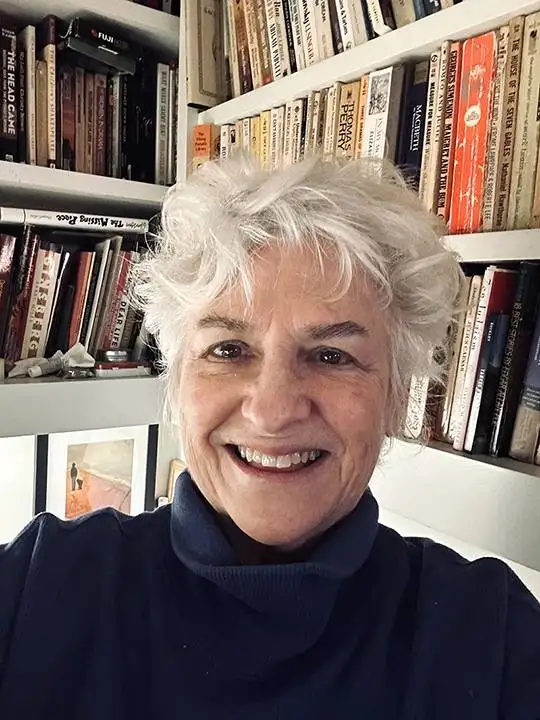
Shortly after author Sally Frances moved into Carroll Gardens in the early 1990s, a neighbor told her about overhearing a fight between an adult brother and sister in the backyard of their shared brownstone next-door.
“The sister says, ‘You can’t hit me—I’m not your wife!’”
Complex family dynamics lie at the heart of Frances’s debut novel, Carroll Gardens Story. Set in 1998, the novel centers on three men in the tightly knit Italian American community.
Helper is a 50-year-old former child prodigy living with the effects of a childhood brain injury. He also experiences synesthesia—his feelings sometimes register as musical notes. After his involvement in the accidental death of an unpopular Irish neighbor, Helper hides out in the childhood home he shares with his closeted older brother Gino, a tough-talking construction worker. When their nephew Tony, a newly promoted detective, is assigned to the case, the investigation threatens to reveal both brothers’ secrets.
More than a whodunit, Carroll Gardens Story is a portrait of people shaped—and often trapped—by family expectations, old loyalties, secrecy, and the unwritten codes of a Brooklyn neighborhood whose influence can still be felt today.
In a recent conversation over Zoom, Frances told me she has “a real sense of humor” about Carroll Gardens. She appreciates “its folklore and its history: Al Capone got married in this neighborhood, all these bakeries have been here forever.”
“It feels very cozy, and I wanted to celebrate it,” she said. “Something about the working-class-ness of it drew me in.”
Frances, a retired clinical social worker, dedicates the book to her patients “who trusted me with their traumas, and collaborated with me to begin their healing.”
“For the most part, working-class people that I know still don’t understand psychotherapy and how it’s supposed to help them,” she said. “They’re stuck with that worried feeling that if you go to a therapist, then you’ve got to be crazy. The problem with trauma is that people don’t reveal secrets.”
In the novel, all three men have been traumatized as children. “They get stuck and frozen in their development,” Frances said. “How do you regenerate adult development if you’ve had this kind of history? The first step is to form some kind of relationship that you can learn to trust.”
Each of the men gradually forms relationships capable of moving him forward: Gino with Lee, his lover in Long Island City; Tony with his veteran detective partner, Muldow; and Helper with Tony’s social worker wife, Amy.
Frances spoke about a concept from trauma therapy known as an “alternate validator”—people outside one’s family who provide a different kind of recognition. “Let’s say your family of origin is not in good shape, and you’re a kid and you’re miserable, but there’s this lady down the street who has a cat, and she offered you cookies once. Or there’s a guy who sells papers, and you go and talk to him. Those are alternate validators in your life who will give you feedback that’s not the same as your family of origin—and you can start to build some health based on those relationships. They’re still extremely important for development. I wanted to demonstrate that. I wanted to show people what that was like.”
There are two currents running through the novel: the conversation happening on the surface, and the turmoil happening underneath. Characters say one thing even as they think and feel another. It’s this complexity that makes for such a rich reading experience.
Frances’s original title for the novel was Helper’s Neighborhood. Yet she told me that readers often disagree about who the book’s main character actually is—some say Tony, others Helper or Gino. “That’s been remarkable for me as an author,” she said.
The novel is set in the time right before I moved to the neighborhood myself. I lived on Henry Street, above one of the neighborhood’s old social clubs and as a gay person, often felt like an outsider, especially when I first arrived. The neighborhood was rapidly gentrifying. Old-timers felt like people were coming in, driving up prices, and then leaving—and leaving them priced out of their longtime neighborhood. Living there for fifteen years helped build trust that allowed me, too, to consider the neighborhood home. I remember one of the guys downstairs asking me, “Where are we supposed to go? This is where we’re from. Those new people can go back to Ohio.”
Reading Carroll Gardens Story, I found myself thinking about different faces from the old neighborhood: the deli guy at Met Food; the girls behind the counter at Mazzola’s; Jamie, the bartender at B61 with a Radical Faerie brother; the baker Margaret Palca, forever with a colored bandanna on her head, wiping her hands on her apron. Looking back, I can see the way the neighborhood slowly drew its arms around me and held me close. Carroll Gardens Story brought me back.
Carroll Gardens Story can be ordered through sallyfrances.com.
Author

Discover more from Red Hook Star-Revue
Subscribe to get the latest posts sent to your email.