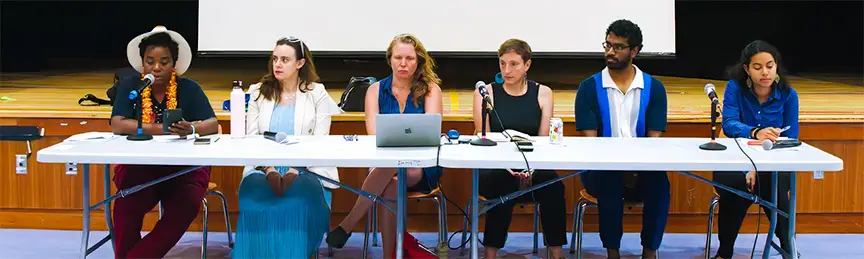
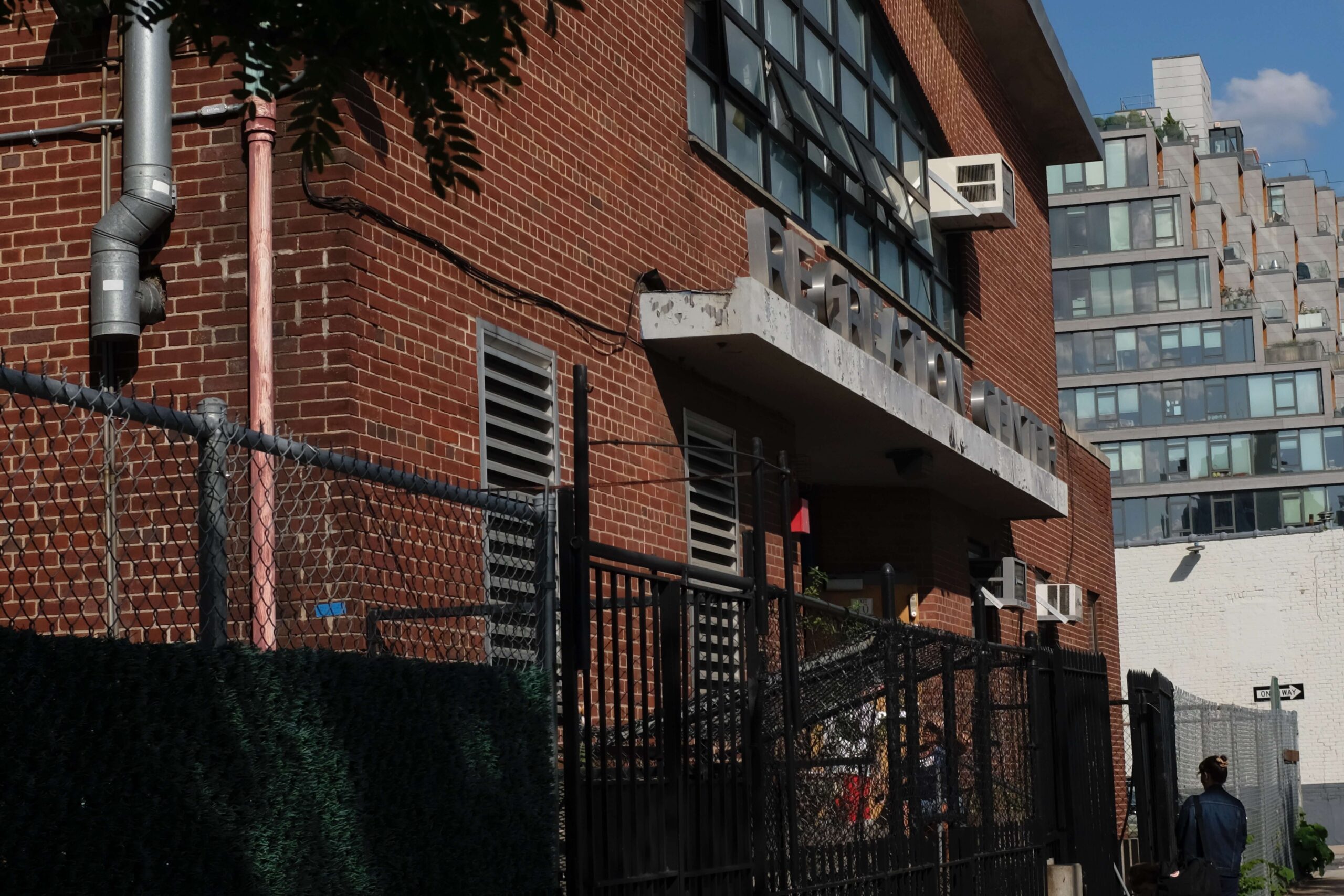
In a poorly ventilated public school gym, community members of Park Slope, Gowanus and the surrounding neighborhoods gathered on Wednesday, May 22, for a sustainability and resiliency resource fair, co-hosted by the Mayor’s Office for Climate and Environmental Justice and the office of Council Member Shahana Hanif.
“This was a pretty standard, successful community event for us,” Kimberly Winston, Communication’s director at the Mayor’s Office of Climate and Environmental Justice said to the Star-Revue. The office of Shahana Hanif did not respond to requests for comment.
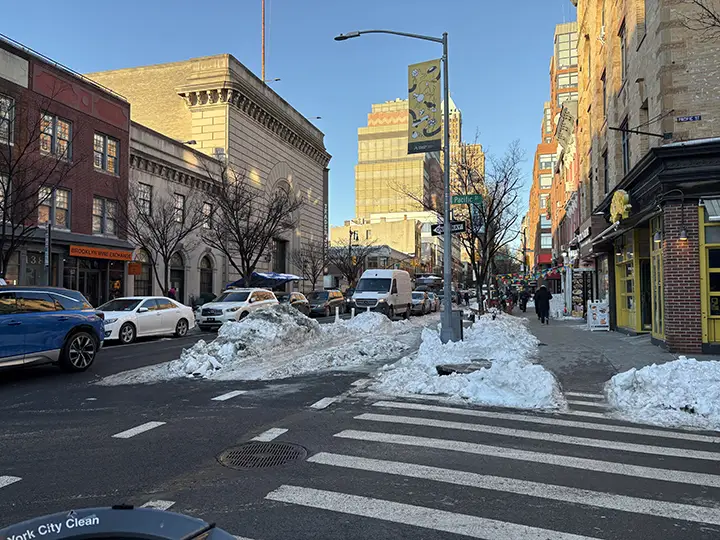
The fair, held just next door to one of the epicenters of Brooklyn flooding, the intersection at 4th Avenue and Carroll Street, was geared primarily toward homeowners and business owners looking to beef up their flooding resilience or make their homes more energy efficient. In attendance were representatives from city agencies like the Department of Environmental Protection (DEP) and the Department of Small Business Services, Con Edison, New York State Research and Development Authority (NYSERDA), and the Gowanus Oversight Task Force.
As the city gears up for a summer that NOAA, the National Oceanic and Atmospheric Administration, predicts will see higher-than-normal temperatures and an above-normal hurricane season, much attention at the fair was given to the DEP.
The agency showed off their 2023 “NYC Green Infrastructure” report. Throughout 2024, the report says, the DEP and other city agencies will continue to study how different kinds of green infrastructure can reduce combined sewer overflows, the possibilities of a citywide expansion of permeable pavement, how engineered wetlands can improve water quality and how ribbed mussels remove harmful bacteria in the city’s water bodies.
Attendees at the DEP’s table voiced frustration with a lack of support from their building managers or Co-op board when trying to implement flood protections, instead looking to the DEP for help. Community members also had questions about a number of other issues, including rain gardens and the sewage system, according to the representatives on-site.
“I’m in pretty good shape now. But I bought [the house] in 2001, and in 2002, we had our first flood. We’ve kept pouring money into trying to save the house,” said Kathy Ruopp, a member of the organization Good Neighbors of Park Slope. Her home hasn’t flooded every year, but every two or three, she estimates.
“You ignore it when it’s not happening,” she said. “But when it’s 4 am and you hear the pumps click on, there’s no more sleep, you know? It creates a lot of anxiety.”
Concerns about flooding were not the only thing that had brought people to the fair, however; electrification was also on the mind of many. Representatives from ConEd, NYSERDA and NYC Accelerator all primarily received questions about their cost-saving programs for energy efficiency improvements.
But the gym was far from packed with community members, a little more than a dozen over the course of the two-hour fair, meaning they were outnumbered by agency and non-profit representatives. The stale gym was also noticeably absent — or at least nearly — of unaffiliated neighborhood residents. Instead, many, like Kathy Ruopp, were already engaged in various sustainability and resilience efforts as members or leaders of neighborhood organizations.
That includes Timothy Gilles, president of the Park Slope Civic Council, who was at the fair to learn more about how the city and state can support homeowners looking to electrify their homes.
“What I’m really looking for is the next step in our education of people in the neighborhood,” he said.
On June 2, the Park Slope Civic Council resumed its annual house tour following a four-year hiatus due to the Covid-19 pandemic, this time focusing on sustainability. Some homeowners may refrain from installing electric heating or solar panels, fearing high costs, Gilles explained. Still, while some sustainability improvements are costly, the initial price isn’t always the whole story.
“There are things they can do that may not be as expensive as they thought and might be more adaptable to their brownstone or their row house or even their co-op apartment than they previously had realized,” he said. “So, to the extent we can educate people about the subsidies and benefits available, I’d like to be able to do that.”
Author
Discover more from Red Hook Star-Revue
Subscribe to get the latest posts sent to your email.