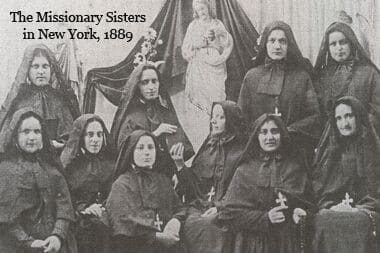
Upon coming to America in 1889 from Italy, Saint Frances Xavier “Mother” Cabrini and her seven Sisters helped newly arrived Italian immigrants in Lower Manhattan who were struggling with poverty. Her order organized catechism and educational classes, opened an orphanage and founded Columbus Hospital (now part of Memorial Sloan-Kettering Cancer Center). Cabrini herself taught at St. Joachim’s parish, the Church of Our Lady of Pompeii, the Transfiguration Catholic Church, and even St. Rita of Cascia in the Bronx. A few years later, then-Archbishop of New York Michael Corrigan no longer felt Cabrini’s services were needed and recommended that she be relocated to the Diocese of Brooklyn instead.
Brooklyn’s bishop at the time, Charles E. McDonnell, sent her to Sacred Hearts of Jesus and Mary Parish – where Mother Cabrini Park is today. John L. Heyer II, pastoral associate at Sacred Hearts & St. Stephen Parish (Carroll Gardens), explained that Cabrini worked tirelessly with the Italian immigrants and youth in the area, especially orphans who she tried to help place in homes.
“She soon realized that a school was needed, and so the Bishop of Brooklyn gave her money to buy an old Moravian church on Van Brunt Street at President, which is now currently near the [Red Hook] Container Terminal,” Heyer said. “She purchased an old church building there and converted it into the first school for Italian children in Brooklyn [in 1892].”
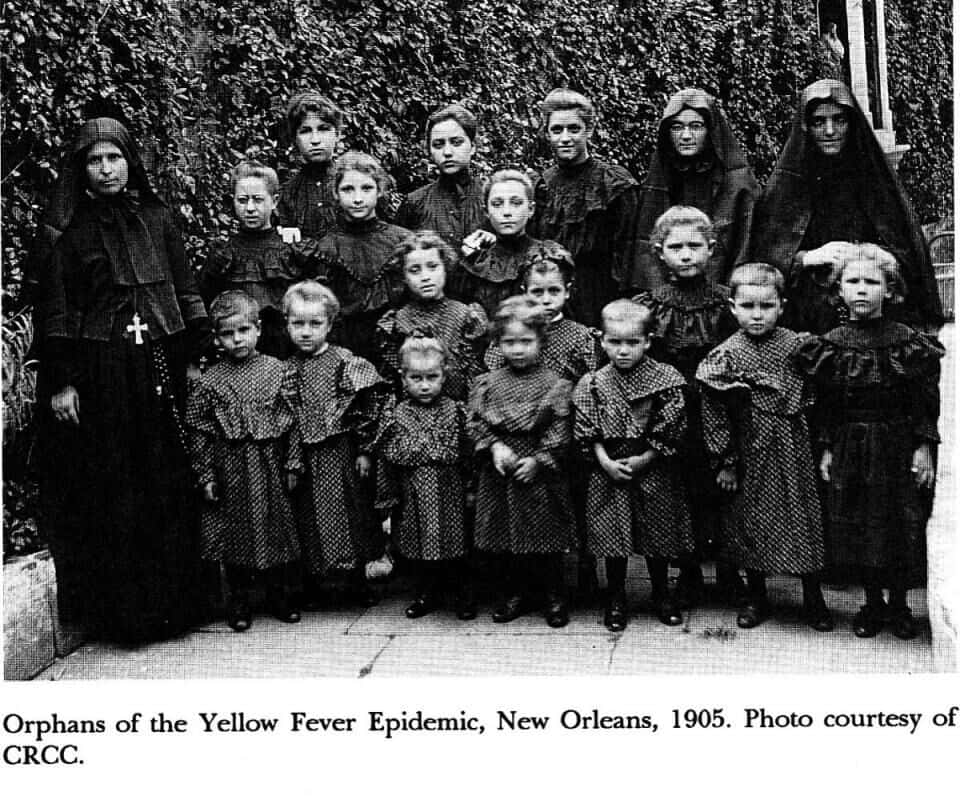
This was Cabrini’s first founded school in the northeast, and she named it St. Charles School, after the Bishop of Brooklyn. It was also the forerunner of the larger Sacred Hearts School (Sacred Hearts of Jesus and Mary School), which opened in 1922 and was operated by the Missionary Sisters for the next seven decades, according to The Tablet.
Cabrini also established a convent for her Sisters in 1898 and a work program within the school for local women to learn a trade so that they too would be able to make money. The Missionary Sisters of the Sacred Heart of Jesus grew and thrived until the last nun left the parish in 1998. Though Cabrini left to help those who were poor, orphaned and ill across the country and around the world, her presence was still deeply felt in Carroll Gardens.
“The children who grew up in this parish – all throughout those hundred years – were instructed about Cabrini and informed with a spirituality about [her],” Heyer said. “In fact… many of the heads of the order were all born and raised in this community at Sacred Hearts, and then went on to lead the Missionary Sisters of the Sacred Heart.”
Heyer continued, saying, “The first image that comes to people’s minds [when they think of Italian-Americans], all the time, is Tony Soprano. I’d rather them think of Mother Cabrini, a woman who came to this country, did all these great things for other people and had a great spirit, zeal, enthusiasm and love for humanity.”
Did you know that St. Stephen Church, which celebrated its 150th anniversary two years ago, actually has a relic of Cabrini onsite? The small bone fragment from Cabrini’s skull is kept in a reliquary and is occasionally displayed for parishioners so that can pray in front of it and ask for her intercession.
A relic, an object associated with a saint that may be offered to the faithful for veneration, is not to be worshipped and is classified into one of three categories: first, second or third class. A first-class relic is a physical part of the saint, which is what Cabrini’s bone fragment is classified as. A second-class relic is an object routinely used or touched by a saint during life, like a piece of clothing, a book or pen. A third-class relic is an object that is reverently touched to a first-class relic.
Top photo from The National Shrine of Saint Frances Xavier Cabrini’s website
Author

Discover more from Red Hook Star-Revue
Subscribe to get the latest posts sent to your email.