Walking or driving past Rapelye and Hamilton, one might never give the corner adjacent to the BQE a second glance. What most don’t know is that it was once home to Salvatore “Buddy” Scotto’s grandfather, his three garages, and his eight family building, many years before the BQE was constructed.
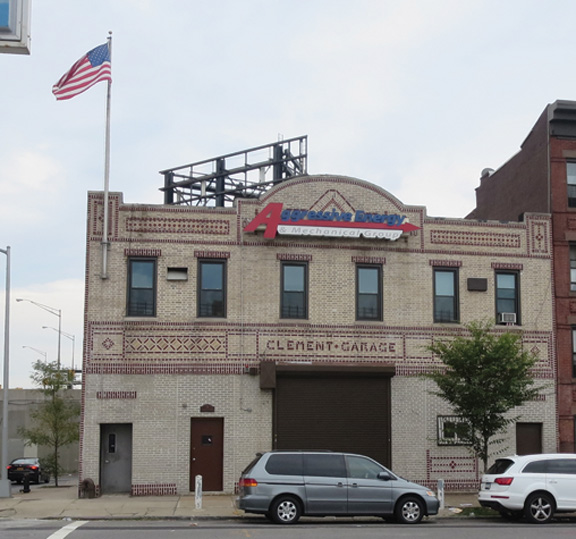
Don Vincence Clementi, known later as Vincent, arrived in America in 1898. Soon after he bought a garage and the floor above it. Named Clement’s garage due to the hostile environment for immigrants, it was one of the few in Brooklyn at the time. Clementi would expand the business in the coming years by purchasing two garages across the street, where a gas station is now located.
Four of Vincent’s thirteen siblings had also come to the States, and he insisted that the entire family meet at two every afternoon for lunch and for dinner on Sundays in the apartment above the garage, described by Buddy as meticulously maintained by his grandmother.
Buddy Scotto, Clementi’s 85-year-old grandson, a Korean war veteran and a community activist for over fifty years, was born in 1928. One of his first memories, he told me, was an argument about Mussolini during a meal. He said the the older family members, first generation immigrants from Sicily, thought he unified the country at a time when most Italians rejected patriotism and instead had strong emotional ties to their home cities or provinces. Their American-born children, however, viewed Mussolini as a corrupt dictator who had committed unforgivable atrocities.
Relations in Carroll Gardens were also tense, especially between different demographics like the Irish and Italians, or the dominant WASPs and new Americans, but nowhere did tensions run higher than in the Italian Mafia. Codes of silence, or Omerta, threatened the lives of many Italian-Americans along the Brooklyn waterfront. Many Mafia bosses and underbosses also held senior positions in the Longshoreman’s Union.
“You said ‘Hello’ and ‘Goodbye’”, said Buddy, referencing the tactic his parents taught him to use to avoid trouble. Later, he said he felt that “as an Italian American, organized crime was a big embarrassment.”
Papa Clement, as his grandchildren affectionately called Vincent, knew that Buddy and his siblings and cousins were kept busy working during the school year. His daughter and Buddy’s mother, Rose, had married Patrick “Patsy” Scotto, and at different points over the years the family ran an imported wine store, a funeral home, and four movie theaters on Court Street. To keep them safe and off the streets during summer vacation, all of the children stayed with him at his summer home on Long Island. There Buddy Scotto, swam, played, and caught frogs until school began again.
Back at the garage, Vincent mediated disputes among his family and customers.
“I grew up being taught to help people in the neighborhood,” said Buddy. Vincent also let his grandson learn to drive in his car, since Buddy was strictly prohibited from using his father Patsy’s 1936 Oldsmobile.
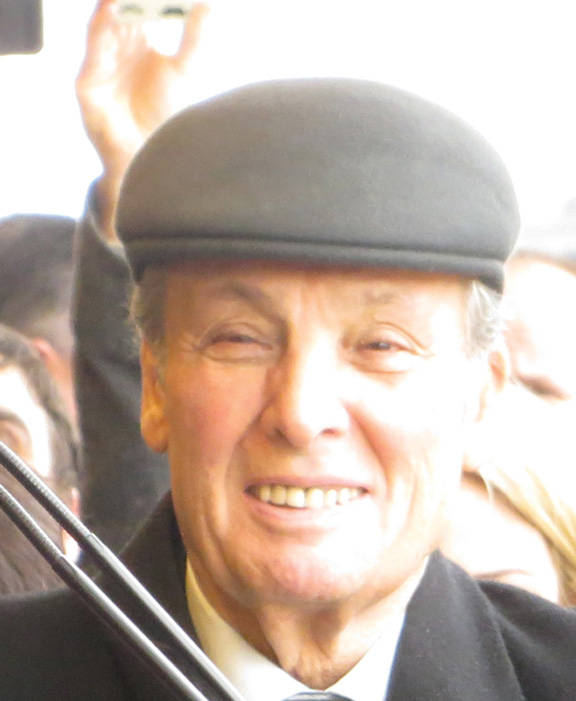
Buddy described the experience as “learning how to drive and then thinking I was a grown-up because I knew how to drive a car.”
He said the purchase of the garage had a major impact on his life.
“There’s no way that I could have done all this,” Buddy said, alluding to his instrumental support in garnering funds for the treatment of the Gowanus Canal and construction of Fulton Mall. He was also a founding member of the Carroll Gardens Civic Association, and his activism took him to the 1976 Republican National Convention and Ford’s White House. He remains a controversial figure for many, but there is no question of whether Carroll Gardens would be the same without him.
After Vincent Clementi died, the property was sold and split up among his children. The building, from which hangs a sign with the logo of Aggressive Energy & Mechanical Group, is now used for office space and apartments. For his family, though, the Clement garage will be remembered as the place where it all began.
Author

Discover more from Red Hook Star-Revue
Subscribe to get the latest posts sent to your email.