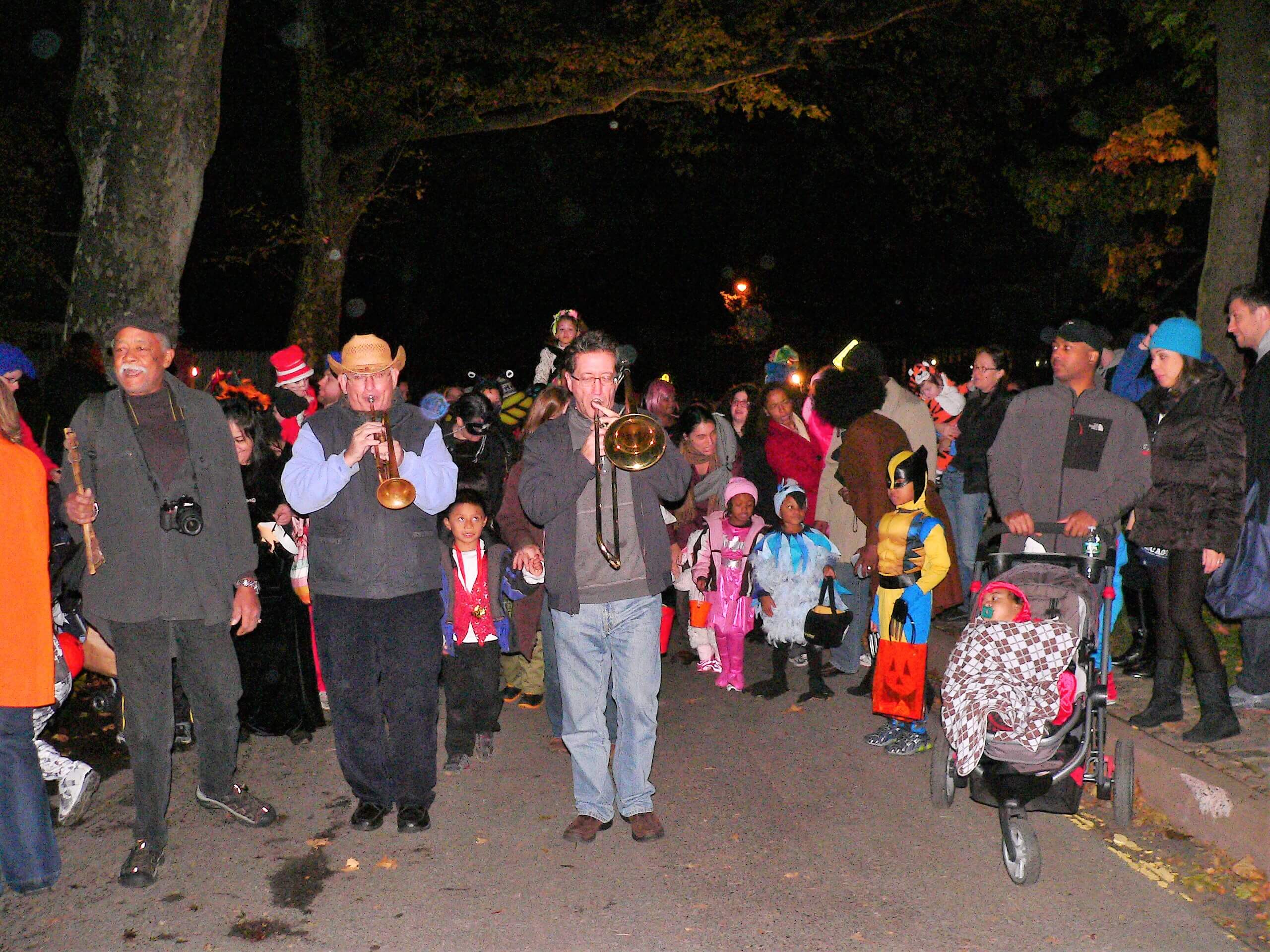
On October 29th, 2011, thunder-snow was heard in Central Park as up to six inches of snow fell across the City, the earliest heavy snow in our history. In retrospect, an eerie omen of what nature had in store exactly one year later.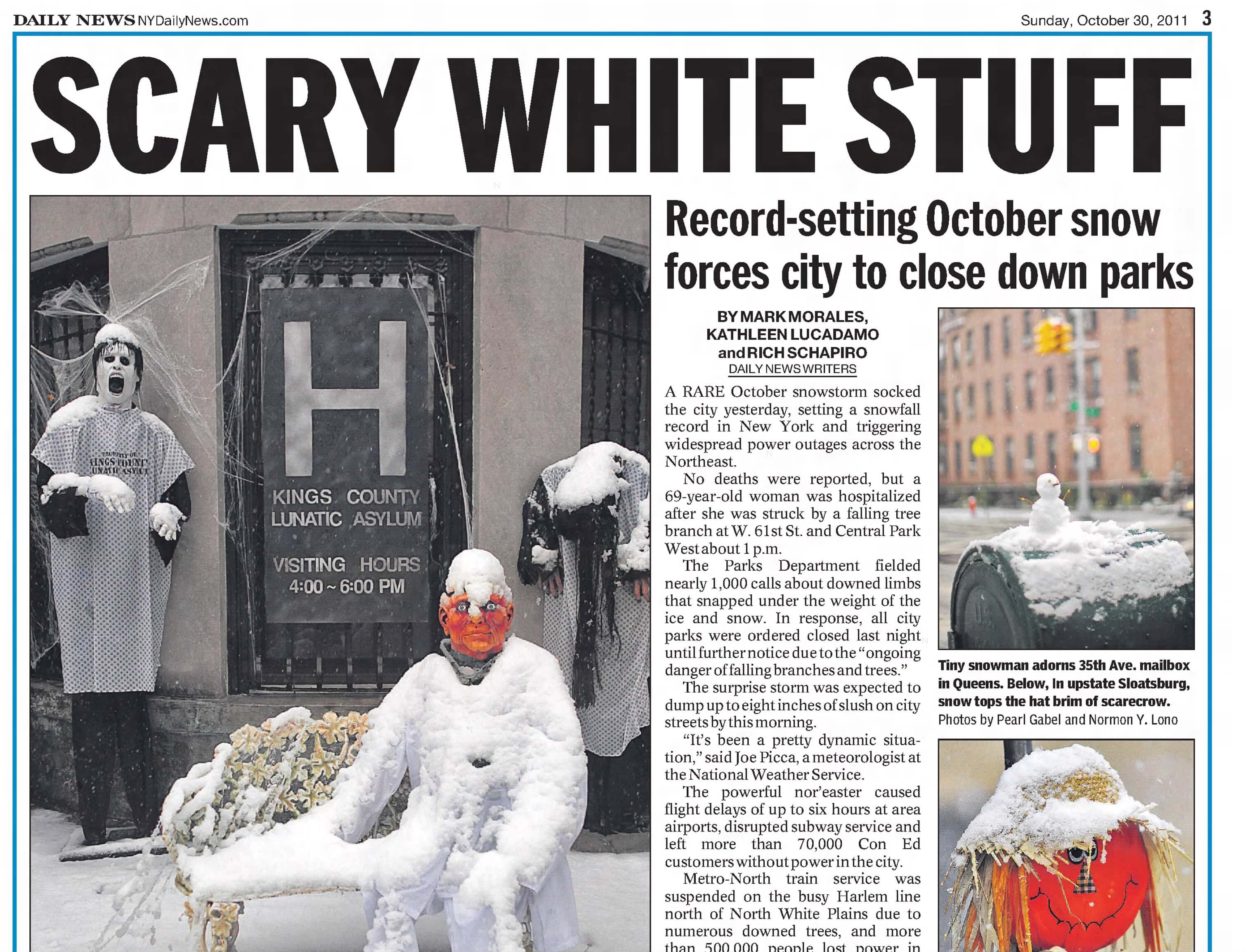
| 2011 Oct 29 |
The Frankenstorm came ashore near Atlantic City on a Monday at 7:30 PM. Its hurricane-force winds combined with high tides and a full moon to push the Atlantic Ocean up and over New York City’s 520-mile shoreline. A string of superlatives followed, the kind that start “the worst…” and end with “ever recorded.”
Superstorm Sandy quickly entered the small list of events we’ll never forget. The ’65 Blackout, the JFK, MLK, RFK assassinations, the ’77 Blackout, the 9/11 attacks, Trump’s election. Like the near-collapse of the US economy in the Fall of 2008 which ushered in the Great Recession, and the onset of the COVID pandemic, Sandy devastated many at the outset, then subsided into a slow-rolling misery, the duration of which, in this case, depended on your proximity to water and financial resources.
In the Rockaways, surging water from the Atlantic and Jamaica Bay created rivers on every street, wrecking scores of homes, and igniting an electrical fire that leveled 130 houses. My son James and his best friend Joe, whose handyman business barely kept them afloat, suddenly found themselves in demand. As the ocean retreated, most of the flora in Neponsit and Belle Harbor died from the salt water. James, with an innate talent for landscaping, and Joe, a jack-of-all-trades bolstered by a Pratt Institute education, found themselves working dawn-to-dusk. A large contractor nearby saw their industry and hired them. When normalcy returned and the gigs dried up, James followed Joe’s path and got a Batchelor’s degree in construction management. No matter how much time may pass, they’ll never forget the crucible of Sandy in Rockaway and how it changed their lives.
The Rockaway peninsula is only two to six feet above sea level. My Flatbush neighborhood is about forty feet higher but Sandy still left a lasting mark here, taking down trees on every block. And a young couple out walking their dog as the winds intensified that first night lost their lives to a huge falling Sycamore.
As for me, the job had me driving hither and yon, getting caught in many a gridlock near soon-to-be depleted gas stations. No biggie. But seven street trees were now blocking a good portion of the route for our Halloween Parade. That was big.
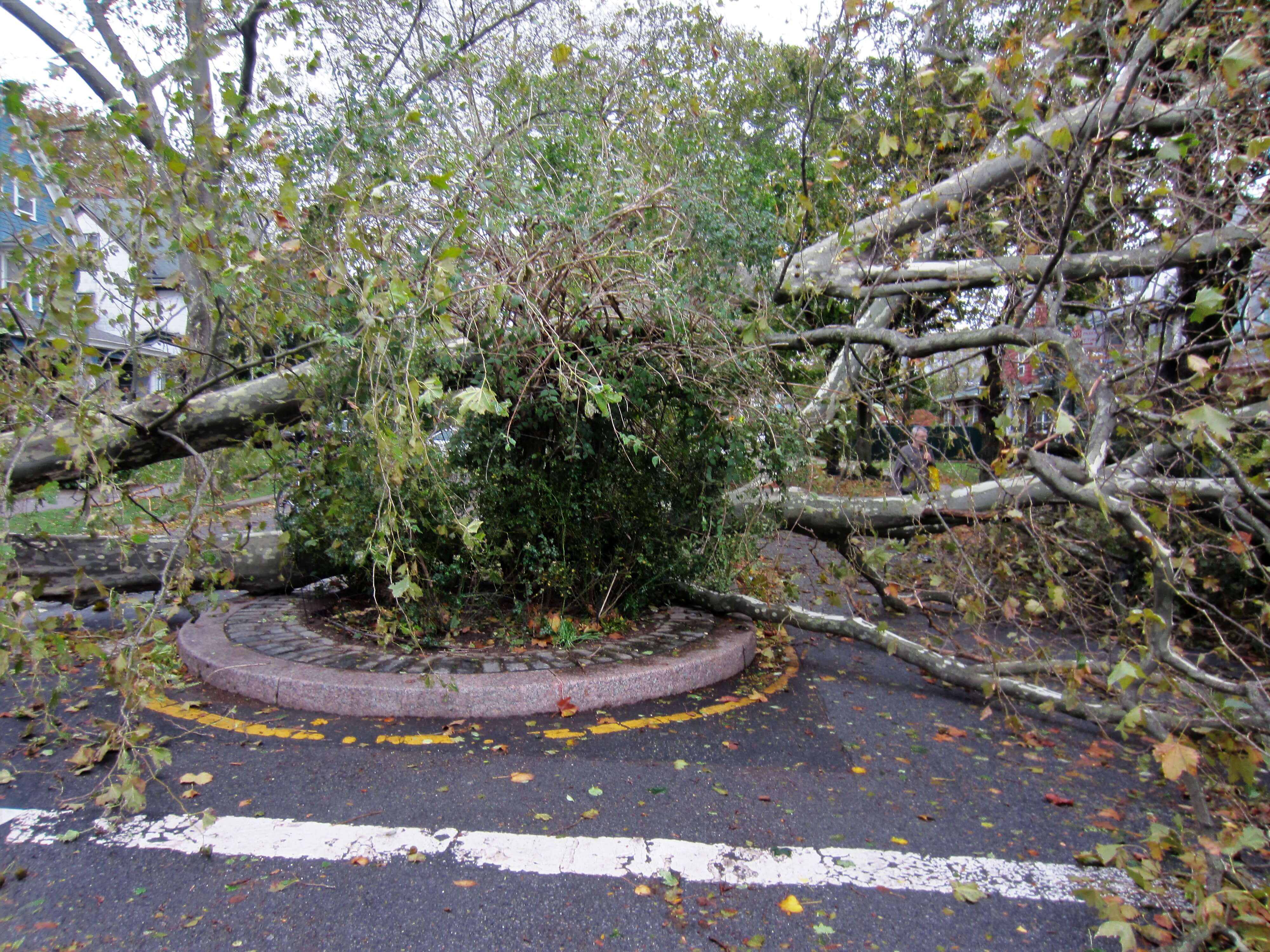
| 2012 Oct 30 Tree Blocks Parade Route on Glenwood Road |
My wife, Virginia, became the parade organizer in 1997, adopting a mantra of “The Show Must Go On For the Kids, No Matter What.” In the midst of the Anthrax terror, right after 9/11, everyone else canceled their parades but ours went forward. Now many residents were hesitant again. The Village canceled, nearby neighborhoods canceled. Virginia waited. No cops to block traffic? Volunteers will act as crossing guards. Too much debris around? We’ll start the festivities well before the traditional dusk sendoff so kids won’t trip. Then, when two trees were cleared, opening a three-block lane, the show went on.
Five hundred Flatbush children, bottled up since October 29th, showed up with their nervous parents in tow. Led by local musicians blowing horns and beating drums, the trick-or-treaters drained every piece of candy available in the 250-odd West Midwood households. Afterward, one parent wrote us, “Amidst such widespread chaos and sadness, watching all those children, white, brown, black, Asian, Caribbean, Latin, rich or poor, so joyous and happy, it gave me such a wonderful feeling of hope and then we saw the little girl in the ‘Brick Covered with Sugar’ costume, and couldn’t stop laughing. She obviously spent her indoor time well.”
Sometimes it takes adversity to bring everybody together, to appreciate what we haven’t lost and to realize a sense of community is the glue that can keep us from falling apart.
Author

Discover more from Red Hook Star-Revue
Subscribe to get the latest posts sent to your email.