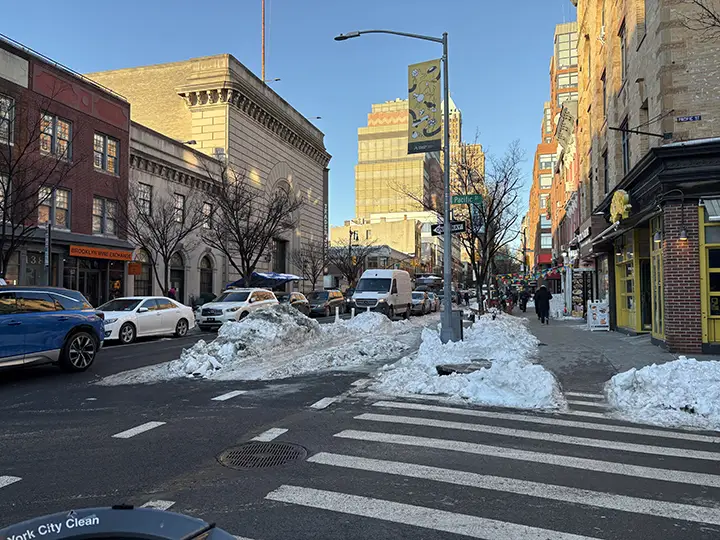
Red Hook has already seen its fair share of transition. The fort that played a pivotal role in the Revolutionary War is long gone, as are the marshlands that surrounded the military structure. For about a hundred years the neighborhood thrived as a key port along the eastern seaboard, until the 1960s when break-bulk shipments gave way to containerization. Today, the port, while still operating, is a shadow of its former self after decades of disinvestment and insufficient maintenance.
After the port’s fall from grace, Red Hook became Brooklyn’s version of Staten Island: disenfranchised, neglected, forgotten. As mayor, Rudy Giuliani had plans in the late ’90s to turn Red Hook into a dumping ground — literally; in 1997, the administration announced that it was considering the peninsula as the site of a massive trash-processing facility. (These plans were, fortunately, thwarted by the Red Hook community.)
Instead, Red Hook became the home of artists, blue-collar workers and small businesses.
Soon, it’s poised to change again as the Brooklyn Marine Terminal redevelopment moves forward; whether the final result is a bustling maritime hub or a mixed-use community with luxury towers and LuluLemon, Whole Foods, Sweetgreen and Starbucks storefronts, it will drastically alter the fabric of the neighborhood.
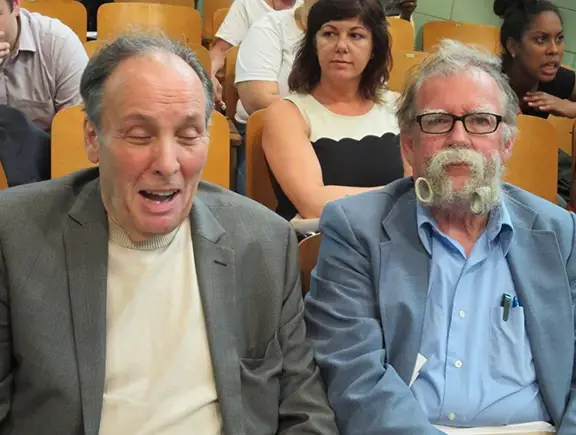
There are many who have made Red Hook into what it is today. But as the Red Hook Star-Revue celebrates 15 years of community news, we thought it appropriate to speak with two men who, in different ways, left marks that have lasted even after they left : John McGettrick and Greg O’Connell, Sr.
John McGettrick, Red Hook’s everyman
When John McGettrick moved to Red Hook in the waning days of 1988, the first thing he noticed was the trash. Waste stations abounded in a neighborhood that at the time was a place that few ventured to, other than perhaps do dump more garbage. The garbage trucks ran up and down the cobblestone streets at all hours of the night, beeping and bumping as they drove. Then there was the smell.
“Odors permeated every place you went, including the local school,” McGettrick said.
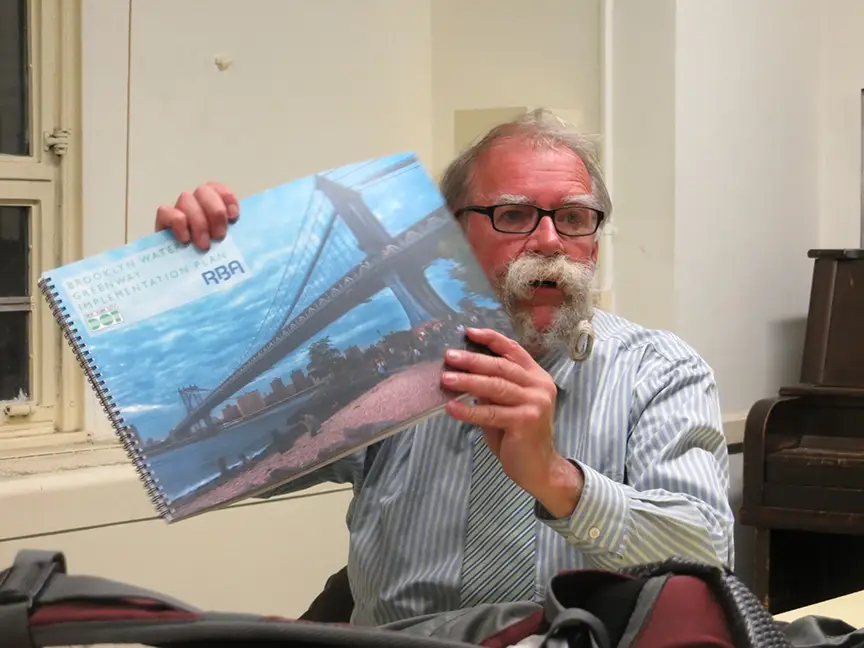
The son of an Irish immigrant, McGettrick has lived many lives. He was in Chicago during the 1968 riots, volunteered for Robert Kennedy’s campaign and fought wildfires in Alaska. But in Red Hook, he is most known for his civic engagement and decades of work on behalf of the community, as the co-chairman for the Red Hook Civic Association.
He’s also held several positions with the City of New York, including Deputy City Council President (although only for a brief time, he insists). Working for the city in various roles was helpful when he first moved to Red Hook, he said; it meant he had an idea of what a city government can do — and more importantly, its limitations.
All throughout the ’90s, McGettrick took to battle for the community. When he came to the neighborhood he had a vision, and in the middle of the decade that vision was about to come to fruition. The Brooklyn Community Board 6’s 197-a plan (a kind of plan allowed under Section 197-a of the City Charter, for large-scale improvements of communities in New York City), titled “Red Hook: A Plan for Community Regeneration” was a 156-page document that boldly laid out a new vision for a neighborhood that for years had been in decline.
It included plans for socially conscious housing development, an expansion of maritime activity, and improved public transit, among other things—all still needs of today.
The plan had broad support from the community, including from the Red Hook Houses. It was critical, McGettrick said, to have the support from the residents of public housing. Way too often neighborhood plans and development ideas have sown division between people Public Housing and other parts of the community, he noted, but this was a rare case where everyone seemed on board.
“We did collectively struggle to make it a better community, and actually had some good interactions on some of the battles with people in public housing, and I was very happy and proud of that, because too little of that effort has been made previously,” he said.
However, after going to the City Planning Commission, efforts were made to derail it, according to McGettrick, and while the 197A plan was passed, it was somewhat watered down.
Groups Against Garbage Sites
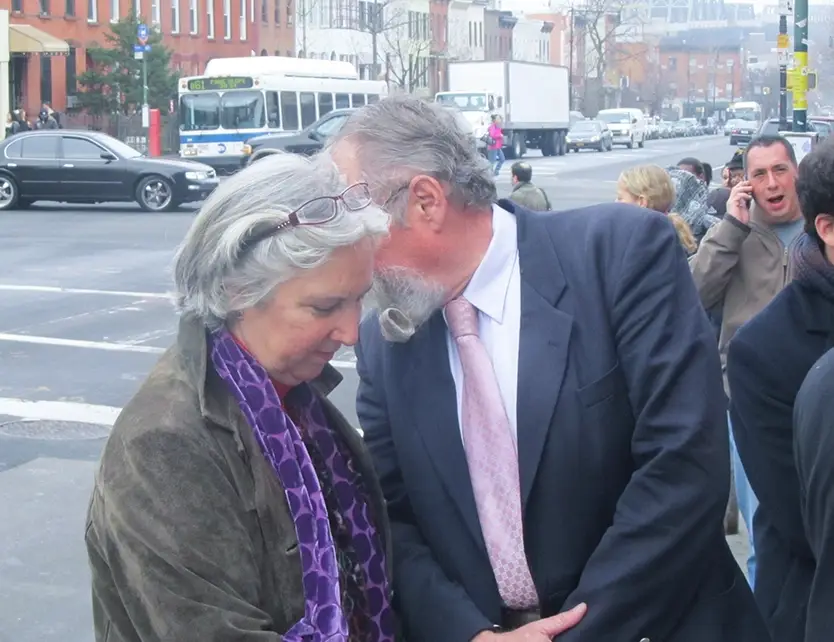
Next, he took on the neighborhood’s trash problem. And that meant taking on Mayor Rudy Giuliani, who wanted to put a majority of the city’s waste transfer stations in Red Hook. The neighborhood was beginning its rebound, with rising real estate prices and an influx of artists and young professionals, and the neighborhood didn’t take kindly to the mayor’s plan.
But in what McGettrick considers a stroke of good luck, Giuliani was at the time also considering running for the the U.S. Senate. With the help of artist-made postcards and — surprisingly — nuns and convents across upstate New York, McGettrick and the community seized the opportunity.
“We printed this rather simple message on the back that said, ’If Mayor Giuliani becomes Senator Giuliani, what would he do with the rest of New York State, if you gave him the power?’ In the process, we were able to activate a number of nuns and convents, and they started mailing postcards to Giuliani. They dropped it,” McGettrick said.
The trash battle eventually led to changes in how the city manages its waste, with facilities now more equitably spread out across the five boroughs (including one next-door to Gracie Mansion).
The Civic Association
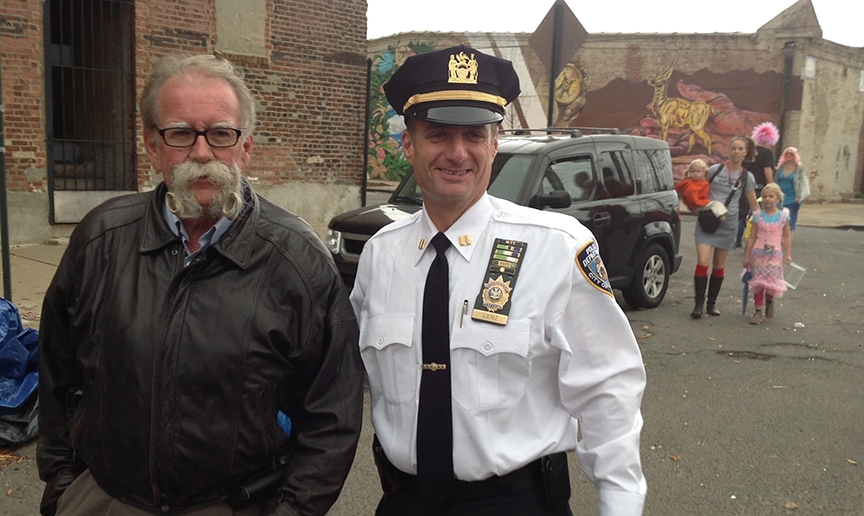
For decades, McGettrick was the co-chair of the Red Hook Civic Association. When he joined, it had been dormant, but with the help of other community members, it was brought back to life. It was “a lot of knocking on doors and telling people, ’Hey, we’re all in this together.’
Getting them to participate meant getting the community to understand that they had a stake in community building not only for themselves and their neighbors, but for their kids,” he said. The Civic Association did a lot, including work to bring more city services to the area improve public transportation opportunities. Reminding people of the history of Red Hook was also important to McGettrick.
On the southwestern tip of the Red Hook Peninsula, where Fort Defiance used to stand (approximately), now sits the Louis Valentino, Jr. Park and Pier, named after firefighter and New York City Parks Department lifeguard Louis Valentino, Jr. who tragically lost his life while trying to save other firefighters. McGettrick was behind the naming.
“We had been promised something for the longest time, aside from a derelict peer,” he said. “Upon his tragic death, I reached out to the family and said, ’If we were able to get some funding for this, could we name it after your son?’ They said it would be wonderful. The money that had been frozen flowed.”
McGettrick doesn’t mince words when he talks about his wish to have seen more residential development during his time in Red Hook. But his view of what that looks like is radically different from what the city is proposing for the Brooklyn Marine Terminal redevelopment.
“I had hoped that there would be more mixed-income housing,” he explained, with a focus on low-rise buildings with commercial development on the first and second floor, and then having the the workers of those stores live upstairs.
A disgrace
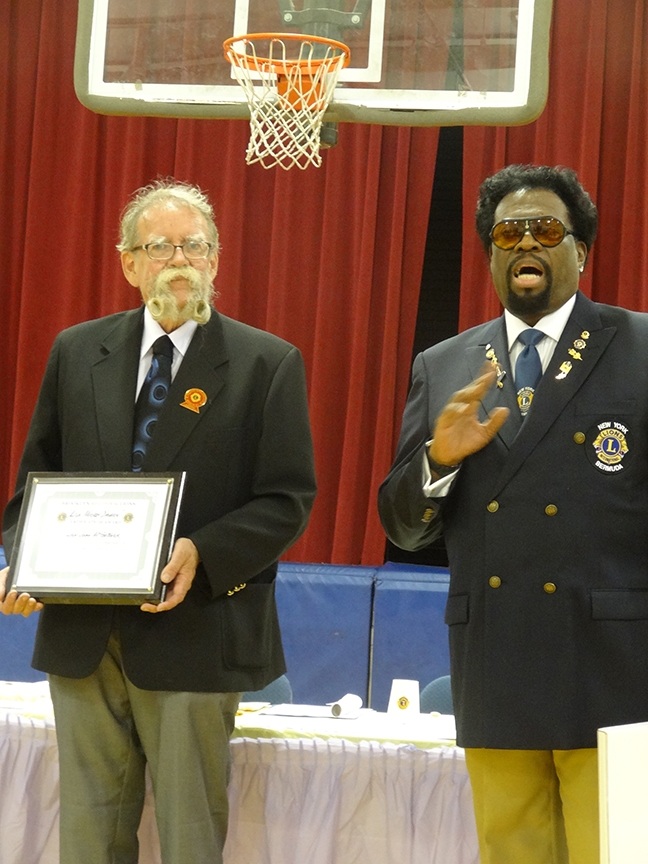
Red Hook is no longer the maritime hub it once was, and the current vision for the Brooklyn Marine Terminal redevelopment doesn’t do much to change that. “That’s such a goddamn disgrace. It should be a maritime hub,” McGettrick said. “Somebody should have enough guts to run on that and say, ’Look, we’re building these monstrosities on the water, and we’re running all of these trucks back and forth?’“
Still, he argued that it’s possible for the community to come together to fight. “You lay out the options that are available, the potential problems that can develop and what specific actions you can take right now to try, if nothing else, slow down the process and see what modifications can be made in the worst case scenario. And that can be done.”
Sunny’s
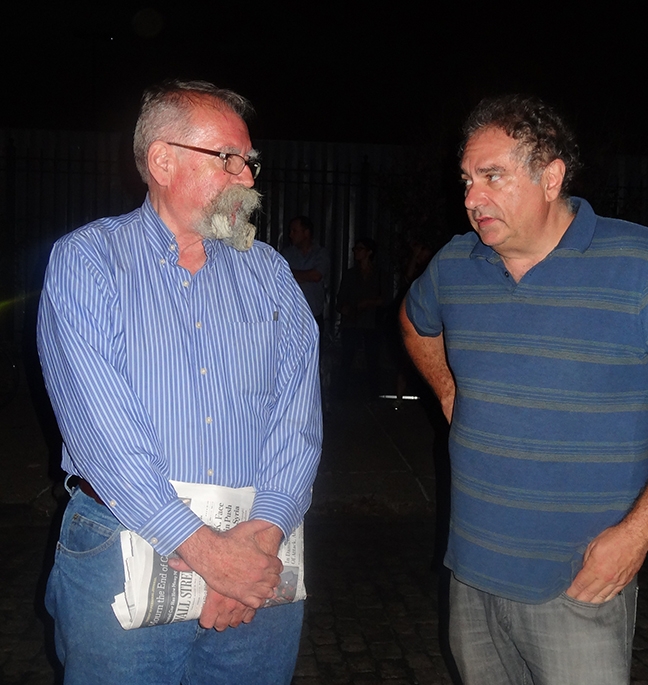
McGettrick used to frequent Sunny’s, the famous watering hole on Conover Street. And for a few years, he even helped to keep it running, after Sunny’s uncle, John, who ran the place at the time, passed away. The bar didn’t renew its liquor license, throwing its future into doubt.
“Oh boy, a bar without a liquor license? What the hell are we going to do?” McGettrick recalled. The solution was as ironic as it was unorthodox: a temporary change from bar to club. “I went around and looked at other neighborhoods and found places that didn’t have liquor licenses, but they had clubs. So, for a couple of years, we became the Red Hook yacht and Kayak Club,” he said. It took them two years to get everything back on track, but they did it, and Sunny’s still serves patrons young and old, some 30-or-so years later.
One’s impact on a community can be difficult to measure. But in the case of John McGettrick, it can perhaps be done by counting phone calls. He still gets them from community members asking what they’re are going to do about different issues. “That’s nice and not so nice. It’s nice to be remembered like that. It’s not so nice that there’s not other people doing the same thing right now, as hard as they can.”
Author

Discover more from Red Hook Star-Revue
Subscribe to get the latest posts sent to your email.