
Téa Obreht’s former student reviews her long-awaited sequel
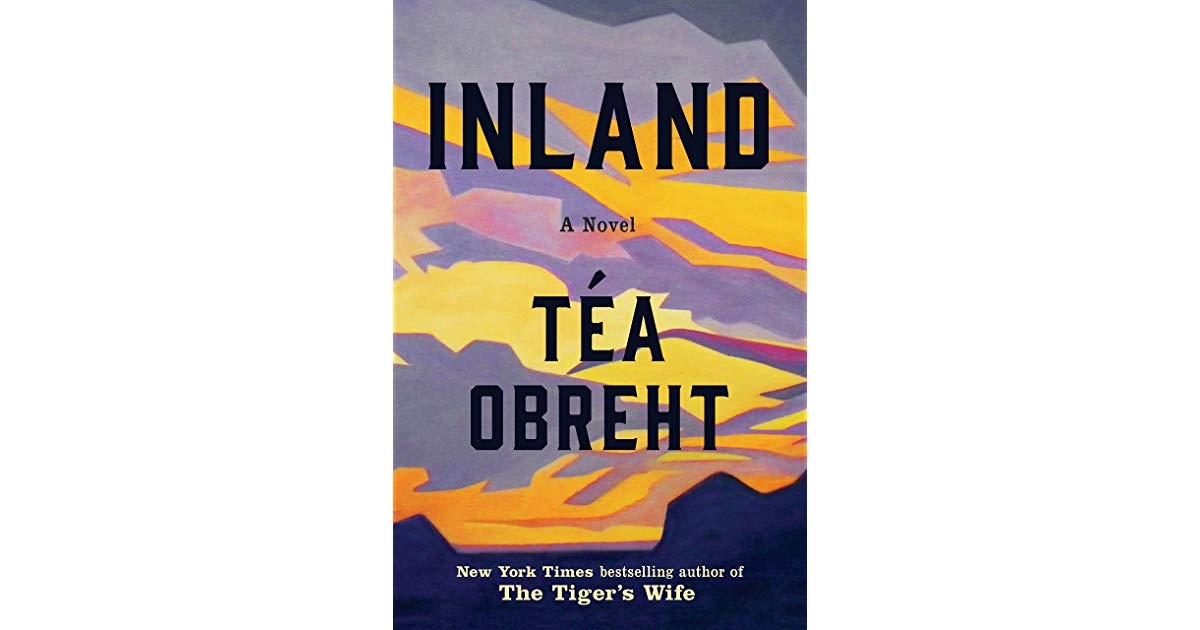
Téa Obreht’s new novel Inland is a triumphant sweeping epic that sets out across the American West following two narrators: Lurie, a stateless orphan turned outlaw trying to claim his place in the world, and Nora, a frontierswoman clinging to the community she helped build as her husband and oldest sons go missing. Thrown together by disparate circumstances in the Arizona Territory in 1893, grief and guilt run deep in each of their stories, which eventually collide most surprisingly. Complete with camels, ghosts, and a beautiful blend of magic and realism, Obreht’s highly anticipated novel is more than a worthy follow-up to her critically acclaimed 2011 debut, The Tiger’s Wife. It is a dazzling tale that unflinchingly examines the trappings of our outer and inner worlds, how the landscape shapes how we live, the relationships we devote ourselves to, and the decisions that each ultimately leave us to face.
 I’ll admit that Obreht’s reputation—National Book Award finalist, 2011 Orange Prize Winner, and international bestseller—preceded her reputation in the classroom, where I was fortunate to work with her as a student in Hunter College’s MFA program. In typical fashion, we peppered her with questions about her approach to the craft—how she decides which details to pluck from her research to achieve authentic realism, how she determines the right scale for a character’s arc, how she readies the reader for magical elements in a story, how she backs out of wrong turns in a draft. Like all good teaching artists do, she responded humbly, sharing insights about her work and the process of writing Inland, while always trying to shepherd us back to instances where we were answering our own questions in our work. Driving home the notion that most writers eternally struggle with similar issues, she often noted that what works for her may not work for us, hinting that she simply may not have all the answers.
Except, of course, she has them. They’re exemplified in Inland.
[pullquote][Obreht] deftly bends the shape of a Western to demonstrate how such an expansive landscape, especially for those out on the margins of society, is at once full of promise and intractably oppressive—an eloquent reminder that human nature does indeed mirror Mother Nature.[/pullquote]
On removing from a story the scaffolding that is research: it’s not just the make of the boot that a person wears, but the weight of it. It’s not just that the United States Camel Corps existed within the military, but the strangeness of a camel’s footprints seen across an American landscape or the bloom of their scent as you draw near the camp. It’s not just the fact that water is scarce, but that its scarcity leaves people on a constant search, one that seeps into every thought, question, and action. On marrying the real and the mystical: ghosts seem to have their own set of rules to follow about how and when they communicate with the living, and even in death, the spirits maintain their humanity, with ingrained needs laid so bare that they permeate ethereal boundaries. On setting as character: the hardpan of Obreht’s American West springs to life, shaping characters’ choices with as much force as their own desires. She deftly bends the shape of a Western to demonstrate how such an expansive landscape, especially for those out on the margins of society, is at once full of promise and intractably oppressive—an eloquent reminder that human nature does indeed mirror Mother Nature.
What I found most striking as a former student was the amount of trust she placed in me as a reader. Thematically, this concern came up often in class—how to release enough information that a reader can see some things coming but still be surprised. Though Obreht’s keeps tight focus on her protagonists’ experiences, she leaves ample room for our own. Undeniably, the obstacles that Nora and Lurie face throughout the novel are familiar today—xenophobia and racism, sexism and misogyny, violence, dwindling resources, rapid technology changes, and even newspaper editorial wars bear down on them. Obreht trusts that we will grab hold of this repeating history and see it with fresh eyes, this time through the carefully crafted lenses of these two societal outsiders. They strive to endure the grim existence to which they are bound righteously—with stony humor, stoic resolve, and an unyielding devotion to those they love.
In doing this successfully, Inland represents the kind of seminal work that adds value to historical discourse. As an emerging writer, to have witnessed any part of its making was a sheer privilege, and the task of balancing Obreht’s influence on my work will forever remain a tricky—albeit enjoyable—one. But reading Inland has also been like opening a window back into her classroom, where so often she encouraged us to follow our instincts, worry less, trust more. In this way, the novel removes from her influence any burden, and serves as a reminder that stories worth telling are often simple in origin, but the emotions they evoke can readily cast them into our shared mythology. Through ambitious artistry, Obreht does just that in Inland, breaking and remaking the American West by weaving from the lives of two ordinary people a truly inventive and remarkable journey.
Inland by Téa Obreht is published by Random House and available August 13.
Author

Discover more from Red Hook Star-Revue
Subscribe to get the latest posts sent to your email.