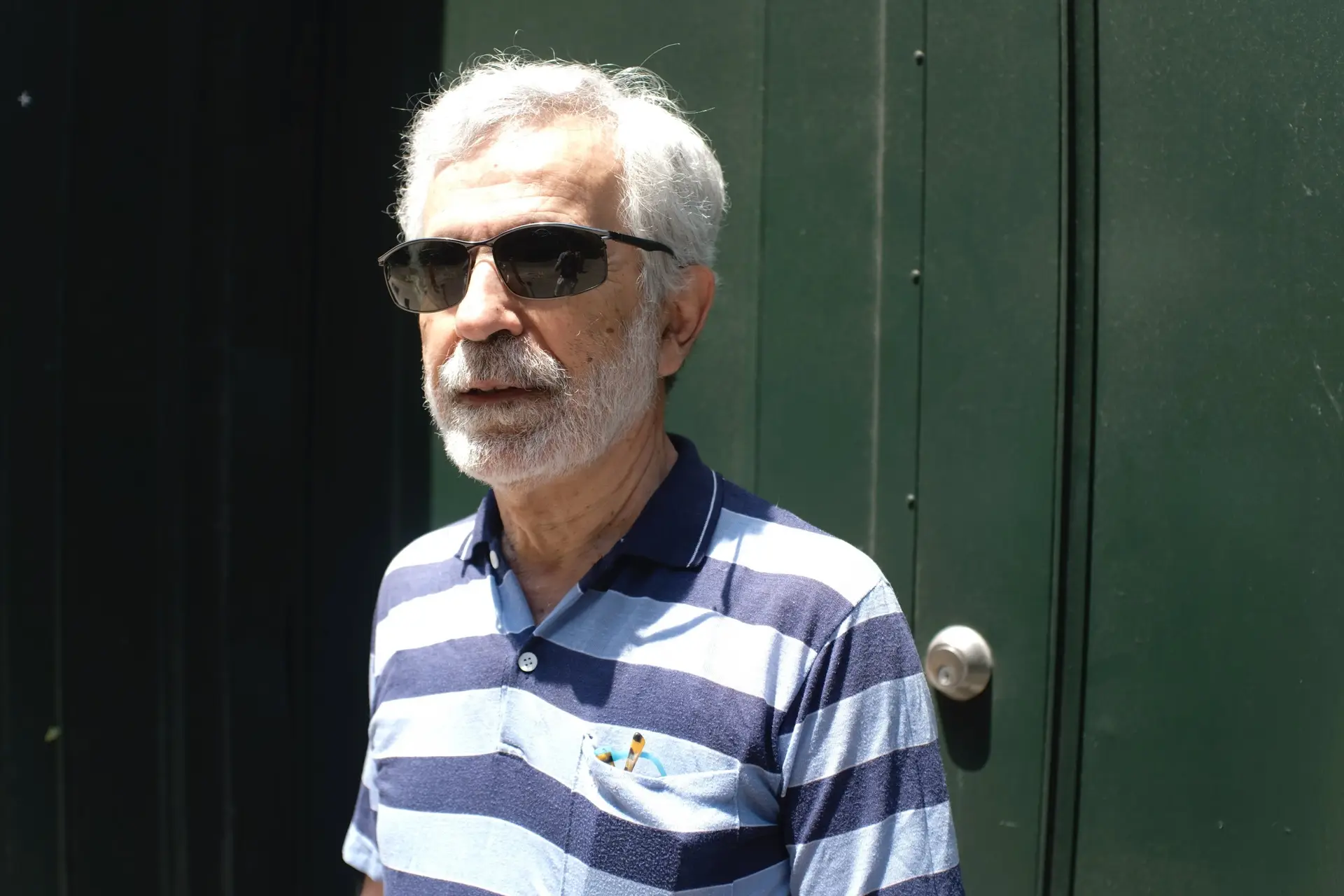
Christos Tsiamis, the United States Environmental Protection Agency’s former remedial project manager for the Gowanus Canal Superfund remediation, is an icon in Gowanus. He’s spoken of with admiration, reverence even, his exploits (alongside EPA region two counsel Brian Carr) in battles against corporate and egotistical interests the stuff of legend among grassroots activists in the neighborhood.
It has been three years since Tsiamis, a chemical engineer, retired from the EPA after more than three decades at the agency, including 14 years leading the cleanup of the Gowanus Canal. From getting the waterbody listed on the national priorities list in the first place, to innovative techniques that enabled sediment solidification in saline water and the combined sewer overflow (CSO) retention tanks on the canal’s eastern bank, his list of achievements is long.
“Before I retired in the middle of 2023, we had nearly finished the cleanup of the upper part of the canal,” Tsiamis said. “So yes, pretty satisfied.”
Led with integrity
Since his exit, he has spoken sparingly about his time in Gowanus, which, while successful in many facets, also saw its fair share of controversy. In 2020, his superiors at the EPA received a strongly worded letter from representatives of the New York State Department of Environmental Conservation (DEC), following a Gowanus Community Advisory Group meeting where Tsiamis questioned the cleanup of the former Citizens Gas Works manufactured gas plant site.
“Basically it was a slander campaign against me by the state,” Tsiamis said. The letter, he added, questioned his engineering qualifications and accused him of alarming the community unnecessarily. It also included “other really personal attacks,” he said.
DEC also asked EPA to retract its lead engineer’s statements, calling it misinformation. Some months earlier, the state agency had declared that remediation had been completed to a point where development could begin. But Tsiamis stands by his assessment that the site wasn’t ready.
“When the state said that it was done, we had very good knowledge of the contamination there, and I felt that it had to be brought up that the work actually was not done. It would not be good for the canal because the source [of the contamination] would still be there, and it would not be good for the people,” he said.
In response, Tsiamis annotated the letter, pointing out DEC’s erroneous claims using the state’s own data. Yet, he didn’t receive the backing of upper management that he asked for, and instead they leaked the original letter to Brooklyn Paper.
Following a push from the EPA, however, the DEC ended up requiring further remediation, and the site remains undeveloped as the state and National Grid, the utility company responsible for the cleanup, iron out the final details of what work should be done.
But the site should have been under the purview of the EPA, Tsiamis said.
“If you ask me, it was an artificial division. When the EPA asked the state to let EPA take over the canal side, there was some kind of arrangement there for the state to keep the uplands. And to me, that arrangement was kind of superficial because the uplands were sources of the canal. As a manager, I would like to have control of both the sources and the canal,” he said.
Political influence
This is not the first time he has said this publicly: At a CAG meeting in January 2023, Tsiamis argued that the Record of Decision for the remediation gave the EPA the sole right to determine the boundaries of the Superfund site, as well as the right to act on contaminated sites that impact a Superfund site.
The federal agency has been reluctant to step in and completely take over the cleanup of the former manufactured gas plant site, now colloquially known as Public Place, and has instead primarily resorted to silent diplomacy to achieve what it deems an appropriate level of remediation.
But Tsiamis’ work was met with pushback long before 2020, from those who didn’t necessarily want the canal to become a decades-long remediation project.
“There was a big resistance to that, both from the responsible parties and from the city,” Tsiamis said. “Mayor Bloomberg at the time wanted control of the canal cleanup to proceed with his plans of development along the canal.”
Through both the media and back channels, Bloomberg and his underlings tried to get EPA to back off from the canal, according to Tsiamis.
“They did direct lobbying with EPA headquarters in Washington. Mayor Bloomberg would have someone from his close circle, from upper management at City Hall, visit with the administrator at the time in Washington, trying to prevent EPA from listing the site as a Superfund site. It was well known to everybody, including the community,” he said.
Moving forward
Despite the city’s best efforts, however, the canal became a Superfund site and the EPA even got the city to build two sewage retention tanks for when the combined sewer system becomes overloaded.
Today, over 350 million gallons of raw sewage enters the Gowanus Canal every year, and preventing that is key to keeping the canal clean long-term.
The retention tanks were not supposed to be part of the Superfund remediation—the program is designed to deal with chemical contamination, not bodily fluids and waste—but after arguing that chemicals and heavy metals from the streets could enter the canal via the sewer system, Tsiamis convinced EPA brass to include the tanks in the legally binding remediation plan.
And the city is ahead of schedule: excavation of the site of the larger tank, which will be able to hold 8 million gallons, was completed six months early, after the New York City Department of Environmental Protection (DEP) agreed, based on community feedback, to speed up its work at the site.
While the tanks aren’t designed to capture 100% of overflows, they will stop enough sewage to keep the canal safe for human health and the environment, Tsiamis said.
Although safe, in the case of the Gowanus Canal, is relative.
“I would not swim in the canal,” he said.
Not even after all the remediation is done?
“… No.”
News from the neighborhood.
Red Hook & Gowanus
Subscribe to get the Star-Revue’s newsletters throughout the month.
Author

Discover more from Red Hook Star-Revue
Subscribe to get the latest posts sent to your email.


One Comment
While he cannot recommend swimming in the canal, what is his opinion of public human powered boating (kayak, canoe) in the Canal where the possibility boat overturns and water immersion realistically exists?
c