
Newsletters from the neighborhood.
Red Hook & Gowanus
Subscribe to get news from the Star-Revue throughout the month.
No spam · Unsubscribe anytime · Privacy policy
On Nov. 20, 1939, public housing came to Red Hook. Now, some 86 years later, one of Brooklyn’s first public housing complexes is set to be turned over to private management.
The Red Hook Star-Revue has learned that NYCHA will move forward with the PACT program for Red Hook West, unlocking federal funds for much-needed improvements at the housing complex.
“NYCHA has faced decades of federal disinvestment and has an $80 billion capital need,” said NYCHA spokesperson Andrew Sklar in an email statement. “In light of this, PACT is one of the most effective tools we have for carrying out critical repairs and upgrades at NYCHA properties in the face of mounting physical needs. The program has a track record of quickly and dramatically improving quality of life for NYCHA residents.”
Public housing—also called Section 9 housing, stemming from its section in the 1937 US Housing Act—was established to provide decent and safe housing for low-income individuals and families.
Under PACT, Red Hook West would convert from Section 9 to a Section 8 Project-Based development and would be managed privately, with NYCHA remaining as the landlord. Under Section 8, developers can leverage public-private financing to fund renovations and repairs. The new private management company for the development would be responsible for maintenance, management and rent collection.
On-site social services are also included in the PACT package and are administered through a selected provider. The developer, management company and social service provider are selected by resident leaders and considered “partners” in the PACT process.
As of April 30, NYCHA hasn’t discussed the Red Hook West plans with any developers, according to a housing authority spokesperson. NYCHA will issue a Request for Expressions of Interest (RFEI) later this year, allowing potential PACT partners to offer proposals for the project.
While no specific date was given by the spokesperson, the Red Hook West PACT site states the RFEI process will begin this summer.
Proposals submitted by potential PACT partners will be reviewed by a resident review committee and NYCHA. The tenant leaders on the committee must sign non-disclosure agreements because the proposals may contain private financial information and related internal documents that are unique to each proposer.
While the complex is bound for PACT conversion, it will be years before it officially happens and renovations take place. The next phase of PACT includes a two-year period of partner review, selection and design before the conversion happens, according to informational materials from the Red Hook West PACT website.
On May 14 at 6 p.m., a meeting will be held at PAVE Academy for residents to learn more about the PACT partner selection and how they can continue being involved in the conversion process.
A NYCHA spokesperson told us that renovations take an average of three years to complete, often in a building-by-building phased approach.
A mixed bag of opinions
In April, the Star-Revue reported that there would be no vote for PACT at Red Hook West. NYCHA told us that a vote is not mandated for PACT projects and it was not considered at Red Hook West. A vote is only required at campuses selected for the Public Housing Preservation Trust, an alternative funding source for repairs at NYCHA.
When asked why the development wasn’t identified for the Trust, a NYCHA spokesperson didn’t respond at the time of publication. Where votes are held, eligible residents can vote to join the Trust, go PACT or stay in Section 9.
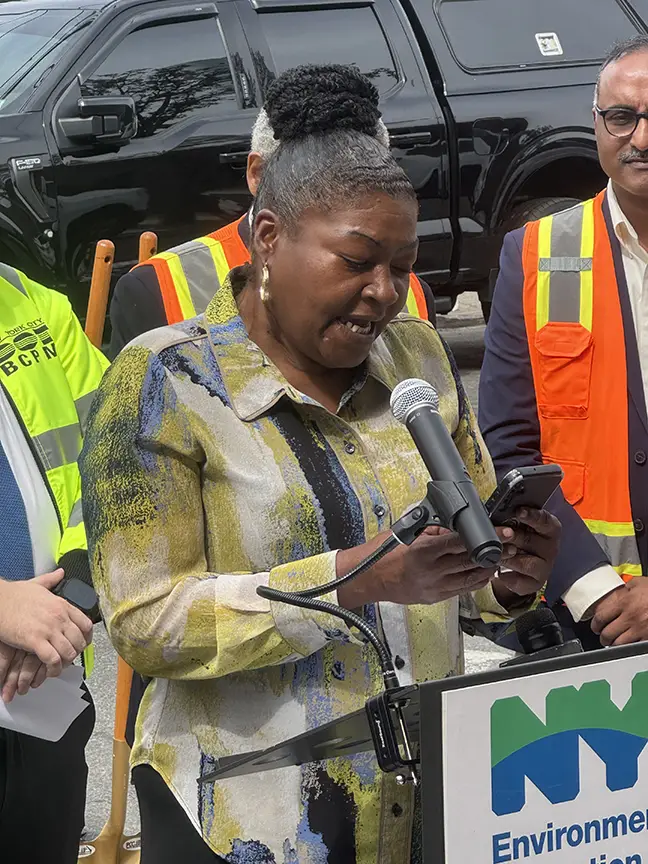
“You’re taking the voice away from the community,” said Red Hook West resident Miriam Williams about the lack of a vote. “If they asked all of these people what they felt about [PACT], 90% of them would be like, ‘no.’”
We asked NYCHA whether it had any data on the number of Red Hook West residents who expressed interest in PACT investments and whether the majority of tenants supported it. A spokesperson did not respond at press time.
“Tenants that have heard about the program are not excited or in support of it, they are worried about what it means,” said Ramona Y. Ferreyra, the founder of Save Section 9, mentioning her interactions with Red Hook Houses tenants so far.
Some tenants felt otherwise.
“We need a change—these buildings are falling apart if you go inside,” said 76-year-old Virginia Ramos, a lifelong resident of Red Hook West.
PACT tenants generally can’t transfer to a non-PACT development. They can transfer within their PACT development, to another PACT complex or to an apartment on the private market with the assistance of a Section 8 voucher, if funds are available. That means there’s no guarantee you can receive that voucher.
The program has been controversial at several developments across the city, as some reported an increase in evictions, shoddy renovations and poor communication from the new private management teams.
Still, PACT has delivered renovations to 65 NYCHA properties across the city and both the authority and residents have reported, in some cases, better management and maintenance of buildings.
According to NYCHA, 57 developments are in the pipeline to receive renovations under PACT. In total, $10 billion has been dedicated to capital repairs through the program.
All PACT projects are federally mandated to address a development’s 20-year capital needs. Red Hook West’s 20-year capital needs include but are not limited to work towards apartments, heating, plumbing and elevator systems. The price tag for these needs is over $800 million, according to NYCHA’s Capital Tracker.
Discover more from Red Hook Star-Revue
Subscribe to get the latest posts sent to your email.
2 Comments
The deterioration (neglect) of NYCHA was well-planned; especially those that were built on what was once “wastelands” and are now in the same “prime” locations.
It’s a real shame what’s going on at Red Hook Houses West
A few desperate residents have reached out to me so I’ve been there in the last few weeks with some young canvassers & none of the residents we spoke to knew that they’re on the road to privatization. They’re not even being given options like the Preservation Trust or remaining in Section 9 (Public Housing), like other NYCHA developments. They’re just being rushed through and decisions are being made by their Resident Association President without their knowledge or consent. It’s shameful.