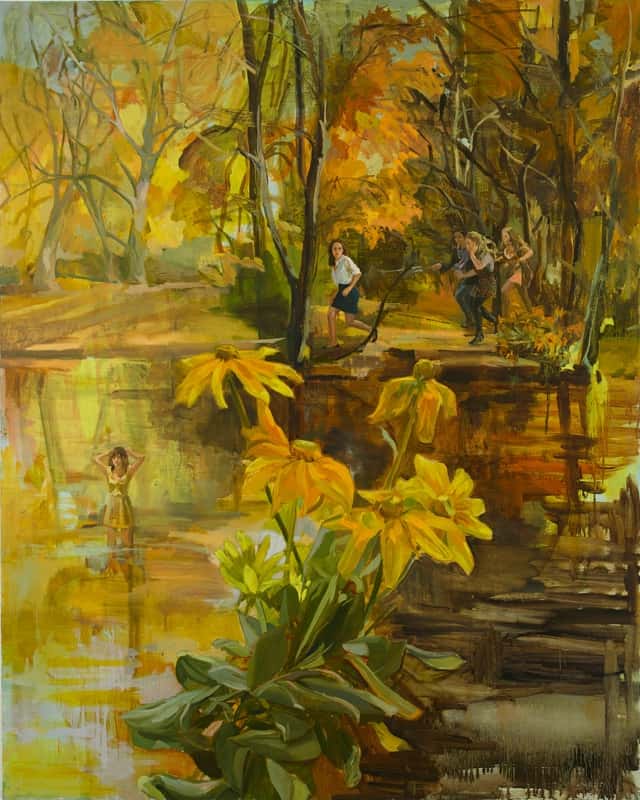
Vera Iliatova sometimes accidentally leaves her studio in the same outfits as the women she’s painting. That’s because the draped, familiar trenches and sensible skirts that outfit the women in her work are painted from the mirrored reflection of her own body. Her work reverberates with the warmth of the same lifeforce. It animates her lush dreamscapes to feel eerily familiar and once inhabited, like slipping into a jacket warm from another’s wear.
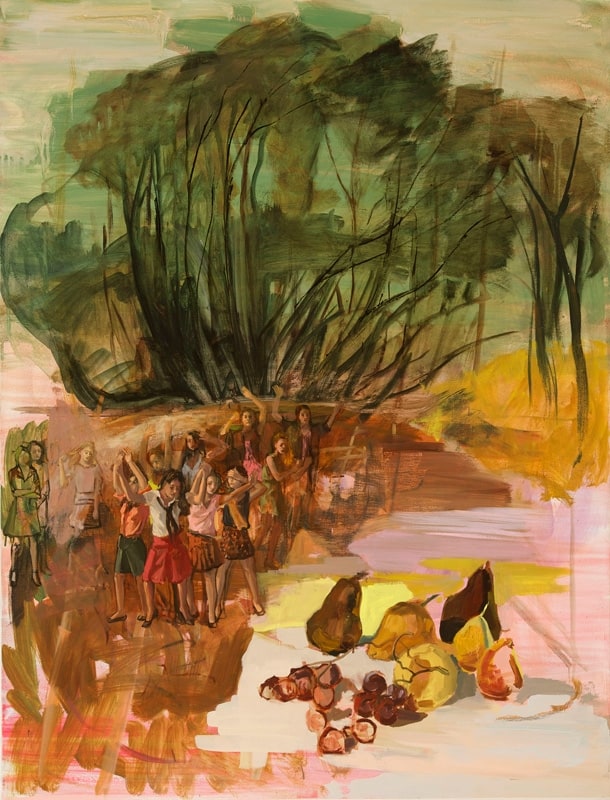
Ms. Iliatova immigrated from Russia to the United States at sixteen. Finding home in the neighborhoods of Bay Ridge and Sunset Park, she sees the lack of borders in her childhood memories and her life now reflected in the blended borough of Brooklyn. She speaks to “experiencing the merge between not quite belonging to the past country and not fully assimilating” as a driving force in her work. Colors seep off the canvas, trickling into a space that is neither home nor away. Even her brushstrokes, at once certain and lucid, evoke a palpable sense of the longing in leaving.
The women depicted in Ms. Iliatova’s contribution to this year’s BRIC Biennial: Volume III, South Brooklyn Edition, are similarly in flux. Where these women are moving is not the question. It’s in the way they move–en masse–that the arresting beauty lies. The instability of their environment is counteracted by their certainty in each other.
Ms. Iliatova describes the ground they traverse in the work as “not quite stable,” citing the counterbalancing bond between females in novels and television dramas as inspiration for her work. Removed from distractions, dreamt into a shifting landscape, these women are their own North Stars.
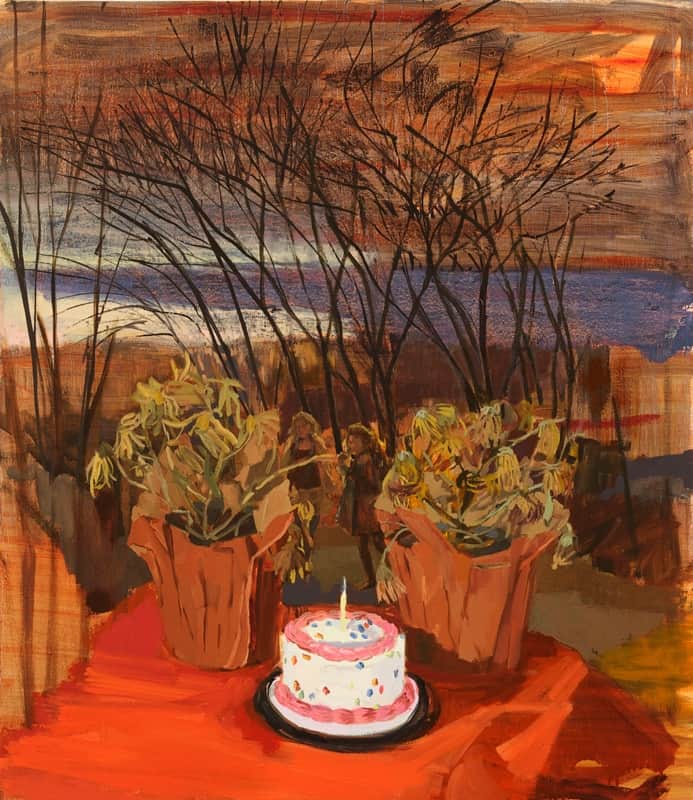
From her studio window overlooking the bay, Vera Iliatova paints life as it unfolds in front of her. Working from observation is the only viable explanation for the vital force her work is laced in. Even the verdant floral still lifes that partly veil each piece depict flowers in real–time stages of decay. Somewhere between utopia and dystopia, the worlds deftly conjured by Ms. Iliatova are fertile ground for timeless and borderless inquiries.
Where are we going? Or more aptly, who are we going with?
Author

Discover more from Red Hook Star-Revue
Subscribe to get the latest posts sent to your email.