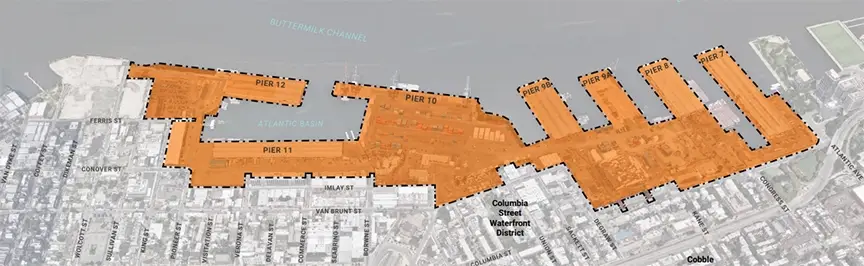
The map above shows the land formerly owned by the Port Authority that is being transferred over to the NYC Economic Development Corporation sometime this year. Their repurposing project, titled
Vision for Brooklyn Marine Terminal, has been stressing the upgrading and modernization of the Red Hook Container Terminal, which under the Port Authority has been ill maintained and in jeopardy of losing their piers due to disrepair, something that had been the responsibility of the Port Authority.
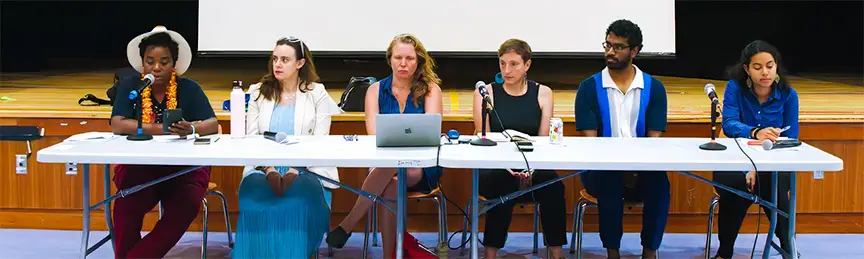
The EDC set up a task force that is supposed to guide them in that vision, aligning it with the surrounding communities, which include Cobble Hill, the Columbia Waterfront District and Red Hook.
It was assumed from the beginning that some of the acreage would be used for parks, some for housing, some for the Cruise Terminal, and the majority for an upgraded shipping center that would align with the Blue Highway vision for the city that would take trucks off the road, use the waters in an environmentally sensitive way, and help the city get to its climate goals.
Jim Tampakis, a member of the Task Force who we interviewed a few months ago, calling him Red Hook’s visionary, has called for using all the piers, including Pier 7, which is across Atlantic Avenue from Brooklyn Bridge Park, for maritime use. He says that this could all be made financially self-sustaining, as well as getting a huge number of trucks off the road.
To be honest, I’m not 100% aware of other community plans that are being advocated by local groups. I’m not saying that there aren’t any, but aside from groups in the Columbia Waterfront District who are fighting for the removal of a concrete facility across from Kane Street, nothing has come across my desk, or my computer, except for demands to slow down the process, which the EDC did do by three months.
I have heard second-hand that a NYCHA activist that is on the Task Force, has been lobbying for improvements at the Red Hook Houses, something well received by the EDC. But basically, aside for things that people do not want, a community plan to counter the EDC proposal has seemingly not emerged.
On December 18th, the Task Force met to start talking about port uses and land use (AKA buildings).
I received access to their printed handout, a stapled colorful document totaling 45 pages. The first part of the meeting, and the document (which I assume was their Powerpoint presentation) had to do with port uses.
But then, on page 36 of the document, they begin talking about how to pay for it (I guess a modern working harbor, despite it being important for national security, among other things), is not meant to be paid entirely by city and state government. The “Opportunities to Generate Revenue” are divided into “Housing, Hotel and Public Grants.”
The report then presents a number of pages of figures that are meant to justify their bottom line. They project a deficit of between $27 and $119 million dollars for the port operation and a little more than $2 billion to prepare the land for future use, including the maritime upgrades.
When you get to the second to last page, they reveal that what they say is needed for their plan (which I suspect has been their plan for a long time), is that “Housing” has to contribute between $1.5 to $2.1 billion to the BMT Vision.
At the end of the very last page, it is revealed that this figure translates into around 7,000 – 9,000 homes (apartment units).
I was told that by the time they got to this at the closed Task Force meeting, which was held at Sacred Hearts and St. Stephen Church on Summit Street, they were just about out of time for any discussion. And basically, except for members like the Fifth Avenue Committee, who are basically real estate developers, everyone was stunned, not to mention a bit upset.
As was I, when I found out about it that evening at an event I attended at Marco Polo’s.
Up until then I naively assumed that the extension of Brooklyn Bridge Park that the governor spoke about at an initial press conference, would include perhaps 4 condo towers around Pier 7. I actually have been throwing my idea around of moving the ballfield and tennis courts on the other side of Columbia Street there into the park, and using that area for two of them, using even less space for housing.
But what they are talking about is the same as the number of new units that are being built right now in Gowanus. If you haven’t seen how Gowanus is changing, go look.
I hope that this information can be used by those who fear the gentrification that this would bring.
Author

Discover more from Red Hook Star-Revue
Subscribe to get the latest posts sent to your email.