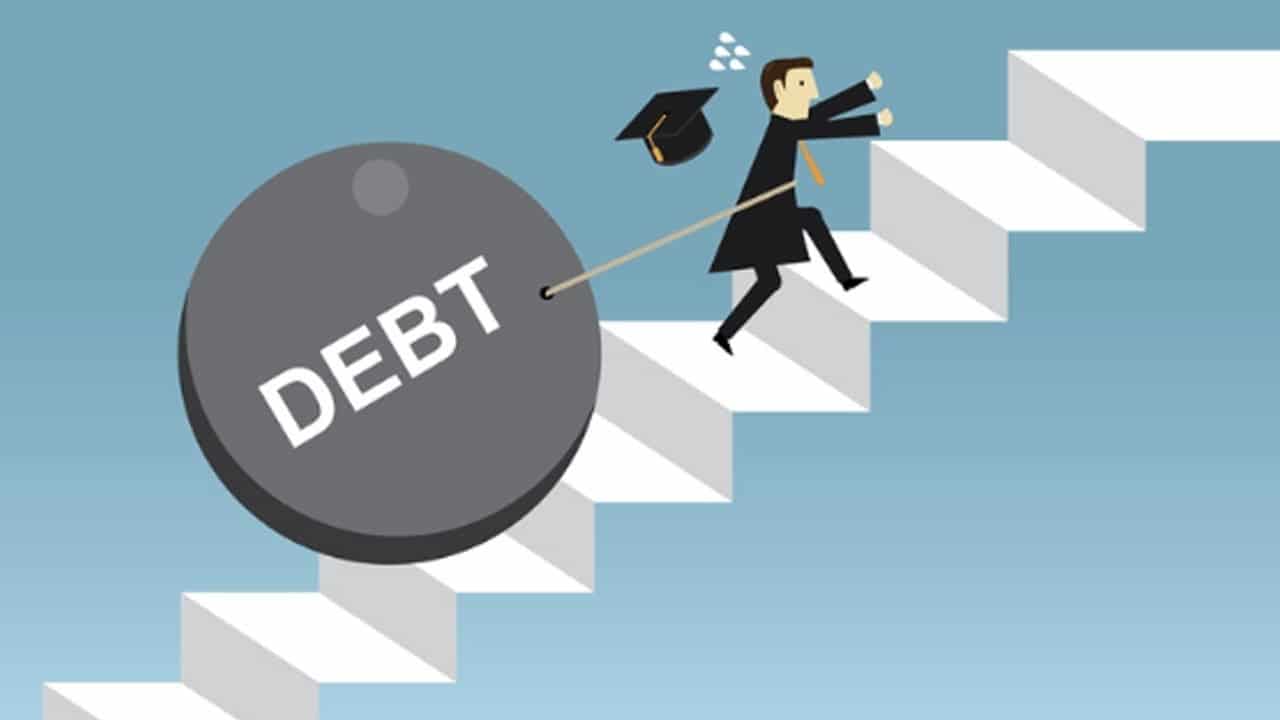
The topic of student debt is often a confusing and uncomfortable one, with no immediate or foreseeable solutions. For most folks, discussing lingering student loan debt can feel pointless. While there is a general understanding that the current system isn’t beneficial or sustainable, there appears to be little to no reformative action, or outrage from legislators – or, to some extent, even the public. So, how did we get here?
Currently, the national student debt is around 1.5 trillion dollars, shared among 44 million borrowers, and is rising at a rate of nearly 3,000 dollars per second. The average cost of yearly tuition at public state colleges is around 10,000 dollars for in-state residents, and more than double that for students from other states. For private institutions, the average yearly tuition at a four-year college is slightly under 50,000 dollars.
Initially (circa 1965), student loan programs were intended to function as a way to increase the population of educated Americans, thus creating a more competitive nation, especially in technological innovation. Unfortunately, the classist barriers to higher education in the U.S. and the culture of uncontrolled capitalism quickly poisoned any noble intentions of funding higher education. The result was a more college-educated populace, but with more lifelong debt.
The recent college bribery scandals that led to the indictments of actresses Felicity Huffman, and Lori Loughlin, as well as others, exemplify the classist culture around education in the United States. The actresses provided monetary donations to have their teenage children unfairly admitted into prestigious institutions.
Like the prison business, academic enterprises, formerly known as Colleges and Universities, are the unfortunate outcomes of unchecked capitalism. Hyper-capitalism is an insatiable beast that is never rich enough, never has enough property, supplies, subscribers, students, etc. Our resources are finite and hyper-capitalism doesn’t give a damn.
I remember being a senior in high school, listening to visiting college recruiters skim over the realities of student loans. Teaching students the realities of working a full-time job, while trying to be a fulfilled human being with debt, didn’t seem to be a priority. Schools are funded and incentivized primarily through enrollment and graduation rates. Simply put, higher education is a business.
Since the 1980s, the cost of education has more than doubled and risen far beyond the rate of inflation, but why? Sadly, there doesn’t seem to be a clear cut answer. In part, the influx of students with loans means more money for university administrative services, new college facilities and to be honest what seems to be unknown expenditures. Interestingly, the marginal increases in pay for teachers can’t account for the explosion in costs of education.
To make matters worse, over the years, certain protections and aid that were put in place to help alleviate the debt burden have in essence, vanished. The Pell Grant, introduced by Senator Claiborne Pell, bankruptcy, hardship declaration and student loan forgiveness are all not very effective at this point. The maximum Federal Pell Grant, which at one point paid 90 percent of tuition, now covers a bit over 15 percent on average. Bankruptcy, which used to be an uneasy but viable route for borrowers, is no longer a legal option. With regard to any declaration of hardship, the barriers to being recognized as a hardship candidate can be daunting, with some borrowers suffering from severe illnesses unable to secure hardship relief. And yet there seems to be no real push by the government to curtail and correct the issue.
Moreover, if we open up the discussion of student debt and its effects on various demographics, we see inequality at the intersections of several isms: capitalism, racism, classism, sexism. Black borrowers and other marginalized groups who tend to borrow at higher rates, experience greater difficulty in securing well-paying jobs and paying off debts.
The most notable push back to the growing debt problem has come from two sources. First, 2011’s now-extinct Occupy Student Debt Movement, which called for (among other things), free public education, zero-interest student loans, and current debt elimination. Second, unactualized promises from political figures running for president. The assumption would be that, the United States’ position as a global power would create a much stronger and more efficient education system – well, not if the desire for financial gain is the beating heart of national systems, which are fundamental to a healthy society. In the upcoming 2020 presidential election, student debt has been prioritized by only a few candidates, such as Elizabeth Warren and Bernie Sanders. Despite the growing crisis, it’s still not a marquee topic.
Other countries, like Germany for example, have managed to create tuition-free institutions, and produce a highly educated population. Education should not be rooted so deeply in for-profit agendas, and it doesn’t have to be. Nevertheless, public outrage hasn’t reached its boiling point. In America, we’ve been conditioned to hopelessly shackle ourselves to debt in order to be educated. The current student debt problem bears an uncanny resemblance to 2008’s debt crisis, where borrowers were unable to pay mortgage loans and defaulted. Similarly in the student debt crisis, most students are not in repayment, with the largest group of those not paying back loans and defaulting (according to the US Department of Education). And while not being able to file for bankruptcy offers protection for the federal government and lenders, creating a nation of debt zombies isn’t an investment.
Author

Discover more from Red Hook Star-Revue
Subscribe to get the latest posts sent to your email.