Gravesend-based Yi Xin Tong identifies as an artist first and as a fisherman second. But it’s a close second.
Tong, who makes sculptural and video-based installations, has found that his hobby brings him to the outskirts of Brooklyn. In his opinion, Floyd Bennett Field, a former airport that juts into Jamaica Bay near Marine Park, has the best fishing in the city. He mentions that Coney Island has a few nice spots for anglers, too. But his own favorite place is Calvert Vaux Park, which touches Gravesend Bay.
“It’s almost run-down; it’s half-maintained. It’s very special, that place,” he says. “I’ve made a lot of works from materials sourced from there.” He’s also caught “all kinds of things”: striped bass, bluefish, flounder, and porgies.
Tong was raised in Mount Lu, China, within the boundaries of Lushan National Park, a UNESCO World Heritage Site. “People had to buy a ticket to enter. I grew up in a kind of utopian landscape.”
For him, Central Park exemplifies the “artificiality” of nature in New York City. “But in the places I go to, on the very periphery of the city, I see a lot of ruins, and nature’s reclamation is very present, so that kind of comforts me in a way.”
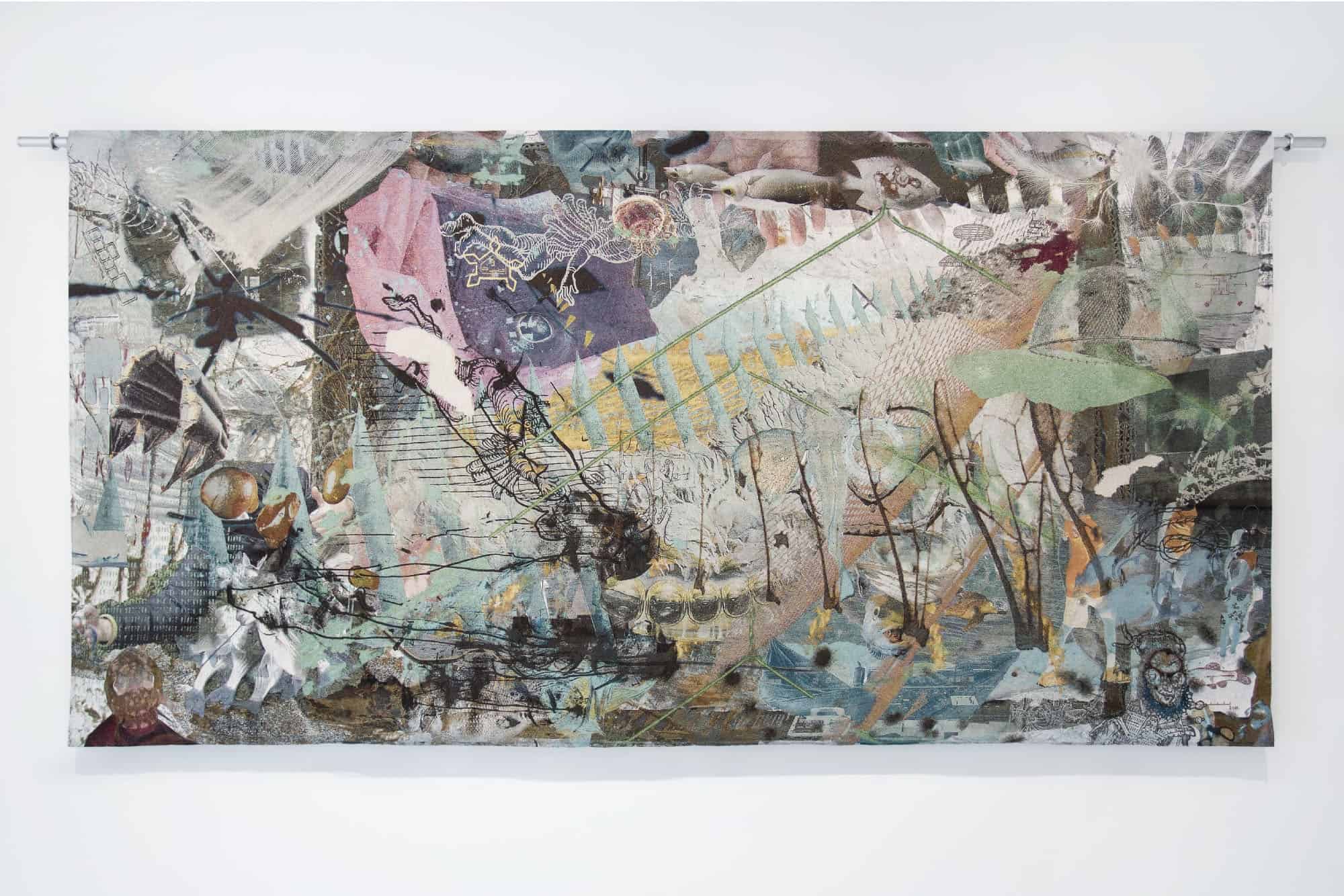
Through April 7, Tong has two works on display at the BRIC Biennial at 647 Fulton Street, including a tapestry that represents his latest effort in an ongoing project called Animalistic Punk. The design brings together urban and pastoral motifs that hint at historical political rebellions in China. During the Song dynasty, “scholars would retreat from government and be solitary fishermen in nature” as “a way of expressing their dissatisfaction with the political situation in the country.”
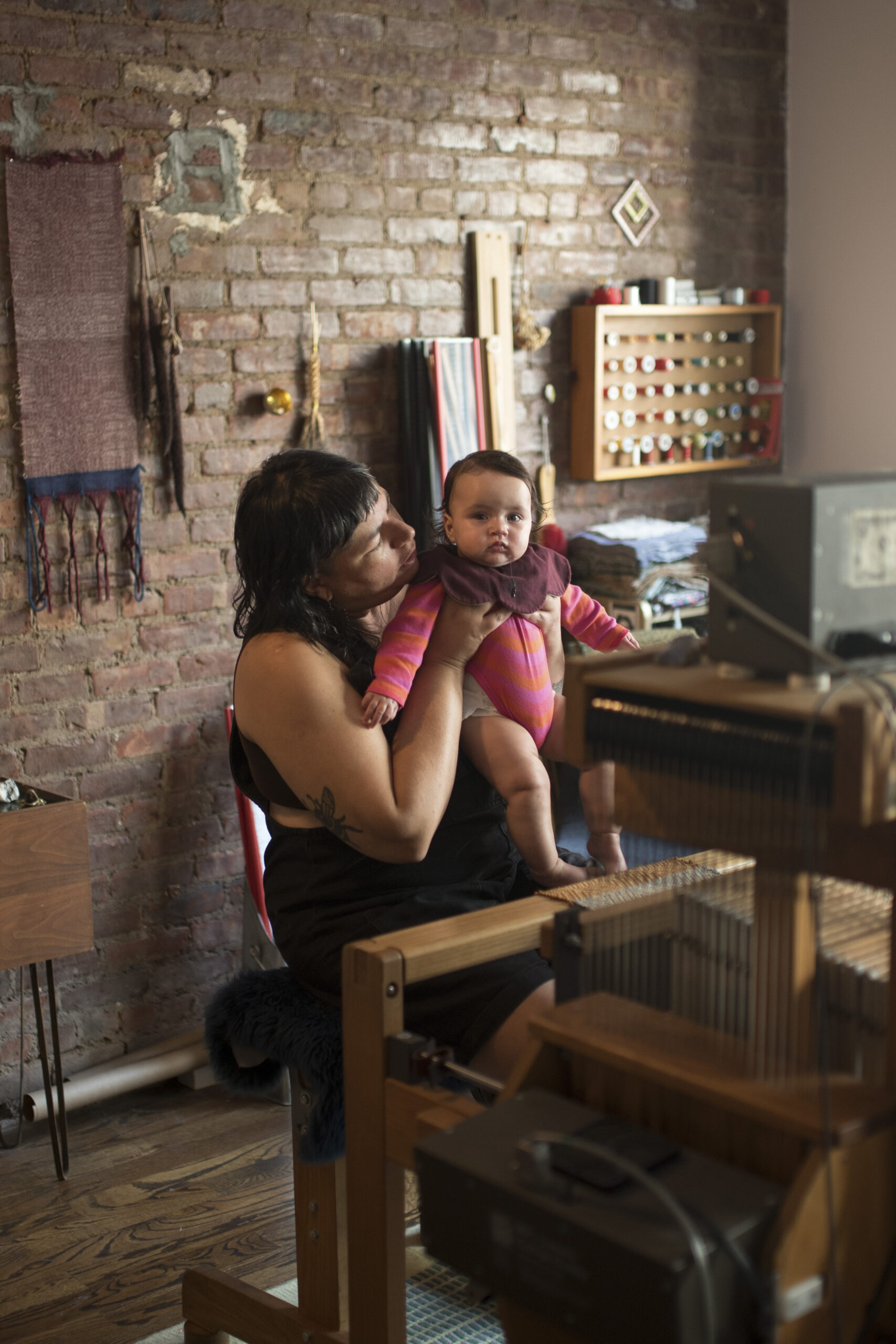
Tong’s tapestry started as a digital collage of his own photographs and “research materials” from libraries. A technician helped the artist translate “the digital language into a textile weaving language,” which directed the “actual weaving process” on a “half-automated Jacquard loom.”
His other work, a ceramic and glass sculpture titled “Nose Ring,” mimics the form of a calf weaner, the device fastened to the noses of young cows to prevent them from suckling. In Tong’s eyes, it resembles a human piercing. “It looks very punk.”
Tong has been “thinking how certain characteristics of animals can change human beings’ social role and mental status in a society. When you start to gain certain animalistic characteristics, you may be becoming more punk. You’re not able to obey the normal social rules.”
He’s made “Nose Ring” the logo for Animalistic Punk. The series took shape in his imagination after the once-popular zoo in his hometown closed, and years later, while exploring the abandoned site, he noticed traces of human habitation in the former animal cages.
The image of squatters living in the old zoo sparked Tong’s current “post-apocalyptic” aesthetic, where man and beast meet at the edges of a crumbling civilization, reflected in artworks that “are about survival.” Fortunately, the fish in Gravesend Bay are safe to eat.
Author

Discover more from Red Hook Star-Revue
Subscribe to get the latest posts sent to your email.