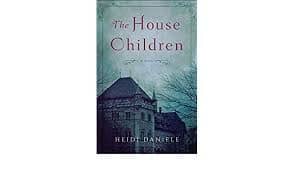
“The House Children,” (April 2019) author Heidi Daniele’s debut novel, tells the story of the unlucky and illegitimate child, Mary Margaret, renamed Peg by the stern but not unkind nuns of the industrial school where she is sent.
This is Ireland, and the year is 1937. As we hear, again and again, there was no choice for Mary Margaret’s mother, Norah Hanley, to give her daughter up. As a priest says to Mary Margaret, “Young lady, when a sin of that nature occurs, there really is no other alternative.”
Although carefully researched, and believably set amongst the achingly familiar ruler-wielding nuns of a boarding school in the same vein of “Jane Eyre” or “The Little Princess,” the novel feels devoid of much real movement or pathos. The two primary settings go back and forth between school, where life is drab and dull, to the glorious but brief two weeks of summer where Mary Margaret is reunited (unknowingly until she’s 13) with her birth mother in nearby Galway, who lives with her own guilt over letting her daughter go but has made a life with a legitimate husband and eventually, two more children.
“I didn’t have a choice,” she later exclaims (again) when Mary Margaret, confronted with the truth of her identity, is filled with feelings of anger, frustration and outright resentment towards her mother.
Unfortunately, this conversation is the rising and falling climax of the novel, leaving little room for unexpected turns in the narrative. Furthermore, even the main character, Peg, feels undeveloped, merely a sketch of an Irish girl from the period, her most distinguishing feature appears to be her beauty and good manners, remarked upon regularly by her relatives in modest ways, as if it’s a shock she’s turned out to be a demure young woman.
Her insights feel cliché, such as the realization that comes halfway through the novel: “Ireland was not a good place for women.” Most interesting is her romance (if tepid) with her cousin Connor. (Don’t fret, he’s conveniently adopted) who becomes a vital inspiration for Peg’s eventual move to America. Spoken by her Aunt Hannah who has gotten away from the Catholic Church, Hannah astutely remarks, “Well Peg, if yer ta come ta America, ya need an education,” leaving us to believe Peg will find a better life across the ocean.
Author

Discover more from Red Hook Star-Revue
Subscribe to get the latest posts sent to your email.